Add products and take advantage now.: This month only, enjoy a 20% discount on all books.
Product Code:
3735-01
ISBN
978-619-01-1744-5
SKU
18.0461
Year
14-05-2026
Pages
288
Size
140/215 mm
Cover Type
Paperback
Genre
The Balkans & the Balkan countries, Literary Criticism, Theory of Literature
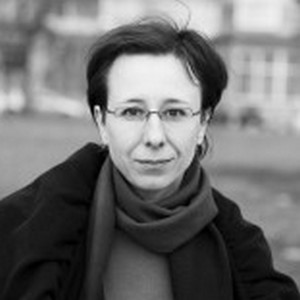
Lyudmila Mindova
Lyudmila Mindova was born in 1974 in Rousse. In 1998, she graduated from Slavic Philology at St. Kliment Ohridski University of Sofia, and in 2005 she defended a dissertation on Croatian Baroque Literature. She is the author of the monograph "The Voice of the Baroque. Ivan Gundulic and the Croatian Baroque Norm "(2011) and the poetic books "Blues"(2009)," Tambos "(2014) and "The Life Without Music…
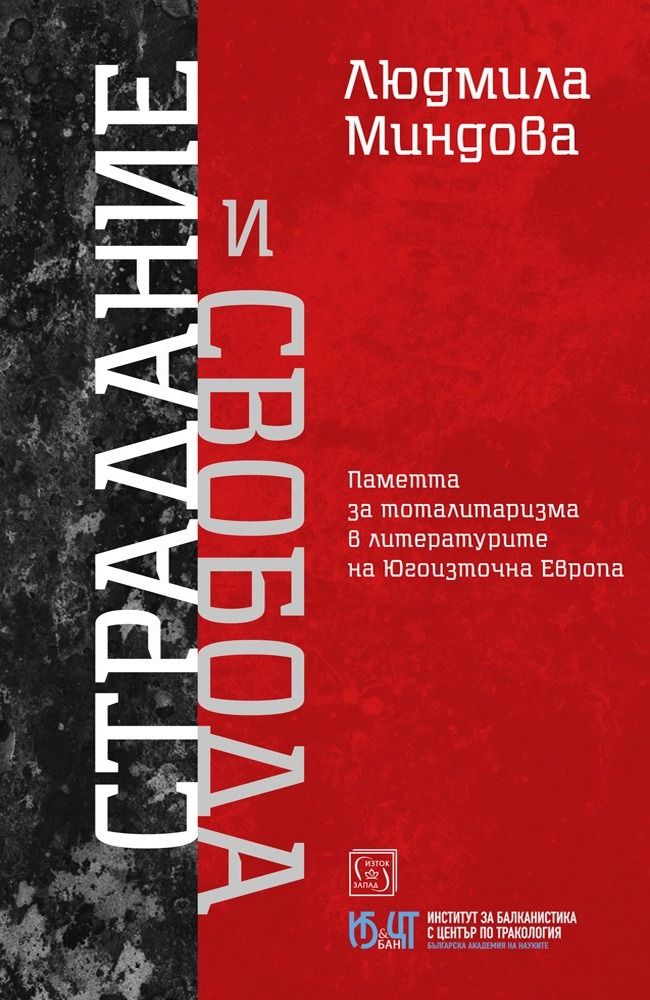
Lyudmila Mindova’s book is dedicated to Slavic and Southeast European literatures from the second half of the 20th century to the present day. These literatures are explored through a thematic lens that has been pivotal for them in recent decades: the Eastern European experience with the history of the 20th century.
The study includes analyses of works by a very wide range of authors from various Slavic and Balkan literatures. The writers discussed are iconic figures in their respective national literatures—Danilo Kiš, Ana Blandiana, Jiří Kratochvil, Drago Jančar, Ismail Kadare, Jordan Radichkov, Blaga Dimitrova, and others. The researcher frequently uncovers points of comparison between their works that have not been previously discussed, thus outlining fascinating literary narratives regarding the implicit dialogues between the literatures of Southeast Europe.
— Assoc. Prof. Ani Burova, PhD
I know Lyudmila Mindova as a scholar from the Bulgarian Academy of Sciences (a Balkanist and Slavist), a translator of fiction, a writer, and a poet. In each of these fields of her ever-growing realization, she demonstrates remarkable activity, with a constant, mutually reinforcing connection between them. Specifically, it is the link between what is creatively, scientifically, and existentially vital to her that leads to publications of authentic significance.
The book "Suffering and Freedom: The Memory of Totalitarianism in the Literatures of Southeast Europe" is the result of her long-standing interests and research in this field. The texts are unified by a leading theme, presented through a richly developed set of problems covering a long line of authors from the former Eastern Bloc (primarily Balkan and Central European). The central part of the research narrative is dedicated to the theme of freedom, which, through several novels by Balkan and Slavic authors, presents freedom as a philosophical, religious, and political problem.
— Prof. Margreta Grigorova, DSc
The comparative analyses of fictional works by numerous authors from Southeast and Central Europe bring to the fore leading themes of violence, memory, and forgetting, as well as the specific connections and dependencies between them; the vulnerability of the intimate world and the family under totalitarian regimes and the assaults against them and against life itself; the games totalitarianism plays with mysticism and religious consciousness in its effort to replace traditional cults with a new secular religion; the interconnection between tyranny and the disintegration of reason, which, in the concentration camp "East-West Divan," produces grisly medical and psychiatric experiments; and the symbolism of camp spaces and prisons, which fill hundreds and thousands of pages of world literature.
Don’t miss a thing! Subscribe to our newsletter and receive our latest articles, offers, and news directly in your inbox.
Cookie settings
We use cookies to provide you with the best possible experience. They also allow us to analyze user behavior in order to constantly improve the website for you.