The Big Question Isn't "What" or "How Much" We Eat, but "Why" We Eat
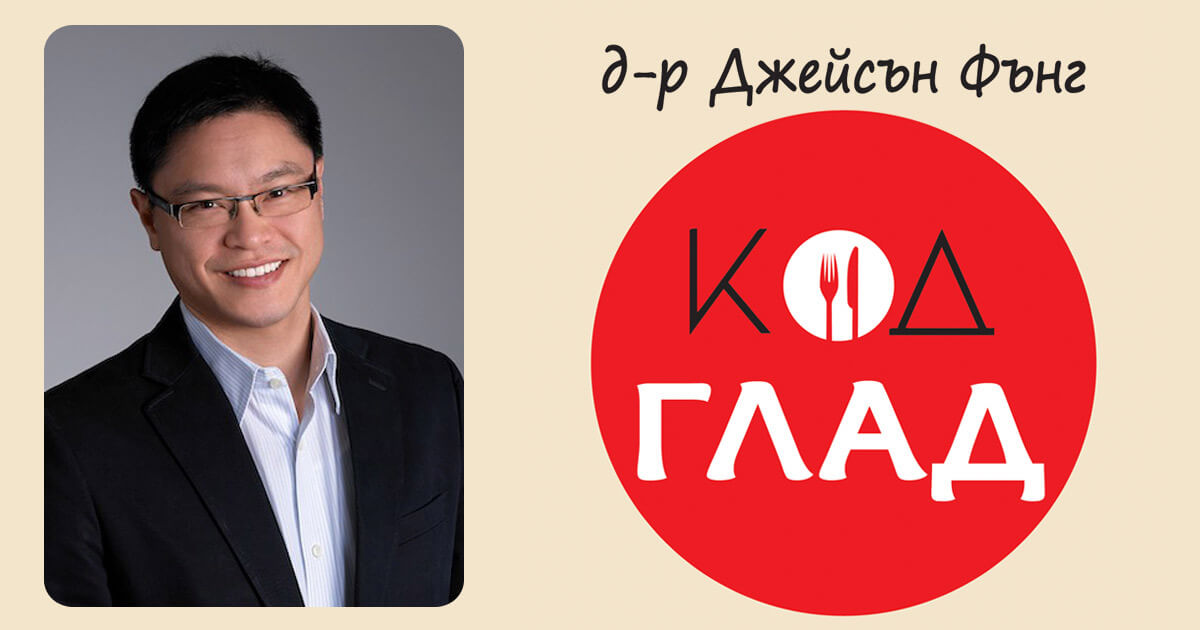 Interview with Dr. Jason Fung, Author of “The Hunger Code: Resetting
Your Body's Fat Thermostat in the Age of Ultra-Processed Food”
You distinguish between physical hunger,
emotional hunger, and social hunger. Has modern society lost the ability to
recognize the difference between them, or is the real problem that we live in
an environment that constantly drowns out our body's natural signals? And how
can we regain the ability to listen to them again?
All the types of hunger may feel the same
but have a different root cause. We can only recognize the differences once we
know what to look for. While the scientific literature has started to
differentiate these types of hunger, it has not yet been widely discussed in
the popular literature.
Once you start to understand the nuances
between the types of hunger, you can apply different solutions since they are
different problems. We regain the ability to listen to these different types of
hunger by first understanding them. For example, we may find ourselves hungry –
but was the hunger driven by a physical (homeostatic) hunger, driven by
emotional (hedonic) hunger, or social (conditioned) hunger. They all feel the
same, but a simple question to ourselves like “Why are we eating?” will often
differentiate. Are we eating to satisfy phsycial hunger, to feel better
(emotional) or simply because of habit (conditioned). All are possible. Knowing
the different types of hunger is the first, most important step to treating it.
When we want to lose weight, we usually
ask ourselves how much we eat and what we eat, but rarely why we eat,
especially when we are not physically hungry. What led you to explore this
seemingly simple yet fundamental question in your new book?
I am interested in root causes. We often
consider that gaining weight is because we ate ‘too much’. But that’s not the
question I am asking. I want to know why we ate ‘too much’. What was the
reason. And it’s deceptively simple.
We eat when we are hungry and we stop
eating when we are full. So, if the problem is ‘overeating’ then the real is
‘over-hunger’. So what caused that hunger in the first place? Until we solve
that problem, we can’t hope to address the ‘overeating’ problem.
What would you say to someone who has lost
weight and regained it repeatedly, and no longer trusts diets, doctors, or even
their own body? What needs to change for that person to finally achieve a
lasting result?
I focus on understanding the problem of
obesity and weight gain, rather than simple hacks or solutions. I focus on the
science because I believe that the better somebody understands the problem, the
more successful they will be at solving it. And weight gain is not a single
problem. It could be a hormonal problem for 1 person, a sleep problem for
another, an emotional eating problem, an ultra-processed food problem, a
snacking habit problem etc. Therefore a single solution (Eat Less) is not
likely to work, since it doesn’t address the underlying problem.
For example, if somebody is eating lots of junk food because they are depressed
and are emotional eaters, then simply telling them to ‘Eat Less’ is not a
solution. You need to treat the depression. It’s as unhelpful as telling an
alcoholic to ‘Drink Less’.
Your concept of the body's “fat
thermostat” suggests that the body actively tries to maintain a certain level
of body fat. Is this a fixed biological set point, or rather a dynamic range
that can shift over time? And to what extent is it influenced by factors such
as age and sex?
It is a dynamic range. Some hormones will
make the thermostat go up, and others will make it go down. Age and sex
influence hormones that influence weight. For example, the loss of testosterone
in men as they age, and the loss of estrogen during menopause will make the
thermostat go up, and therefore increase the tendency to gain weight. Teenage
boys, with very high testosterone, will tend to lose weight and gain muscle,
despite a notoriously unhealthy diet.
How would you adapt your approach for
someone who works shifts, gets very little sleep, has a limited budget, and
cannot fully control their diet? What can we realistically achieve under such
circumstances?
There are many aspects that affect weight.
If you work shifts or are sleep deprived, then you can affect other aspects,
such as the diet. Limited budget will affect food choices, but you can always
find alternatives – eg. eggs, ground beef are relatively cheap sources of
protein, many vegetables are not expensive when they are in season. Fasting is
also free. There are many, many ways to change diets and eating habits without
money.
We live in an era of quick fixes and easy
promises. Is it possible for someone to live on fast food and still maintain a
healthy weight with the help of modern weight-loss drugs? We all know such a
lifestyle is unlikely to be healthy, but what is actually happening inside the
body in that situation?
Yes. Not all fast foods are unhealthy.
There are many choices that are still compatible with weight loss. In The
Hunger Code, I try to explain the multitude of ways that you can affect
hormones without necessarily changing the foods – eg. food order, resistant
starch, eating earlier in the day, avoid ‘naked’ carbs, walking after meals
etc. Weight loss drugs also work, but are only one of many solutions
The book offers 50 practical tips. If you
had to persuade readers to try just three of them over the next 30 days, which
would you choose and why?
The book also contains 3 ‘golden rules’
which are the most important changes. First among them is to reduce or
eliminate ultraprocessed foods, as it negatively impacts health and weight on
so many levels.
Isn't it true that most people start
paying attention to their health only when it's already too late, when they are
faced with a real medical problem? Diabetes and obesity have been among the
defining health challenges of recent decades, but is there another major
condition today that modern medicine could help us prevent or manage far more
effectively, if only we paid more attention to it?
Diabetes and obesity are part of a broader
condition called metabolic syndrome. It is one of the most important risk
factors for cardiovascular disease and cancer. Importantly, they are also
reversible conditions, but not with medications – only with diet.
Which book do you wish you had written –
both on a personal level and in terms of your professional aspirations?
There are none in the fields that I cover.
In covering the disease of obesity, I think my book The Obesity Code is the
best discussion of the science of weight loss. The same applies to The Diabetes
Code, The Cancer Code and now The Hunger Code. I can’t think of any other book
that covers those topics in the scientific rigor. But I suppose that is like
loving your kids – everybody thinks theirs are great.
I really admire Nicholas Nassim Taleb’s
books – The Black Swan, Anti-Fragile and Skin in the Game, but those cover
completely different topics than mine.
Interview by Vladimir Tsankov
Products related to this post