Turn the Page. See the World: This month only, enjoy a 20% discount on all books.
Product Code:
1655-01
ISBN
978-619-152-751-9
SKU
06.0110
Year
18-01-2016
Translation
from Latin: Marko Markov
Pages
344
Size
140/215 мм
Weight
0.45 kg
Collection
Колекция "Тезаурус"
Cover Type
Hardcover
Genre
Modern Philosophy, Ethics
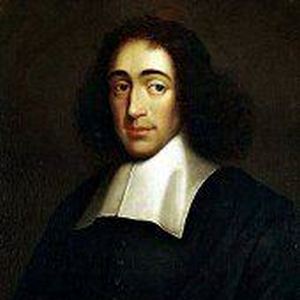
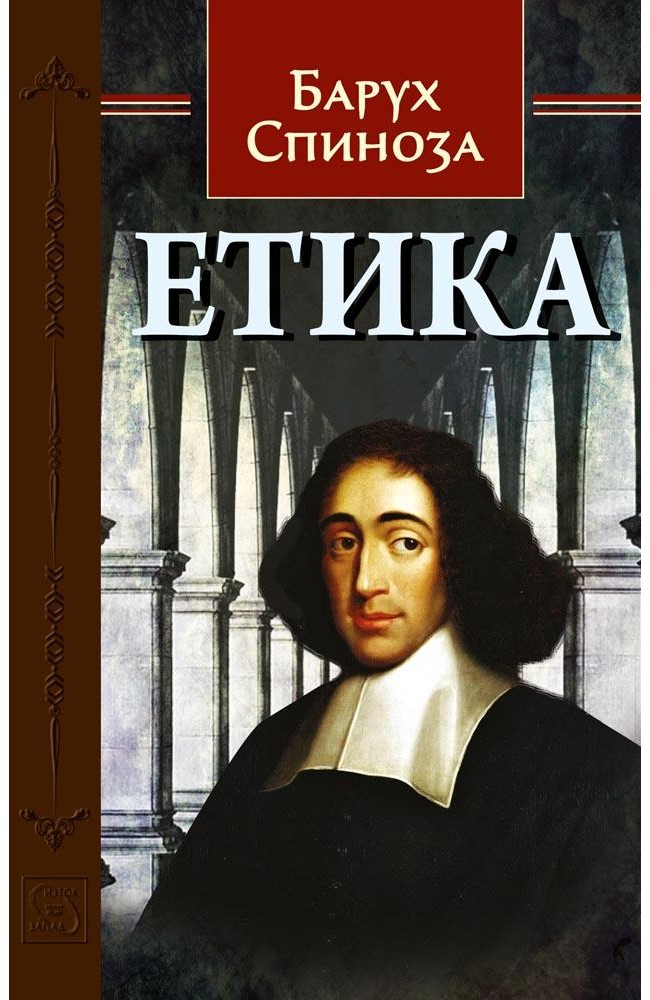
Baruch Spinoza
Baruch Spinoza (born Benedito de Espinosa; 1632 – 1677, later Benedict de Spinoza) was a Dutch philosopher of Sephardi/Portuguese origin. By laying the groundwork for the 18th-century Enlightenment and modern biblical criticism, including modern conceptions of the self and the universe, he came to be considered one of the great rationalists of 17th-century philosophy. Along with René Descartes, Sp…

A profoundly beautiful and uniquely insightful description of the universe, Benedict de Spinoza's Ethics is one of the masterpieces of Enlightenment-era philosophy.
Published shortly after his death, the Ethics is undoubtedly Spinoza's greatest work - an elegant, fully cohesive cosmology derived from first principles, providing a coherent picture of reality, and a guide to the meaning of an ethical life. Following a logical step-by-step format, it defines in turn the nature of God, the mind, the emotions, human bondage to the emotions, and the power of understanding - moving from a consideration of the eternal, to speculate upon humanity's place in the natural order, the nature of freedom and the path to attainable happiness. A powerful work of elegant simplicity, the Ethics is a brilliantly insightful consideration of the possibility of redemption through intense thought and philosophical reflection.
The Ethics is presented in the standard translation of the work by Edwin Curley. This edition also includes an introduction by Stuart Hampshire, outlining Spinoza's philosophy and placing it in context.
Baruch Spinoza (1632-77), later known as Benedict de Spinoza, was born in Amsterdam, where his orthodox Jewish family had fled from persecution in Portugal. Ethics was published in 1677 after his death, and his influence spread to the nineteenth century: inspiring the Romantic poets, winning the respect of Flaubert and Matthew Arnold, and moving George Eliot, who admired him as the enemy of superstition and the hero of scientific rationalism, to begin a translation of his works.
The noblest and most lovable of the great philosophers ... ethically he is supreme. - Bertrand Russell
Don’t miss a thing! Subscribe to our newsletter and receive our latest articles, offers, and news directly in your inbox.
Cookie settings
We use cookies to provide you with the best possible experience. They also allow us to analyze user behavior in order to constantly improve the website for you.