Welcome to the new website of “Iztok-Zapad” – quality books, knowledge, and inspiration all in one place!
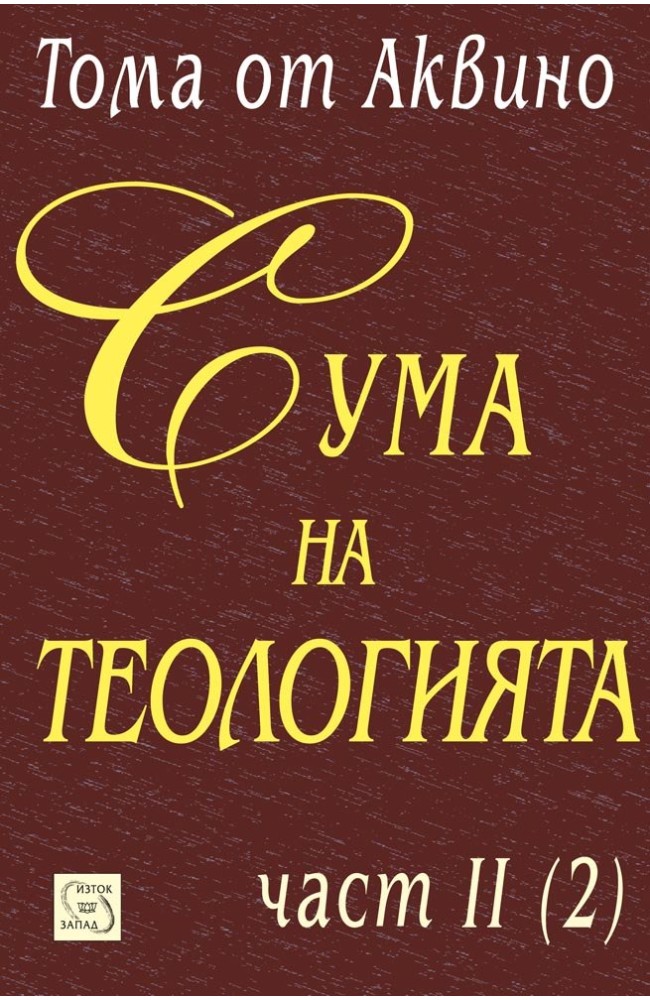
The Summa Theologica. Part II (2)

The Summa Theologica. Part II (2)

Sale -20%
  • 38.35€ / 75.00 лв.
  • 30.68€ / 60.00 лв.

Turn the Page. See the World: This month only, enjoy a 20% discount on all books.

Product Code:
505-01
ISBN
978-954-321-615-4
SKU
18.0105
Year
29-10-2009
Translation
from Latin: Tsocho Boyadzhiev
Pages
2504
Size
140/215 мм
Weight
2.45 kg
Cover Type
Hardcover
Genre
Medieval Philosophy, Philosophy of Religion, Тheology, Christianity
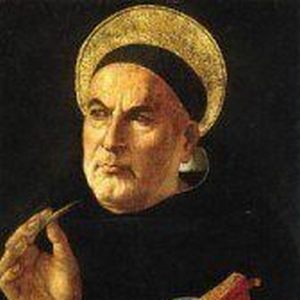
Thomas Aquinas

Thomas Aquinas

Saint Thomas Aquinas (1225–1274) was an Italian Dominican friar, a Catholic priest, and Doctor of the Church. He was an immensely influential philosopher, theologian, and jurist in the tradition of scholasticism, within which he is also known as the Doctor Angelicus and the Doctor Communis. The name Aquinas identifies his ancestral origins in the county of Aquino in present-day Lazio. He was the f…
Read more

Aquinas’s theories on ensoulment in Summa Theologica do reveal more about the understanding of embryology during the period. His segment on souls indicates that while he believed souls were immediately united with the body, he believed that upon fertilization, human life begins with a vegetative soul. This vegetative entity was credited with having nutritive, augmentative, and generative powers, according to Aquinas, but would require further development before it would gain sensitive and intellectual capacities. The document does, however, argue for the immediate ensoulment upon the conception of Jesus Christ in Question 33, wherein Jesus was instantaneously given a rational, perfect soul, as opposed to the imperfect soul of the vegetative or animal stages, and a human form. Summa Theologica indicates that even scientific understanding of embryology was limited at this time, as there is very little accurate content in the document’s description of development in utero.

Currently, the Roman Catholic Church relies heavily on the Summa Theologica in its discussions on theology, philosophy, and morality, though it has since parted ways with Aquinas when it comes to the ideas of delayed hominization, vegetative souls, and the Aristotelian view of embryology, among others. Overall, the Summa Theologica provides great insight into the prevalent Christian views on human development and ensoulment during the Middle Ages, though it is less representative of today’s scientific and theological beliefs on these matters.

There are no reviews for this product.