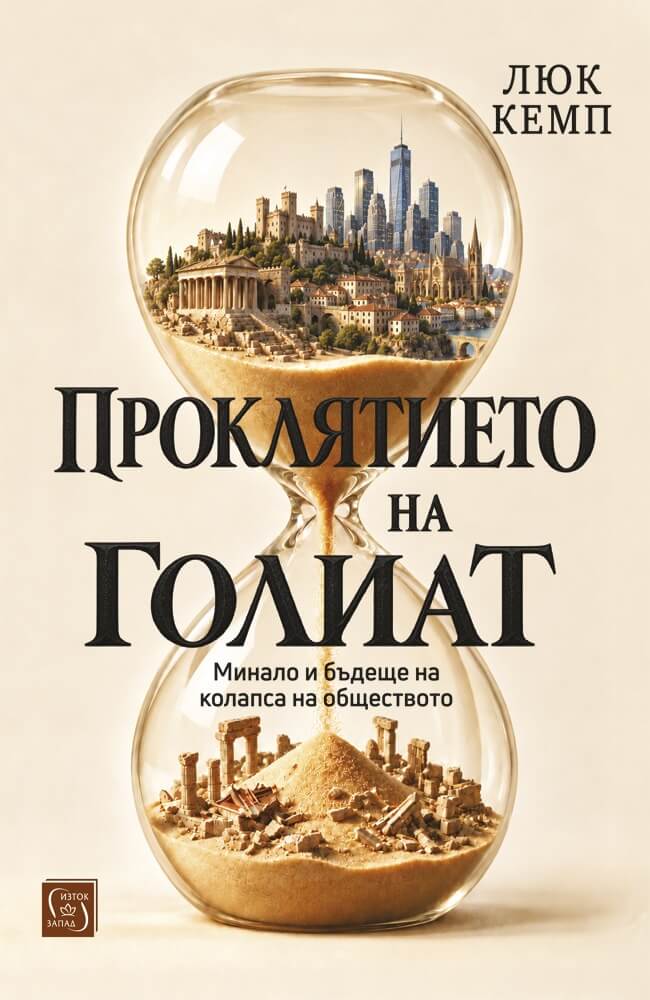
Luke Kemp is an Australian scholar, writer, and research associate at the Centre for the Study of Existential Risk at the University of Cambridge. His research interests include the history of civilizations, the collapse of societies, climate change, and global threats to humanity. He holds a PhD in International Relations from the Australian National University and has consulted for international…
This comprehensive study of the collapse of human societies, spanning from the Bronze Age to the age of silicon, digs through the ruins of fallen civilizations to understand the root causes of their downfall. Looking at today's fragile, interdependent global society, overshadowed by the threat of nuclear war and global warming, hardly anyone would blame us for asking: will we survive?
Cambridge scholar Luke Kemp conducts a historical autopsy spanning five millennia and hundreds of civilizational life cycles—from the First Dynasty of Egypt to the modern United Kingdom. Drawing on the latest discoveries in archaeology and anthropology, he reaches profound and often paradoxical insights into why societies collapse.
While books like Jared Diamond's Collapse focus on only a few specific case studies, Kemp's approach utilizes the broadest possible dataset. This enables him to identify overarching trends and the deeper causes of collapse that threaten our future—without sacrificing the engaging historical narratives that bring these pages to life.
Goliath's Curse is a stark reminder that societal collapse has both light and dark sides; that it does not necessarily mean a return to chaos or a Dark Age—and that to build a more resilient world, we must inject greater justice into it.
The era of grand narratives about the human past, stretching from Hobbes's Leviathan to Harari's Sapiens, has clearly not come to an end. Goliath's Curse once again turns the mirror of philosophical speculation toward history as a whole. Precisely because a mirror image is always warped by ideological assumptions, every book of such scope provides us with a piece of the puzzle that thinking individuals must piece together. Luke Kemp's book stands out because, rather than seeking the origins of civilization, it searches for the signs of its downfall. Drawing on numerous examples, the author introduces us both to the mistakes we have made in the past and to the ways we can avoid them here and now.
It should be noted that the experienced translator Svetlana Dicheva (who also translated Manuel DeLanda's famous A Thousand Years of Nonlinear History for "Iztok-Zapad") has managed to convey the author's thoughts with great precision, allowing herself neither personal interpretations nor additions to his words.
Don’t miss a thing! Subscribe to our newsletter and receive our latest articles, offers, and news directly in your inbox.
Cookie settings
We use cookies to provide you with the best possible experience. They also allow us to analyze user behavior in order to constantly improve the website for you.