"Undoubtedly the most powerful voice in Asia today."— Kenzaburō Ōe, Nobel Laureate
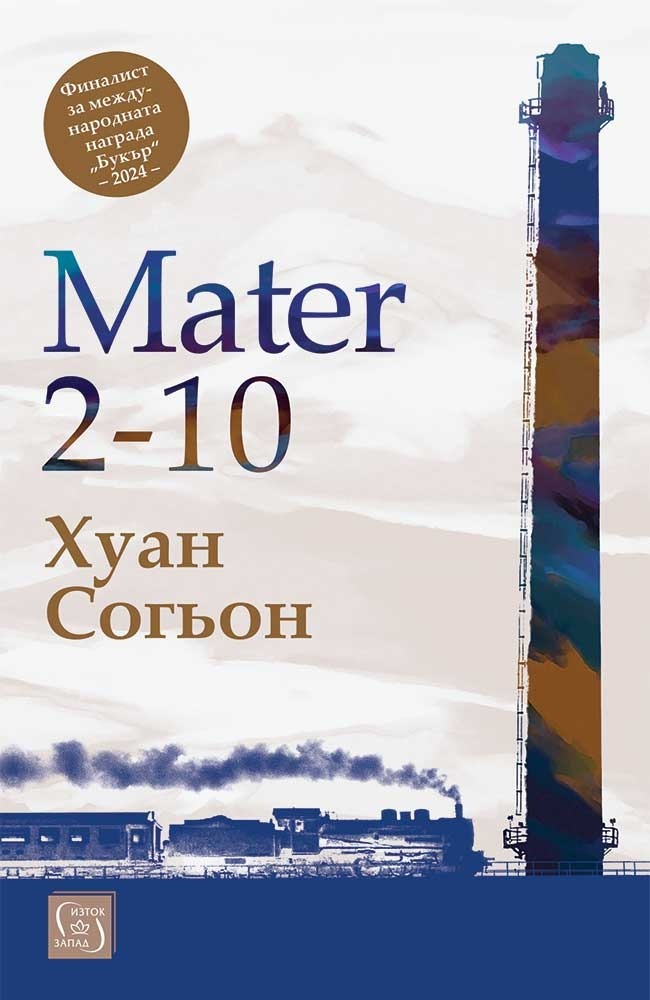
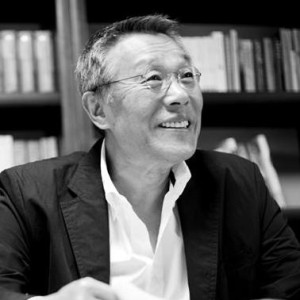
Hwang Sok-yong, the most iconic contemporary Korean writer, completed Mater 2-10 at the age of eighty. Behind him, the author already carries the turbulent history of the Korean Peninsula—a history in which he was a direct participant. Looking back from a nearly autobiographical perspective, he narrates the eras of Japanese colonial rule, the American military regime, the division of the peninsula, the Korean War, and the subsequent bloody struggle for democracy in the South. The hope for independence and freedom drives the characters forward along a thorny, blood-soaked path, only for them to realize at the end of each historical period that the old yoke has simply been replaced by a new one.
One of the characters in the book remarks: "Korea is a country of so many vicissitudes that one year here is equivalent to ten years in another nation. Ten years correspond to an entire century. All of us have aged by several hundred years."
Indeed, when the reader closes the book, they are left with the profound sense that the entire history of East Asia has unfolded before their very eyes. It is as if they themselves were riding the train from Seoul to the capital of Manchuria, watching through the window as thousands of kilometers of land zipped by—land ruthlessly divided in the global struggle for supremacy.
"Mater" is the name of a mountain-type steam locomotive, derived from the Japanese abbreviation of the English word mountain. During the Japanese colonial rule of Korea, fifty locomotives of the "Mater 1" series were manufactured based on an American design. These locomotives were built at the Gyeongseong (present-day Seoul) plant and the Japanese "Kisha Seizo" factory. Later, thirty-three locomotives from the improved "Mater 2" series were imported. They were manufactured by Kawasaki Heavy Industries and were primarily utilized in the northern part of the Korean Peninsula. The "Mater 2-10" locomotive was one of them. During the Korean War, it was captured by South Korean forces during their advance into the North; it then briefly serviced the Kaesong–Pyongyang line. During the retreat of the UN forces, it was halted at Changdan Station, south of Kaesong. To prevent it from falling back into the hands of the North Koreans, U.S. troops destroyed it on December 31, 1950, leaving only its metallic chassis. Discarded like an old tin can, the locomotive thus earned the nickname "The Chimney." For decades, its remains rusted inside the Demilitarized Zone (DMZ) between the two Koreas. In 2004, under a contemporary cultural heritage preservation program, the locomotive was relocated, and after two years of labor, it was restored. Today, it stands registered as Number 78 on the Cultural Heritage List of the Republic of Korea and has been on display at the Imjingak Unification Park since 2006. The rusted hull of the locomotive—facing north—bears the inscription: "The Iron Horse Wants to Run!"
Today, "Mater 2-10" has become one of the defining symbols of the Korean War. The locomotive features in textbooks, newspapers, magazines, state informational materials, and postage stamps. Its rusted iron carries a dual symbolism: on one hand, it reminds us of the Cold War and the anti-communist struggle, while on the other, it points us toward peace and reconciliation. Its multifaceted meaning periodically shifts depending on the era and the political power in place. "Mater 2-10," much like a mummy from an ancient tomb, has been chemically preserved, becoming a fossil of the era of Korea's division.
Don’t miss a thing! Subscribe to our newsletter and receive our latest articles, offers, and news directly in your inbox.
Cookie settings
We use cookies to provide you with the best possible experience. They also allow us to analyze user behavior in order to constantly improve the website for you.