Add products and take advantage now.: This month only, enjoy a 20% discount on all books.
Product Code:
1632-01
ISBN
978-619-152-721-2
SKU
02.0091
Year
19-11-2015
Translation
from Chinese: Petko Hinov
Pages
448
Size
140/215 мм
Weight
0.65 kg
Collection
Колекция "Изток"
Cover Type
Hardcover
Genre
China, Eastern Wisdom & Philosophy, Way of Life & Spirituality, Culturology,
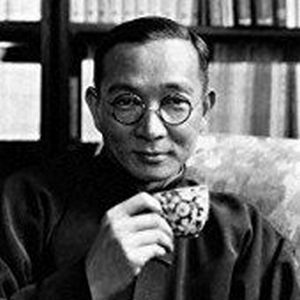
Lin Yutang
Lin Yutang (1895–1976) was a Chinese writer, translator, linguist, philosopher and inventor. His informal but polished style in both Chinese and English made him one of the most influential writers of his generation, and his compilations and translations of classic Chinese texts into English were bestsellers in the West. Lin was born in 1895 in the town of Banzai, Fujian. The mountainous region ma…
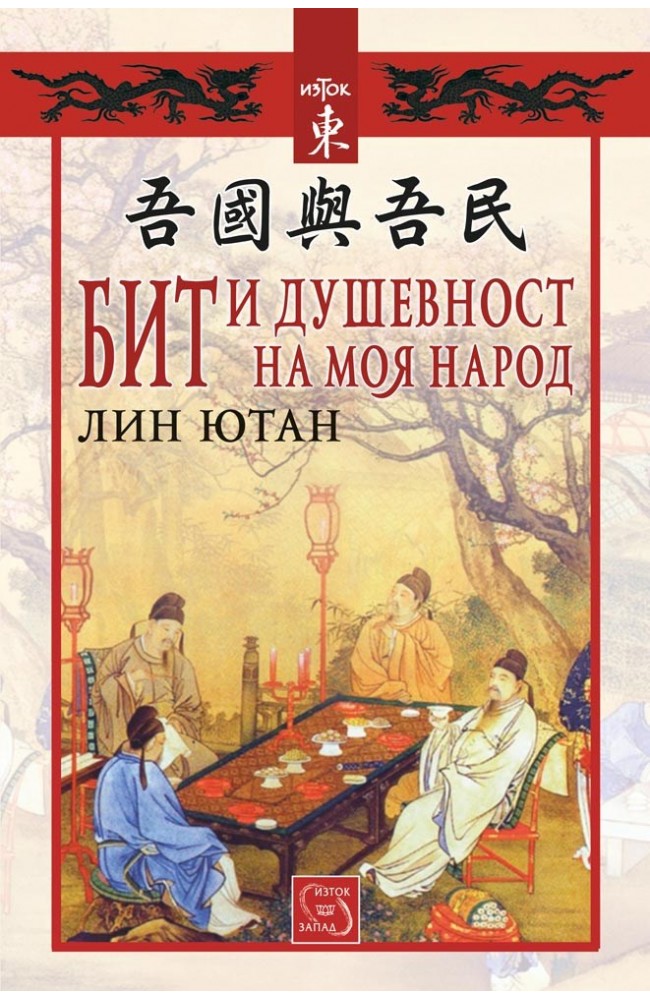
In this classic book Yutang Ling does a fantastic job of describing Chinese people, customs and culture in an understandable way for the Western reader. this book was the first of it's kind, Ling being a rarity as he was fluent in both English and Chinese, having been born in China but growing up in America. This extremely popular book will prove to be a fascinating read, and is highly recommended on the bookshelf of anyone with an interest in different cultures and societies.
In this atmosphere of change, the present intellectual youth of China has grown up. Where the fathers imbibed the doctrine of Confucius and learned the classics and revolted against them, these young people have been battered by many forces of the new times. They have been taught something of science, something of Christianity, something of atheism, something of free love, something of communism, something of Western philosophy, something of modern militarism, something, in fact, of everything. In the midst of the sturdy medievalism of the masses of their countrymen the young intellectuals have been taught the most extreme of every culture. Intellectually they have been forced to the same great omissions that China has made physically. They have skipped, figuratively speaking, from the period of the unimproved country road to the aero plane era. The omission was too great. The mind could not compensate for it. The spirit was lost in the conflict. The first result, therefore, of the hiatus was undoubtedly to produce a class of young Chinese, both men and women, but chiefly men, who frankly did not know how to live in their own country or in the age in which their country still was. They were for the most part educated abroad, where they forgot the realities of their own race. It was easy enough for various revolutionary leaders to persuade these alienated minds that China's so-called backwardness was due primarily to political and material interference by foreign powers. The world was made the scapegoat for Chinas medievalism. Instead of realizing that China was in her own way making her own steps, slowly, it is true, and somewhatponderously, toward modernity, it was easy hue and cry to say that if it had not been for foreigners she would have been already on an equality, in material terms, with other nations. The result of this was a fresh revolution of a sort. China practically rid herself of her two great grievances outside of Japan, extraterritoriality and the tariff. No great visible change appeared as a consequence. It became apparent that what had been weaknesses were still weaknesses, and that these were inherent in the ideology of the people. It was found, for instance, that when a revolutionary leader became secure and entrenched he became conservative and as corrupt, too often, as an old style official. The same has been true in other histories. There were too many honest and intelligent young minds in China not to observe and accept the truth, that the outside world had very little to do with Chinas condition, and what she had to do with it could have been prevented if China had been earlier less sluggish and her leaders less blind and selfish. Then followed a period of despair and frenzy and increased idealistic worship of the West. The evident prosperity of foreign countries was felt to be a direct fruit of Western scientific development.
Don’t miss a thing! Subscribe to our newsletter and receive our latest articles, offers, and news directly in your inbox.
Cookie settings
We use cookies to provide you with the best possible experience. They also allow us to analyze user behavior in order to constantly improve the website for you.