
Innovations Are Generating an Ever Growing Number of Internal Conflicts
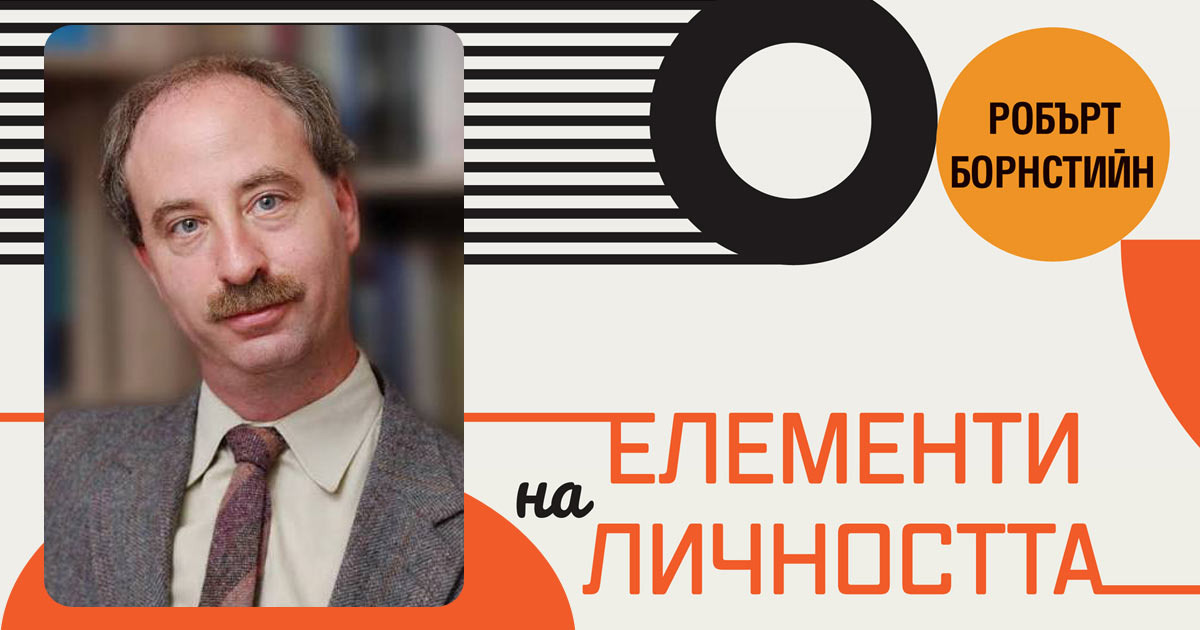 Interview with Dr. Robert Bornstein, Author of “Elements of Personality: Discovering Connections”
You argue that for a personality theory to be considered valid and useful, most of its predictions must withstand empirical testing. You are also one of the leading voices advocating for multi‑method personality assessment, emphasizing that different methods reveal different layers of personality. Which assessment method currently engages your attention the most, and what do you hope it will contribute to the field?
This is an excellent question, and one that I’ve thought about quite a bit in recent years, as technological innovation has broadened the range of assessment techniques available to psychologists. I believe that ambulatory assessment is one of the most exciting data-gathering innovations in contemporary psychology.
For those unfamiliar with the term, ambulatory assessment refers to an array of methods that share a common element. Ambulatory assessment techniques involve prompting a research participant by sending messages to their mobile device at random or predetermined intervals. When the participant receives a prompt, they provide a brief description of where they are, what they’re doing, how they’re feeling, and other relevant information, allowing the researcher to understand what is going on in the participant’s life at that point in time. It’s a wonderful experience-sampling method that is in many ways superior to more traditional self-report (questionnaire) responses. Unlike self-reports, ambulatory assessment responses occur “in the moment”, and therefore are not affected by memory biases and distortions that can reduce the accuracy of retrospective reports.
It is widely accepted that certain personality traits have a genetic basis, while temperament and personality gradually emerge through family dynamics, culture, socialization, and learning. But do you consider the possibility of a stronger form of innateness – that some individuals might be born with inherent predispositions toward harmful, malevolent, or even evil behavior? Or do you believe that personality is entirely shaped by genetics, biochemistry, environmental influences, and developmental experiences?
Evidence indicates that approximately 40-50% of the variability in core personality traits (such as those that comprise the Five Factor Model) are attributable to genetic factors, with most of the remaining variability reflecting environmental influences of various kinds, including family dynamics, culture, socialization, and learning. When we conclude that certain people are inherently predisposed toward malevolent or evil behavior, I believe that we are referring to the influence of genetics, using a slightly different terminology.
That being said, it is also important to keep in mind that children who receive “harmful” genes from their parents often grow up in households where the parents themselves have these harmful genes, creating an environment wherein the child is exposed to negative behaviors within the home. Recent research involving children who are at risk for exhibiting antisocial tendencies later in life suggests that both factors–harmful genes and problematic parental behavior–increase the likelihood that the child will eventually become antisocial.
Beyond these risk factors, those children who are at greatest risk display what have come to be called “callous-unemotional traits” during early childhood. Unlike most people, these “callous-unemotional” children do not show typical patterns of sympathetic nervous system arousal in response to perceived threat, nor in response to the suffering of others. Possessing such traits is a strong indicator of serious mental health problems and legal difficulties later in life.
Culture plays a significant role in shaping personality development and interpersonal dynamics. Cultural norms vary across societies, but what changes do you expect globalization and constant connectivity through social media to bring? For example, do you foresee the erosion of traditional taboos and the emergence of new ones?
Although the impact of culture on personality development and interpersonal behavior is well-established, researchers continue to explore the ways that peoples’ functioning evolves in response to changing cultural norms. We know, for example, that when societies which have traditionally been sociocentric incorporate more individualistic standards and values, this creates conflict within individuals as they struggle to incorporate these new standards and values into longstanding ways of behaving. These types of internal conflicts occurred in Japan following World War II, especially among men, as Japanese culture became increasingly westernized.
The current situation, wherein social media related globalization is increasingly common, even in countries that do not have extensive online infrastructure, is likely to accelerate this process. Although it is tempting to focus primarily on the negative consequences of this globalization–and there will almost certainly be some negative effects–it is also important to recognize that today’s easy online access may have some positive consequences as well.
In Kurt Vonnegut’s Breakfast of Champions, the breakdown of Dwayne Hoover is attributed to the interaction of “bad chemicals” in his brain and “bad ideas” from a sci‑fi novel – what Vonnegut calls the “yin and yang of madness.” In light of this metaphor, do you think our growing technological dependence adds a new dimension to this interplay? Are we likely to see the emerging of new forms of psychopathology?
This process may already be underway, as new diagnostic categories like Internet Gaming Disorder have been proposed for inclusion in future editions of the diagnostic manuals. Beyond the possibility of new technology-related diagnostic categories, our growing technological dependence may also influence how existing psychopathologies are experienced and expressed. I’ve taught an undergraduate personality disorders course for nearly 40 years, and for much of that time my material on schizoid personality disorder included some discussion of how schizoid people try to find ways to venture out into the world without feeling overwhelmed by social contact (for example, finding a job like nighttime security guard, where minimal social interaction is required). Now schizoid people–and introverted people more generally–can connect with others online, enabling them to have social contact “from a distance”.
You describe cognitive distortions as biased, inaccurate perceptions of ourselves, other people, and the world – often involving jumping to conclusions and overgeneralization. In today’s environment of overwhelming information flows, much of which is deliberately misleading or produced by self‑appointed “experts,” what do you believe can preserve our capacity for critical thinking?
This is a wonderful question, and a complicated one as well. At least two factors are at play here, in my view. First, it’s important to keep in mind that the human mental apparatus was not built to maximize accuracy in thinking and perception, but to balance accuracy and efficiency. In other words, we try to be accurate in our thinking and perceiving, but–as social psychologists Susan Fiske and Shelley Taylor observed–humans are “cognitive misers”. We don’t like to spend too much mental energy on everyday tasks, preferring to “hoard” cognitive capacity so it will be available if we need it in an emergency.
The second important factor, as noted in the question, has to do with the quantity and quality of information we receive. When we are overwhelmed with input from social media and other sources, our limited cognitive resources do not permit us to evaluate this input as critically as we should, and it is easy to be misled by inaccurate or misleading information. One obvious solution is to spend less time on social media, and evidence suggests that people who do that are better at separating accurate from inaccurate media inputs. Another potential solution is to do a better job teaching critical thinking skills to children and adolescents. That will require us to prioritize critical thinking in elementary and high school classrooms far more than we currently do.
If we consider authority figures as a key factor in personality development, how should we understand the current erosion of traditional sources of authority? What kinds of role models can we offer children and adolescents when we increasingly witness chaotic, neurotic, and often hypocritical behavior even among prominent global leaders?
I agree completely with your assessment of the current political climate, and it worries me a great deal. I think this situation is causing impressionable young people to adopt flawed leaders as role models, which is obviously a very bad thing. It is also causing people–at least here in the United States–to become cynical about politics and not bother to vote, thinking that “all politicians are dishonest” or “all politicians are the same”. I do not think that we can count on the current group of global leaders to alter their behavior dramatically; they are far too invested in maintaining the status quo. If admirable role models are to emerge during the next few years, they must come from other areas (news reporters, writers, artists, academics) rather than from politics.
Psychology is an expansive discipline that draws on many fields – anthropology, physiological biochemistry, cultural studies, and more – which makes broad generalizations difficult. But what can we say about its fundamental nature and origins? In your view, is psychology primarily the product of an innate scientific curiosity, or does it reflect an evolutionary need to understand and predict the behavior of others?
Although innate curiosity undoubtably plays some role (humans are, after all, very inquisitive creatures) I believe that psychology is rooted in our need to understand and predict other people’s behavior. Evolution certainly played some role in this process: Those of us who are particularly skilled at anticipating others’ behavior are more likely to have reproductive success than those who are less skilled in this area. With that in mind, it is important to recognize that although evolutionary forces have likely contributed to our ability to decipher subtle interpersonal cues and predict other people’s responses, as a group humans are not always accurate perceivers and interpreters of social information. We rely on cognitive shortcuts of various kinds–what Kahneman and Tversky referred to as heuristics–and in doing so we preserve mental energy for other tasks, but give up some predictive accuracy in the process.
Which book do you wish you had written – both on a personal level and in terms of your professional aspirations?
It’s nice to end this interview on an existential note. This is an issue that I’ve thought about quite a bit, especially now that I’ve entered the later stages of my career (the 2026-2027 academic year will be my 42nd year of full-time teaching). And I can offer two answers to this question.
For many years I’ve wanted to write an undergraduate personality text, but the everyday demands of academic life got in the way. Between teaching, research, service, and (most important) mentoring students it is hard to find time to take on a demanding project like writing a textbook. Ironically, it was the COVID-19 pandemic that finally afforded me the time to begin writing Elements of Personality: Discovering Connections. We were all working from home for several semesters, and since there were fewer meetings and I no longer had to commute to work, there was more time available to take on such a daunting project. I’m very happy with how the book came out, and glad that I was able to complete the project during this phase of my career.
Does that mean I’ve finished writing–that there are no more books left in me? Time will tell, but I do believe I have unfinished work in this area. There are no great books on personality disorders available for undergraduate teaching, which is hard to believe given the importance of this topic. I would like to write the definitive undergraduate textbook on personality dysfunction, integrating theory, research, and clinical application, and providing students with an evidence-based resource for understanding narcissism, dependency, and other forms of personality pathology.
Interview by Vladimir Tsankov
Products related to this post

Comments