
Trump Has Mastered the Economic Hit Man Strategy
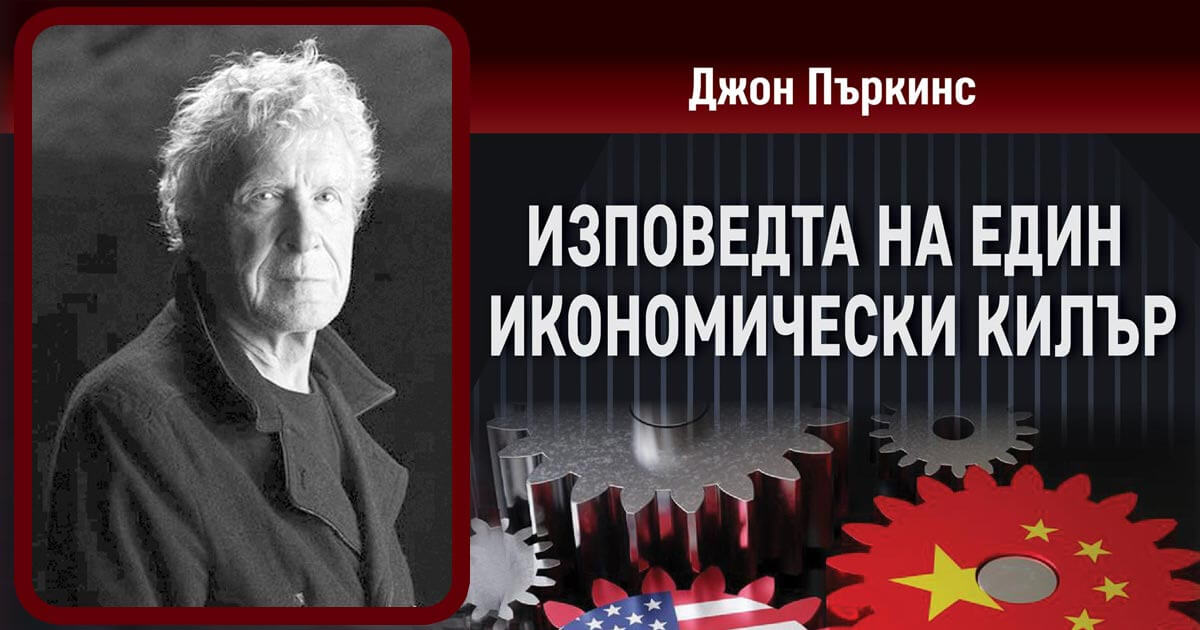 Interview with John Perkins, Author of Confessions of an Economic Hit Man
How does a person find the courage to
speak publicly about the things you describe, knowing how easily human lives
become expendable in schemes that manipulate nations and redirect trillions of
dollars?
I’m motivated by the knowledge that my daughter and
grandson are going to inherit the world I’m helping to shape. I would gladly
risk my life for their lives and futures.
I also grew up with a deep admiration, instilled in me
by my parents, for the courage of my ancestors who fought in the American
Revolution back in the 1770s. They had the fortitude to stand up for what they
believed was right. I was taught that having the courage to fight for your
convictions is an essential part of being a human being, a good citizen, and a
good parent.
What was the turning point that made you
reject your role in the covert system you depict and decide to speak publicly,
despite the personal risks involved? Was the death of Panama’s leader Omar
Torrijos the decisive moment in that transformation?
Omar did not die until after I had made the decision.
However, what he told me about the fact that I was being lied to, was lying to
myself, and to others about the benefits of the work I did, was instrumental in
taking me to the turning point.
The actual turning point came when I was on vacation,
renting a sailboat in the Virgin Islands. Late one afternoon I anchored the
boat in a little cove off St. John Island and rowed the dinghy ashore. I
climbed a hill to the ruins of an old sugar plantation. I sat there and looked
out at the Caribbean. The sun was setting and I was surrounded by beautiful
blooming Bougainvillea flowers that interwove themselves into the stone ruins
of the sugar plantation. It seemed idyllic.
And suddenly I realized that this plantation had been
built on the bones of thousands of slaves. After that, I had to admit that the
whole hemisphere was built on the bones of millions of slaves and then that I myself
was a slaver. I was enslaving people with debt. I made the decision at that
moment never to do it again and to commit to using what I had learned to turn
things around.
I went back to my headquarters in Boston, Massachusetts,
into the president of the company’s office, and quit.
Which country case, documented in your
book, provides the clearest and most ruthless example of the debt‑leverage
mechanism you witnessed?
It’s difficult to pick one. There were significant differences
in all of them, although in each case they were driven by the four pillars of
the economic hitman strategy that I describe in my upcoming book, The Art of
the Steal: Trump and the Economic Hit Man Presidency. These are fear, debt,
anxiety over scarcity, and divide and conquer.
Indonesia is perhaps the most concise example of how I
used all four pillars.
Fear: I emphasized the fear that because the North
Vietnamese Communists were winning the Vietnam War, the rest of Southeast Asia,
including Indonesia, would fall like dominoes to Communism.
Debt: To protect itself from the communist invasion,
and to pull itself out of deep poverty, I convinced Indonesia that it needed to
take huge loans – using its oil resources as collateral. We would apply the
loans to developing its electrical power grid and industrial base. In the end
Indonesia would be saddled with a debt it could not repay; we had caught it in
the debt-trap –we could dictate many of its policies, take possession of its
oil at very cheap prices, and enlisted support at the UN and many other places.
Anxiety over scarcity: It was easy to point out to the
Indonesian government that they were a very poor country, didn’t have enough
education, healthcare, food, housing and all the other symbols of success and
prosperity. They needed us, our loans, and technologies to pull them out of dire
poverty.
Divide and conquer: I highlighted the dangers of their
neighbors and the approaching “red tide of communism that was sweeping down
from Vietnam” and also the communist militias and terrorist organizations that
were becoming increasingly prevalent throughout Southeast Asia.
What is the single strongest weapon of an
Economic Hit Man –
and what makes his targets so vulnerable to it?
The strongest weapon is the combination of the use of
the four pillars of the economic hit man strategy. Although they are four
distinct pillars, they all come together to support the overall strategy. A gun
is a good example.
A gun needs ammunition, a firing mechanism, structural
integrity, and someone to shoot it. These are all separate and yet each one is
part of what we might think of as an overall strategy.
You speak about “the jackals” – the CIA or other intelligence
agencies stepping in with threats, bribery, or orchestrated coups when the
Economic Hit Man fails to corrupt a foreign leader. And when the jackals fail
as well, military intervention becomes highly probable. Is there any chance of
salvation for a country at all if it has become a target of the corporatocracy
you expose?
I believe the greatest chance for salvation is through
unity -- for the country to make alliances with other countries, both
neighboring ones and others across the globe. That’s how the United States
defeated England during the American Revolution. It’s also how Europe and
America stopped Hitler.
I’ve gone on record telling African and Latin American
nations that they need to come together and demand that their resources be used
to help their people, as well as being used in industries around the world.
For example, Africa is endowed with rare minerals and
other resources that are necessary for the emerging high-tech industries. Most
African countries don’t have the technology to mine these resources. However,
when they sign on for technological assistance, they should also insist that
they participate in the value added from these resources. Instead of just
mining lithium, also insist that that lithium be processed within their own
country and used right there to make batteries, etc.
The economic hit man strategy pits various African
countries against each other. Their best protection is to recognize that they
must unite and make these demands together. The world needs their resources.
The African nations need technology from foreign countries. They also must use
the resources to pull their own people out of poverty and bring them into
prosperity. And the only way this will work is when the various African countries
support each other.
Unified groups are hard to defeat. Competing ones can
be bribed, manipulated, and suppressed one at a time.
As someone who understands these
mechanisms deeply, an Economic Hit Man should be able to recognize the schemes
much more easily once they are already in motion. Where do you see the signs
most clearly today? In the efforts to remove Nicolás Maduro in Venezuela – and his extraction to the United
States? In the U.S. drive to secure access to rare‑earth elements and other
critical minerals in Ukraine?
Venezuela and Ukraine are good examples. So are the Iran
War, the Israel- Palestine conflict, the attempt to constantly blame the
world’s problems and those of the United States on “the other,” and many of the
other examples I provide in my new book.
One example: The Trump administration blames the US’s
problems on migrants, the press, environmentalists, health experts, Democrats.
And on, and on. . . anything to ignore the real systemic problems that are
created by a growing oligarchy.
As detailed in The Art of the Steal, Trump has
mastered the economic hit man strategy of convincing people to focus on the
symptoms of the disease rather than the disease itself.
You knew Graham Greene. His novel The Quiet American is often described as a prophecy of American foreign policy. What, however, did even he fail to foresee about the world we live in today?
I think he failed to see the extent to which a US
president could gain control over the other two branches of government. The US
Constitution envisions a balance between the executive, the legislative, and
the judiciary. Trump has proven that the balance is vulnerable to manipulation.
Where do you see the countries of Eastern
Europe today, including Bulgaria – are they still potential targets, or does EU
membership provide them with some degree of protection? And do you have
personal observations about the interests directed toward this region after the
collapse of the Soviet Union?
The divide and conquer pillar is very much at play in
Europe today. Trump has set in motion the wheels to end NATO and the EU as we
know them. His threat to invade Greenland has raised deep concerns about the
possibility of NATO having to take actions against the United States.
I’ve never actually worked as an economic hit man in
Europe; therefore, I don’t have personal observations. I will say, however,
that Trump’s actions to pull the US out of a number of agreements, including
the Paris Climate Change ones has weakened what once was considered a strong
and very successful relationship between the United States and most of Europe.
This plays into Russia’s hands and also into China’s hands.
Interview by Vladimir Tsankov
Products related to this post
Comments