
“The best way to die? Caesar would say: ‘Unexpectedly!’”
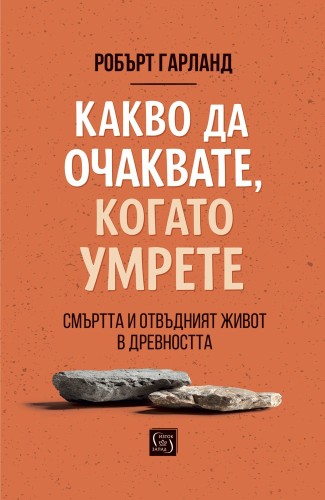
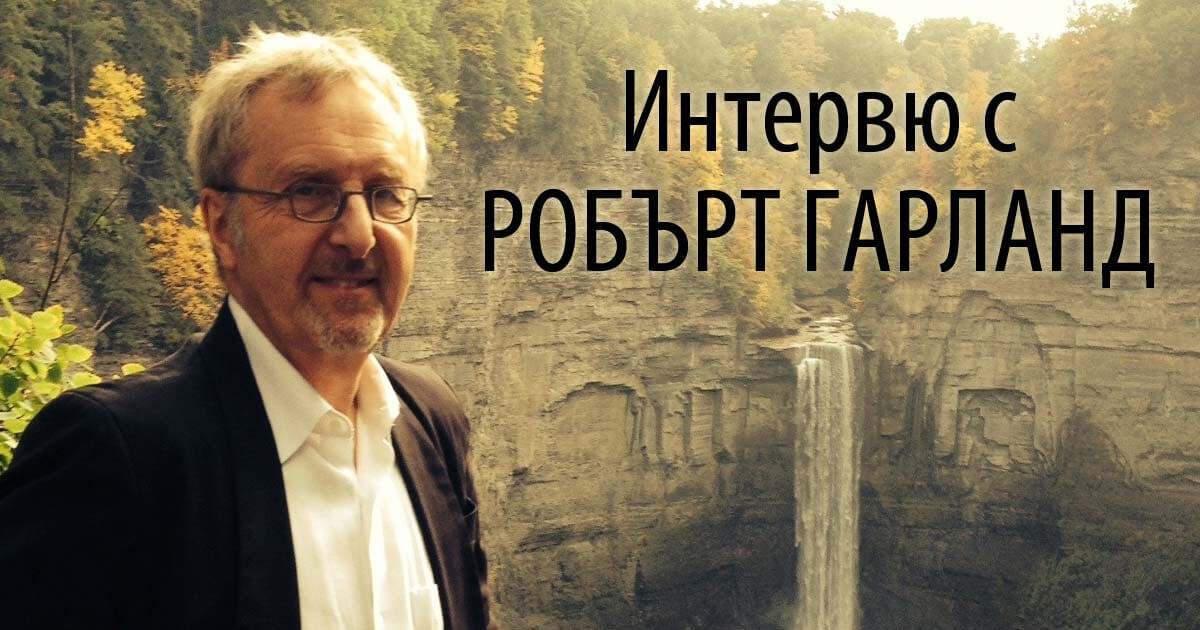 Interview with Robert Garland, author of What to Expect When You AreDead
Probably the first question, you will find
it some kind of provocative, but which is the best manner to die?
Well, do you know, I’m a great admirer of Julius
Caesar. And on the night before he was assassinated by the conspirators in the
Senate, which might not seem a very good place to die or a very good way to
die, he said in one word, “Unexpectedly.” And whether he was expecting death,
we can’t know, of course. But I think it was a very wise reply, because
allegedly that was the topic of conversation when he went to the house of his
master of horses, Lepidus, the night before he died. And in the Greek model of
a symposium, where you would choose a subject for conversation, that was the
subject of conversation. What is the best way to die? And apparently, Julius
Caesar was, as he often did, working away at papers. He was a great
administrator. He just looked up, and he said that one word, “Unexpectedly.”
I will agree with you from my point of
view. It’s probably the best manner. Do you see any serious differences between
the concepts for the nether world of the ancient Greeks and the Romans?
Well, that’s, of course, covering a great period of
time.
When we begin, of course, with Homer, and Homer
presents the afterworld, Hades, as a place of indiscriminate misery, but not
torture. The dead supposedly are insubstantial. They are fleshless, so that
when they meet Odysseus, who goes down there, they just try to embrace, and
they go through each other, so to speak. And it’s cheerless, it’s dark, it’s
dank. Greece is a wonderful country for its beautiful sunlight. And to be
deprived of sunlight is a metaphor for death, for being dead, to not see the
light of the sun. So, Hades is a place of indiscriminate misery, with the
exception that there are two or three felons who are suffering. The most famous
one is Tantalus, who is tantalized by not being able to reach out to the grapes
or the water, and so he’s dying, so to speak, of thirst.
Now, over time, the Greeks seemed to have become
anxious about death.
And to have sought ways to think that maybe it isn’t a
place of indiscriminate misery, which led to the rise of the so‑called mystery
religions, of which the most famous is the Eleusinian Mysteries, which was
centered at Eleusis, about 30 miles west of Athens. And if you underwent
initiation, then you would be living, we’re not told in any exact way, but you
would be living a blessed life in the afterlife. At some point, the Greeks do
seem to have also become fearful that there might be some punishments. And in
Plato’s Republic, an elderly figure called Cephalus says that when people get
to the end of their lives, they begin to fear the things that they would not
have feared when they were young about what might be awaiting them in the world
to come, various kinds of terrors. But he doesn’t really specify.
Now, when we get to the Aeneid of Virgil, which is
written around the beginning of the first century, then it’s quite clear that
the fear of the afterlife has taken a hold on learned people like Virgil. And
if it’s taken a hold on learned people, I think it’s very likely that it has
taken a hold on a large sector of the general population. So, in very broad
terms, and waiting in the wings is Christianity, there seems to have been a
movement from the afterlife being the same for everybody in Greek belief,
moving towards a belief that there is something for the elect if they undergo
initiation, don’t have to be good or anything like that, just do the job of
going to Eleusis and getting initiated. And then, by the time we get to the
period leading up to Christianity, that fear of the afterlife has taken a
strong hold over a large number of people.
Now, that’s not to say that there weren’t a lot of
people who just thought, “No, there’s nothing awaiting us.” And this wonderful
Roman letters that are placed sometimes on tombs, N‑F‑F‑N‑S‑N‑C, which stands
for “I was not,” non fui, “I was,” fui, “I am not,” non sum, “Non curo,” I
don’t give a damn.
So I always think that’s a… To put that on your
gravestone is making a very strong statement.
It is known that the language of the
Etruscans is still not deciphered, and what we know about their ideas for the
afterlife is based mainly on the wall paintings from their tombs. In what
degree can we have confidence on contemporary scientific interpretations
because we have no texts?
No, exactly. And that, of course, pertains to any
period of history, obviously, leading up until the invention of writing. I’m
always provoked by the fact that there is evidence that in the middle
Paleolithic period, there were the beginnings of a sense that the dead were
honored and possibly even that they would enjoy an afterlife, because you get
one or two objects. There’s one in which a mandible of a boar is placed over a
body. Does that mean that the dead is going to use it in the afterlife, or is
it an object of personal significance to them? So, with the Etruscans, we are
very much confined to whatever we can make out of the illustrations, the
frescoes that they placed in their tombs. Now, it does seem very likely that
they do tell us something significant about the Etruscan afterlife.
We see tombs which are illustrated with people
banqueting, for instance. Now, we might think, “Well, that’s just what they did
in the world, of course.” But there is evidence that other peoples also
believed that banqueting in the afterlife was way to go, as the American
expression has it.
And Plato, in fact, mocks this idea. He says the
afterlife is eternal drunkenness or something like that. But I think it does
suggest, and particularly since Etruscan burials of wealthy people were very
much like houses in streets and so forth, it does seem to replicate the idea of
life here and now. And we also get images that are very disturbing, which
suggests that there was fear of the afterlife. So the Greek Charon, who’s a
sort of benign figure who helps you to get across the River Styx, he turns up
with a hammer and his name seems to be Charun, and maybe he knocks the heads of
the people that he’s going to see to the underworld. Not a very pleasant
thought. But still, as you rightly say, it’s very difficult to determine
whether images are images of this world or images of the world to come.
And I particularly love a sarcophagus, which is in the
Boston Museum of Fine Arts, which shows a couple lying in bed together, covered
by a sheet, and it’s clear they’re enjoying one another physically.
On page 76 in your book, you write, “I
think it is fair to say that both the Christian belief and the Muslim belief in
a postmortem judgment have added greatly to the sum of human misery.” Why so
skeptical?
Why am I skeptical of Christian and Muslim belief in
the afterlife?
Well, I always think of what Shakespeare says, “It’s
the undiscovered country from which no traveler returns.” And, I mean, this is
obviously a very personal question, and I can only answer it in a very personal
way. I believe in human goodness. Let me just say that absolutely, 100%, and I
happen to think that it should not be contingent on religious belief. And one
could say, I grew up as a Christian and someone might say, “Well, the fact that
you believe in the doctrine of love and the importance of love and goodness and
so forth is because you grew up in a Christian environment.” And that may well
be so, but I still think that it is not necessary to think that that goodness
and that love that one should show towards people needs to be rewarded in the
afterlife. There’s that lovely little chant that people sing at Christmastime.
Santa says, “Be good, for goodness’ sake.”
And I think that that is my motto really. I do not in
any way look down on people who happen to have a belief, and that belief can be
very powerful, and it can be very inspirational as well. But I like to quote
the Athenian sophist Protagoras, who said, “Concerning whether the gods exist
or not, I have no opinion. There are many obstacles to knowledge. The
complexity of the subject and the shortness of human life.”
Preparing your book you used source texts
pertaining to different civilizations and cultures. Which text do you think is
most difficult for understanding by today’s person?
Because we have to acknowledge, we’ve already
acknowledged that visual evidence is limited in what it can tell us. It’s a
fact that whereas the Egyptians provide us with a lot of visual evidence about
what to expect in the afterlife, the judgment before Osiris, the negative
confession, when you are supposed to deny that you’ve done anything bad, other
cultures have not provided us with much visible visual evidence.
For instance, Jewish or obviously Muslim or indeed
Christian. So, we have to say that that’s set aside, but it’s difficult when we
get it to know, as we were just talking about in the previous question about
the Etruscans, how to interpret it. Now, when we come to literary evidence,
we’ve got literary evidence, we’ve got archaeological evidence as the other two
main sources, I would say. The literary evidence we have to acknowledge is
written by the elite, and we were talking about Virgil a moment ago. Now,
Virgil was highly educated, of course, and he had a very elaborate sense of
what the afterlife consisted in, the topography of his view of Hades, he never
mentions the word, by the way, Hades. He calls it by other names. But what he
presents there is extremely elaborate. Now, should we think that that
represents the average Roman’s view of the afterlife? Well, certainly not, even
if he believed, he/she believed in an afterlife.
So, we always have to acknowledge, and this is true,
of course, of every single investigation into antiquity that most of our
literary evidence is written by the educated, by the elite.
And men as well, one has to say. Not many women, of
course.
So, that’s a problem. And I could say more about that
because when you come to looking at any text, I think you have to bear in mind
that this is privileged, and this is not necessarily representative.
And archaeology, of course, is very valuable in terms
of the types of grave gifts that people put with the dead, the type of
monuments that they built to them. But again, this tends to be elitist because
the great mass of people were shoved into the ground with basically nothing,
and their graves have not survived. But certainly, the archaeological evidence
does point to the fact that people did believe that you needed things with you
in the afterlife, that certainly Tutankhamun, for instance, was buried with
enormous wealth that he was expected to have at his disposal when he entered
the afterlife.
As for the most difficult or the most complicated
source, now…
This is a question of point of view. For
me, the most difficult text for understanding are the Egyptian texts. We talk
about translations, but it is interesting for me to know your experience.
Yes. Well, I think I agree with you. I mean, the
problem is that when we are outside a religious system, it is very difficult
for us to get inside, for us to imagine that religious system. I mean, I might
almost say that what really puzzles me most is, if we go to the New Testament,
to the Gospels, what exactly did Jesus think about the afterlife? You know, he
talks about the Kingdom of Heaven and so forth, but what exactly did that mean?
And also, we think that Christianity introduces, which it did in many ways,
although it had its forerunners in clearly Roman belief, as we were talking
about. But did he really believe in hell? He talks about the wailing and gnashing
of teeth and so forth. But is this a sort of permanent state of the fiery
furnace, et cetera, that certainly in the Middle Ages gained control over
people’s thinking within the church? So that, to me, is something I always
puzzle over. One of the reasons there’s a book which the English philosopher
Bertrand Russell wrote, called Why I’m Not a Christian. And one of the
reasons he says, “I’m not a Christian,” is he says, “I can’t sign up for any
religion, and its forerunner, precursor, Jesus, who believed in eternal
punishment, because eternal punishment just does not seem to him to be humane,
nor does it to me.” But when you look at the Gospels very closely, you get no
very clear idea as to whether that was a belief that Jesus held. So, I would
say that that is what really puzzles me most of all.
Yes, Jesus was very laconic in relation to
the afterlife at all. Saint Paul says, “If you are scared by death, believe in
the resurrection.” What do you think about his counsel?
Believe in the resurrection. Well, yes. I mean, I’ve
already declared my position, really, on that one. I mean, I am rootedly
committed to the here and now. Of course, that is a consolation for those who
believe, and it may be a very strong consolation, and I don’t criticize it. On
the other hand, there’s many things I don’t admire the Greeks for, but one
thing I do is that they faced death without such a consolation.
Because the gods, the Olympian gods, had no interest
in humans once they died. And this is exemplified by Euripides’ great play, the
Hippolytus. When Hippolytus is on his deathbed, and he’s about to die,
he’s been devoted completely to the goddess Artemis, and he has abhorred
Aphrodite, her opposite, so to speak, and he’s done everything to promote her
belief system, one might say, and as Greeks would do, to sort of… rather like
saints. They might be more drawn to one god or goddess than another. And
Artemis says to him, “Oh, I’m sorry, I’ve got to go now, because I can’t be
polluted by the dying breath of a mortal.” And so Hippolytus faces the end, as
it were, without any kind of consolation whatsoever. And every Greek, pretty
much, I think, was in the same boat.
I hope it doesn’t sound too blasphemous, but I honor
the Greeks for being able to face death nakedly and without any support from
their religious system, except if they were initiated into the Eleusinian
Mysteries, which I mentioned a moment ago. And I am not in any way demeaning
faith by saying that, and nor am I ignoring the fact that faith gives you
courage, gives you hope, and the hope of salvation is, of course, a wonderful
thing to have.
If you meet the spirit of a dead person
known to you, what would you ask him? I know, it seems like a horror movie, but
what you would ask him?
That’s a lovely, lovely question. And I want to say
that I do meet the dead regularly in my dreams.
I dream of my parents on a, not a daily basis, but
probably one of them turns up in my dreams. And I dream every night, and it’s
wonderful to be in their company. It’s truly wonderful. And unfortunately, I’ve
never asked them those questions, because they seem to be alive in my dreams.
They’re not the dead, so to speak. Well, the first question I would ask them
is, “Do you have a physical body?” And if so, what is that physical body able
to do? Do you eat, do you drink? And so forth. And the other question, all the
activities, in other words, that, you know, how are you spending time? Because
one of the problems I have with belief in the afterlife is eternity.
Eternity, and I’m not in any way undermining your
belief or anyone else’s belief, but eternity seems to me to be without the
opportunities that we have in this life to grow and to develop, all the
terrible things as well, of course, but nonetheless, to encounter change, new
knowledge, and all those kinds of things. So, you know, what do you do? What is
your state of mind? And are you in the state, if you have a body, that you were
when you… well, I’m now 78, will I have to be 78? Or can I choose my age, so to
speak? Muslims, of course, believe that you will be at the peak of your
physical fitness, I think at the age of 32, something like that, which is
ideal, of course. But I wonder, I’d like to ask the dead that question as well.
It was interesting for me with all your
experience of knowledge, because every one of us can dream and does dream of our
relatives which are dead. I see mine in my dreams too, but now, I agree with
you that our conversations are not some kind of a relation between the worlds.
Well, I mean, just, yes, exactly. And to lead, if I
may just say one thing further there. You know, are the dead… I mean, this is
the real question, I think, a very important question. Are the dead aware of
us? Because many peoples, and I’m not sure whether it is a central belief of
Christianity, I don’t think it really is, but many people do, of course, who
are Christians, believe that they are, in some sense, watched over by dead
relatives, even perhaps friends. And that is a very, very powerful thought to
have. I mean, to some degree, even though I don’t believe in the afterlife, I
cannot rid myself of the idea that there is a connection between, as I say,
myself and my parents, and that, I find that, you know, I’m now kind of
backtracking on what I’ve been saying all along, but I find that to be very
strong.
Now, when Odysseus goes down to the underworld in book
11 of the Odyssey, and he encounters the dead, they’re so eager to hear
about news of what’s going on on Earth because they are cut off. They haven’t
got 24 news cycle going on, and there’s nothing that’s connecting them. And
that is a rather terrifying thought, actually, because they leave all the
concerns about their children, about their loved ones up on Earth, and they
know nothing about them once they enter the underworld. Well, are we, in some
sense, in connection with them? Do the dead, if they exist, have a sense of
what our lives are, and even further, are they our protectors?
The Romans had this very strong view in the line of
descent, so that at a Roman funeral, for instance – relatives of the deceased
would wear imagines, which were masks resembling former members of their
family, ancestors and so forth, and they formed a chain at the funeral, just as
there is a chain that links us to those, our parents, our grandparents, and so
on and so forth.
In your study, there is a lot of
skepticism concerning the visions of different civilizations and religions in
the afterlife. Why? I feel like it was some kind of general skepticism.
Well, I think, again, it is the undiscovered country,
and we can only speculate as to what exists. I mean, obviously, the closest we
can get to, in some ways, and I think every religion that believes in the
afterlife somehow has this view, that the afterlife will be like our life, only
better, and that we will have bodies and that we will communicate and that we
will encounter the divine in some ways. But nonetheless, we, as humans, are
incapable of imagining something that goes very much beyond that, unless we
believe that we get absorbed in a sort of general energy, as it were, so to
speak. So my skepticism arises from the fact that we are struggling, whoever we
are, from whatever position, assuming that we believe in the afterlife, we are
struggling to understand what it consists of. And when it is stated, and I
don’t wish to knock Islam here, but Islam has a very, very developed, refined,
detailed view of what life is like in the equivalent of heaven, I have to
respond by thinking, “Well, how do you know?” And so I just would urge humility
really, because Pope Francis said, I thought in a very enlightened way, he was
asked about hell, off the cuff, not officially ex cathedra, and he said, “There
is no hell. There is just that souls, bad souls cease to exist.” And I’m
paraphrasing him a bit, and I hope he will forgive me. But that’s what I think
as well about hell, for instance. I mean, we talked before a moment ago about
the idea that I cannot, I could not, I think, even if I were devout, sign up
for the idea that human beings are eternally punished for their sins. That does
not seem what a loving God would imagine, even if these humans who are assigned
to that, and it could include me, of course, I don’t know what will be my fate.
But humility. If I’m skeptical, it’s simply because I
would urge a little bit of standing back and saying, “Well, we don’t know.
Let’s just allow that fact, but hope, yes, hope that there will be a reward for
human goodness.” I think that that is absolutely an honorable position to take.
There are questions which we will find the
answer. Every one of us will find the answer.
We will, and that’s what links us all together.
Whatever our positions are, whatever our ethnicity, our religious belief, non‑religious
belief, et cetera, the same fate awaits us all.
In our biological life, there is only one
thing which is sure, that we will die.
And that we will… Well, and the other one is, it’s non‑biological,
we’ll pay taxes.
It is another question. (laughs)
Yes.
You use the Gilgamesh Epic in your work.
In your conclusion, even you quote the counsel of Siduri, the wife of
Utanapishtim, to Gilgamesh, “How to live here in our world?” Do you see the
main message of the epic about the afterlife in her counsel?
I love the Epic of Gilgamesh, and it’s a text which
I’ve regularly taught to students because I think it says a lot about growth,
about being young and facing perhaps the most important question of all, which
is about death, life versus death and so forth. And when you’re young, like
Gilgamesh, you are two‑thirds a god, but you’re always one‑third mortal as
well. And therefore, however much you reach out to achieve, et cetera, you’re
never going to make it to the point where you’re three‑thirds a god. And yes,
Siduri’s advice is advice I would offer to anyone. Now, if I’m remembering it
correctly, it’s basically carpe diem, seize the day, and acknowledge
that you cannot… She proves to him that he isn’t strong enough to stay awake,
because she’s baked those loaves of bread to show just how many days he’s been
asleep.
And if you can’t stay awake, you can’t be immortal and
so forth. So basically, recognize your limits and seize the day. I don’t think
there’s any better advice I would give to my children, my grandchildren, my
students, than those very words, because all we have, just as we all will face
death, all we have now is the present moment. And as Horace goes on to say, and
it’s very similar, put as little trust in tomorrow as you can, because this is
now, the moment that we’re enjoying.
I will finish with one, I hope, unexpected
question. Is there a question which you would like to hear about your book?
Well, I suppose, yes. “Why did you… Why are you
interested in death? Why would you devote yourself to a subject that is so
mournful and et cetera, et cetera?” I did my thesis on death, Greek death. And
this is going to sound rather odd because the answer to that question is, I
find death romantic. I find it adds to life itself, of course, because
contemplating death means you’re ever aware of life. I love cemeteries. I find
them very moving. I find them very uplifting and I find them very romantic as
well. You think about the people who have lived before you, what lives they’ve
led, the people they’ve loved, the mistakes they’ve made, their everyday
concerns that suddenly get snuffed out.
I think often of the population of Pompeii getting up
in the morning to lead a very average day, and then suddenly around lunchtime
or whenever, everything changes. So I’d like to be asked why you devote so much
of your time to death. And it is because, like the Egyptians, whom I don’t
think were by any means a mournful people, it’s because I love life. I’m
enormously privileged to be talking with you today, and I’m enormously privileged
to have been able to get up in the morning to face.
And to see the sun.
The sun, exactly. Although it’s a little bit gray
outside my window in Brooklyn at this very moment. I hope it’s a lot brighter
in Bulgaria.
Now it’s very sunny, and very, very pleasant
weather, very pleasant weather.
Dear professor, I would like you from the bottom of my
heart for your interesting interview. It was not only interesting, it was an
honor for us.
It was an honor for me. Absolutely an honor. And in
some shape or form, I very much want to keep in touch with Bulgaria.
Interview by Dr. Kabalan Moukarzel
Products related to this post
Comments