
The Most Unfortunate Journeys Make for the Most Compelling Stories
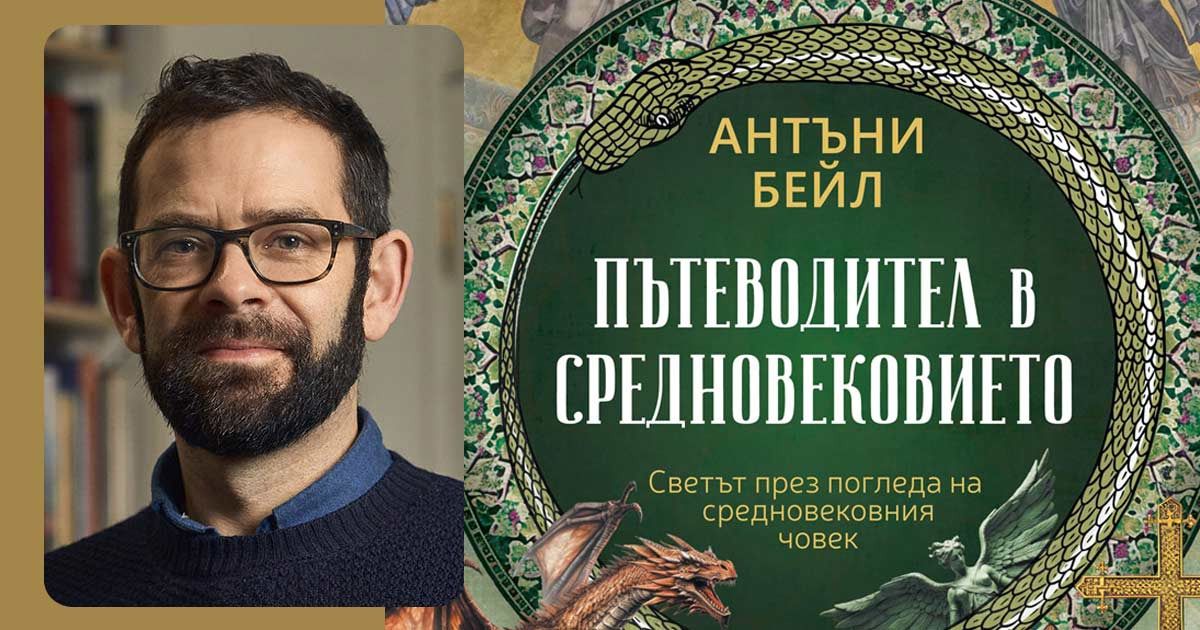
Interview with Prof. Anthony Bale, Author of “A Travel Guide to the Middle Ages”
You mention that during your research travels for this book you often found yourself in difficult circumstances – food poisoning, exhausting heat, panic after a tick bite, struggling with coronavirus in unfamiliar places. What was the hardest moment, and did you ever feel that medieval travellers might actually have handled such situations better than you?
I did much of the research and writing of the book during the coronavirus pandemic, in 2021-2. During this period, the entire infrastructure of travel, globally, was disrupted and started to look much more like medieval travel: unpredictable, expensive, almost random in the difficulties and challenges that were presented. My journeys were beset by difficulties, some of them were funny and some of them were serious. For instance, when I arrived in Venice, I found that there was a sudden city-wide public transport strike: like a medieval traveller, the only thing I could do was throw money at the situation and hire a very expensive taxi. The hardest moment was probably in the Maldives – one of the most beautiful places I travelled to during my research. However, I was due to fly on to India but India closed its borders due to Covid, and I had to find a way back to England suddenly; I then started to develop symptoms of Covid myself as I started my journey back, and felt very unwell. When I finally got back to London I locked myself in a bedroom for 2 weeks. Medieval travellers might have handled such situations better than me because their expectations were much lower: most travellers knew that travel was dangerous and perilous, that they might not come back alive, that they would spend or lose all their money. So a medieval traveller already expected and anticipated these kinds of problems!
Your book is at once a travel guide, an anthology of medieval voices, and a reconstruction of how people between the 13th and 15th centuries imagined the world – a genuine guidebook complete with warnings, prices, recipes, dangers, and curious details. Which of all the routes you describe posed the greatest dangers and challenges for a medieval traveller, and why? Is it easy for us to slip into a romantic view of this fascinating era and forget that these were times when death often came quickly, unexpectedly, and brutally?
Yes, medieval travel was fairly brutal and unenjoyable. Most travellers would prepare themselves for the worst: before they set off, they would make a confession to a priest, settle their debts, make a will, perhaps buy a charm or amulet to wear to protect them, even buy a travel guide or written itinerary to help them on their way. All routes were dangerous – even sailing across the English Channel for example – because travellers were completely at the mercy of the seas. Dirty water, bad wine, hot weather, shipwrecks, and banditry were common problems everywhere. However, in Europe, from Spain to Constantinople, there were very established trade and pilgrimage routes that had an infrastructure and some regulations designed to make the traveller’s journey easier and safer. Once a Christian traveller went beyond Jerusalem or Constantinople, things became markedly more dangerous for them. Very many pilgrims, missionaries and ambassadors died in the east from a wide variety of causes.
You mention the enigmatic figures of Gog and Magog from the Bible – at once people and nations, places and tribes. You write that their shifting image reveals many features of medieval travel culture, and that their remarkable mobility was shaped more by the visitor’s needs than by actual geographical facts. Did medieval travellers, in a sense, shape the world as they went?
Yes, I think that’s a good way of putting it: medieval travellers made the world as they wanted and needed to experience it. So a merchant who was buying gems or spices or silks in Persia had different needs and priorities from a pilgrim travelling to Rome or Jerusalem, and they saw the world accordingly. We see this most strikingly in the ‘Stations of the Cross’ and ‘via dolorosa’ traditions in Jerusalem: this was a very deliberate way of turning medieval Jerusalem into the landscape of the bible. As medieval Jerusalem was an Islamic city, this was also a way of ‘Christianising’ the city. Gog and Magog served as a kind of boundary or imaginary edge, but medieval travellers are remarkably silent about geographical boundaries – for instance, mountains rarely feature in medieval travel writing – and medieval travellers often misunderstand where they are and what they are seeing. Tourists, even today, view the world through their own lens; their own needs are paramount. In a way, apps like Instagram are recreating medieval ways of seeing the world as a communities of viewers, rather than as individuals encountering the world as it is.
You quote many practical pieces of advice, such as the warning that when dining among the Mongols, travellers should know that if a host gives someone a piece of food and the guest puts it in their mouth but does not eat it and spits it out, a pit must be dug under the yurt where that person is to be taken and killed without mercy. Do you think, however, that interactions between different cultures at the time were in fact much more peaceful than in the centuries that followed?
Travel is full of surprising interactions and in my book I’ve tried to keep this sense of travel as having the potential for changing one’s view of the world. Many interactions, however, were not peaceful, especially in the Holy Land. We need to remember that it was mostly unsuccessful interactions that were recorded: I make the point in the book that bad journeys make for better writing! However, hundreds of everyday interactions took place in pilgrim hostels, in caravanserais on the silk routes, in churches, on board ships, were people from all over the world met each other. My book shows how these included women, children, people of varying education and wealth, and people from all over the known world, from Iceland to Ethiopia. Medieval people tended not to have the strict national identities that we have today: they had regional identities, often highly local (e.g. Florentine, Bolognese, Milanese). In western Europe, Latin Christianity united most people, and so a Christian from Ireland could turn up in a church in Sicily or Rhodes and be familiar with the language and liturgy and structure. There were many peaceful interactions between Christians and non-Christians too: there were more cosmopolitan cities like Byzantium or Venice which didn’t yet have the restrictive laws that would be a feature of the early modern period, from the later fifteenth century onwards.
Your medieval sources show how the real and the fantastical coexisted without contradiction in medieval thought. They tell of trees that grow sheep, flying coffins, hippos said to prefer eating humans if they can catch them, and giant snakes that become attached to children. What would you identify as the most enduring medieval fantastical motif – one that has persisted into modern culture – and how should we understand it: as a trope, a symbol, or something else?
That’s such a good, and difficult, question! I suppose the easy answer is the dragon, or the unicorn! I include travellers who say they saw dragons and unicorns on their journeys, and it’s easy to dismiss them as having misunderstood a natural phenomenon: for example, an alligator or crocodile misunderstood as a dragon, an oryx or horned antelope seen amiss as a unicorn. However, medieval people weren’t stupid or credulous, although they were open-minded about the wonders of nature. All animals, even cats and dogs, had moral meanings and interpretations attached to them in the Middle Ages, and the dragon and unicorn are no different. The unicorn, representing purity, and Christian chivalry, could be seen to be a sign of God’s working in the natural world, of God’s authorship even of those parts of the world that could not be fully understood. We don’t ‘believe’ in unicorns or dragons today, but I’m not sure medieval people did either: unicorns and dragons were good to think with!
You mention travellers who returned to their homelands only to find them devastated by the Black Death. Was this plague the most tragic and consequential event of the medieval world, or would you point to something else as having an even greater impact?
The plague of 1348-9 was an enormously consequential event for all of Europe, Asia and north Africa: the estimate is often given that one third of the population was wiped out. In the generations after this, profound demographic changes took place, including the rapid growth of towns. In terms of travel, however, I’d suggest two different major events: first, the fall of Acre in 1291, which effectively ended the western Christian crusader occupation of the Holy Land, and the Ottoman conquest of Byzantium in 1453, which very significantly changed the power balance between Islam and Christendom. These events materially shifted the horizons of Christian travel – both for trade and pilgrimage.
Who do you consider the greatest medieval traveller of all time – Ibn Battuta, Marco Polo, or someone else? And what was his greatest contribution to shaping the new ways in which medieval people began to look at the unknown world?
For me – and I appreciate that this is a minority view – one of the greatest travellers is John Mandeville, even though he probably never left his library. His book of travels, from c. 1356, was a medieval bestseller across Europe, and had a very wide audience, from French kings to Italian students to German merchants. And it very cleverly plays with the idea of belief in worlds beyond our experience. Mandeville’s book was the foundation for a huge amount of later knowledge, including early globes, and it was one of the texts Christopher Columbus had read. Felix Fabri, a Swiss-born friar, is also one of my favourite travellers, because his accounts of full of personal detail and his own personality. His accounts of elements of travel like homesickness and homecoming are unusual and very poignant. Ibn Battuta is also an excellent nomination but Marco Polo is, I think, overrated as a traveller – after all, it was his uncle and father who laid the groundwork for his travels, and Rustichello of Pisa who wrote down the travels: Marco Polo is important, but not as important as history has made out!
What did medieval travellers carry forward with them, and what did they change in the way they interacted with distant lands and peoples as they stepped into the era of the Great Geographical Discoveries?
I see the ‘Era of Discovery’ as overlapping with the medieval era of travel. I open the book with Behaim’s globe, a decorated globe in Nuremberg that was made c. 1491. It shows three continents (Europe, Asia, Africa) on the eve of Columbus’ journeys, and so it is a vivid record of the world before Europe encountered the Americas. However, it is also a record of medieval exploration in several different ways: the west and southern coast of Africa is marked on the globe, which had been explored by the globe’s patron, Martin Behaim. This coast was rapidly being chartered by Portuguese merchants for trade and commerce. And yet the globe has mermaids and other ‘medieval’ marvels on it, and texts from Mandeville and other Classical and medieval authors. This globe asks to read on a continuum with later travellers, including Columbus, whose ‘intellectual world’ or ‘imaginative landscape’ was a medieval one, not a modern one. So, in the age of discovery, European travellers found proof of the marvellous worlds their reading had led them to expect: strange humans including Amazonian female warriors, prodigious animals, terrifying storms, great plenty of gems and wood, exotic fruit and vegetables, some of which had narcotic effects. I think for the first few generations of travellers in the ‘age of discovery’, travel to the Americas in particular was proof positive of the marvellous vistas of medieval travel writing.
Which book do you wish you had written – both on a personal level and in terms of your professional aspirations?
I love a very wide range of literature, medieval and modern, and I read a lot of travel writing from the book: in particular, I enjoyed the travel writing and travelogues of Geoff Dyer, Jan Morris, Patrick Leigh Fermor and Freya Stark. But a writer can only write the book he or she writes: a book is so personal and individual. My writing comes from my experience, my interests, my knowledge, and it is unique to me.
Interview by Vladimir Tsankov
Products related to this post

Comments