
Every Great Civilization Runs on a Story It Tells About Itself
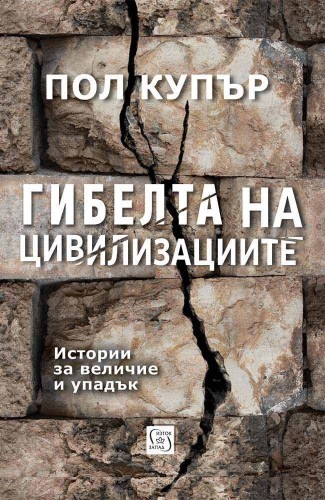
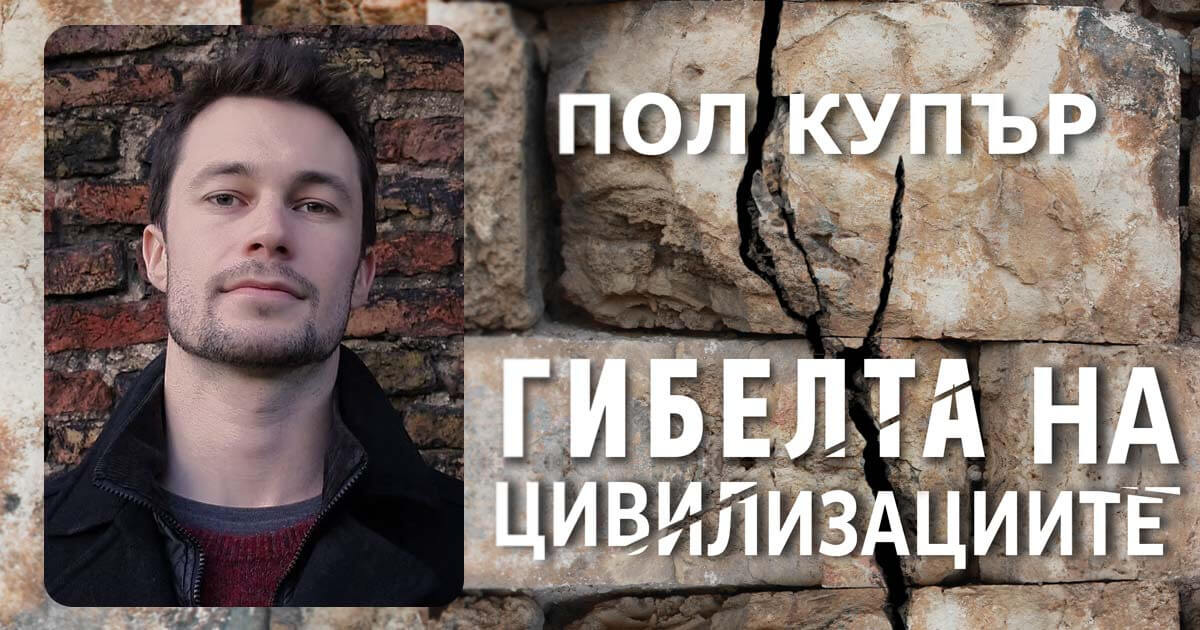 Interview with Dr Paul Cooper, Author of Fall of Civilizations: Stories of Greatness and Decline
Is there an ancient monument that, when you look at it, fills you with sorrow and a sense of profound loss?
I love ruined places, and I love to explore them, to wander around the ancient crumbling temples and palaces and imagine what lives people led within their walls. Ruins can fill people with sorrow but they also remind you of hope. Although the walls may be crumbling and the roof fallen in, the pillars fallen and the statues cracked, a ruin is still standing in some form. In that way they show you both the power of time to destroy and change, and also stand in defiance of that power. I think it’s for that reason that they form such powerful imaginative spaces, and people have always been drawn to them, and drawn to explore them, paint them and write about them.
If you had to identify one factor that consistently determines whether a civilization survives a crisis or collapses under it, what would it be?
Adaptability, above all else. The civilizations that endure are those that can change their structures, their institutions, and even their fundamental assumptions about how society should be organized when the world changes around them. Perhaps the most remarkable example of this in history is the Byzantine Empire, which survived for over a thousand years after the fall of the Western Roman Empire. It did this by reinventing itself as a medieval state. It faced invasion, plague, religious schism and dynastic collapse, and each time it found a new form to inhabit. Contrast this with societies that became too rigid, too committed to a particular way of doing things, too confident in the institutions that had served them well in different circumstances by have now become liabilities. Adaptability is harder than it sounds, because it often requires those in power to surrender the very things that gave them power in the first place - and that is a sacrifice most ruling classes throughout history have been unwilling to make.
Which collapse do you think is the most misunderstood by modern historians, and what crucial detail we keep getting wrong?
There are misconceptions surrounding lots of stories of collapsed societies, but I would say the most consistently misrepresented is the story of the people of Easter Island or Rapa Nui. From the first moment that Europeans arrived on its shores, they were struck by the incredible carved statues erected all around the island – nearly a thousand in number. They believed that the Rapa Nui people they saw weren’t capable of erecting such statues, and so they believed that a previous, more advanced society must have made them. Since those early days, the story of Easter Island has been consistently misrepresented, involving a self-inflicted ecological collapse caused by its people degrading the landscape, followed by warfare, starvation and even cannibalism. This story has even been repurposed in the modern day as an environmental warning. But all the evidence, both archaeological and textual, points against this narrative. In fact when Dutch explorers arrived on the island in 1722, they make clear that the islanders were thriving. It’s only with the introduction of European diseases, slave raids and the final industrialisation of the island in aid of sheep farming that the population collapsed to little more than a hundred islanders.
If you could resurrect one collapsed civilization exactly as it was at its peak, knowing it might repeat its mistakes, would you do it?
No, the arrow of time only flies in one direction.
Is it possible that some civilizations “deserved” to collapse – that their fall was a moral correction rather than a tragedy?
As a historian we don’t tend to look at history through a moral lens, which is really a matter for philosophers. There have been evils committed by every human society, but we seek to understand only what exactly happened and why. But there are some schools of collapsology that would view collapse not as a tragedy, but as a kind of adaptation. When a society has become unsustainable, or its environment has changed around it in ways that make a previously sustainable society now untenable, it naturally collapses into a simpler and less organized shape. It could be stated as a historical law that societies that are unable to sustain themselves are replaced by societies that are, and we see these patterns repeated throughout the story of humanity.
If you could erase one civilization from the historical record to see how the world would have evolved without its influence, which would you choose and why?
Well setting aside for the moment that I would erase myself by doing this, it would be interesting to see how Europe would have developed without Rome. Because its shadow has fallen so completely across the subsequent two thousand years of Western history, it has become impossible to see around it. Many European kingdoms that followed styled itself in Rome's image, and spoke languages derived from Latin. Our legal systems, our architecture, our very idea of what civilization looks like - all of it filtered through a Roman lens. And I find myself wondering whether that inheritance has constrained us as much as it has inspired us. The idea of the centralised, expansionist, administratively uniform state is a Roman idea, and it is one that has caused enormous suffering in its repeated reimaginings across history. Without Rome, the extraordinary diversity of peoples and cultures across Europe and the Mediterranean might have developed along entirely different lines. We cannot know whether the result would have been better or worse. But of all the thought experiments available to a historian, that is the one I find most genuinely vertiginous - and therefore the most irresistible.
If you had to choose one modern nation‑state that most resembles a pre‑collapse society from your research, which one would it be – and what parallels concern you the most?
It would be difficult to look at the United States and not feel a certain historical unease. The parallels that concern me most are not the dramatic ones - not the political ossification or gerontocracy, the descent into militarization of the police or the crumbling infrastructure or military overstretch in idiotic wars, though all these are real signs of distress. It’s the subtler signs that a society has begun to lose faith in its own founding myths. Every great civilization runs on a story it tells about itself, a set of values and assumptions that bind its people together and give them a shared framework for resolving disputes. When that story fractures, when different groups within a society are no longer operating from the same basic premises about what their civilization is even for, you begin to see the kind of institutional decay that historically precedes collapse. Rome didn’t fall when Alaric sacked it in 410, or when the last emperor resigned after the battle of Ravenna in 476. It had been falling for generations beforehand, as the civic bonds that held it together slowly frayed. Whether the United States can find a new and credible story to tell about itself - one that is honest about its history while still giving its people something to build toward - is perhaps the defining question of the coming decades.
You’ve probably been asked this countless times, but what do you believe is most likely to bring about the end of our own civilization – nuclear conflict, climate catastrophe, or a global pandemic?
Undoubtedly the struggle of the next century will be defined by climate breakdown, the early results of which we are already experiencing. A number of tipping points have been identified, which speed up and amplify the effects caused by CO2 and the even more potent greenhouse gas methane, meaning that the changes we have seen are in the more severe range of what was predicted in previous decades. In other words, we are now living in what was previously considered the worst-case scenario. One of these tipping points is the melting of the Arctic sea ice, which currently reflects up to eighty per cent of the sunlight that falls on it back into space, thus cooling the planet. We have now experienced multiple years when the Arctic has seen temperatures 20°C higher than average, with record low ice levels, and the sea is projected to have its first ice-free summer as early as the 2030s, ‘irrespective of emission scenarios’. Many fossil fuel-producing countries are actually expanding their industries, a move that the author of one UN report has called ‘insanity’. The test of the next century will be whether we are able to respond to these challenges, or whether our societies, like so many before them, will need to replaced by ones that can.
Interview by Vladimir Tsankov
Products related to this post
Comments