
We are witnessing an unprecedented attack on the freedom of the mind
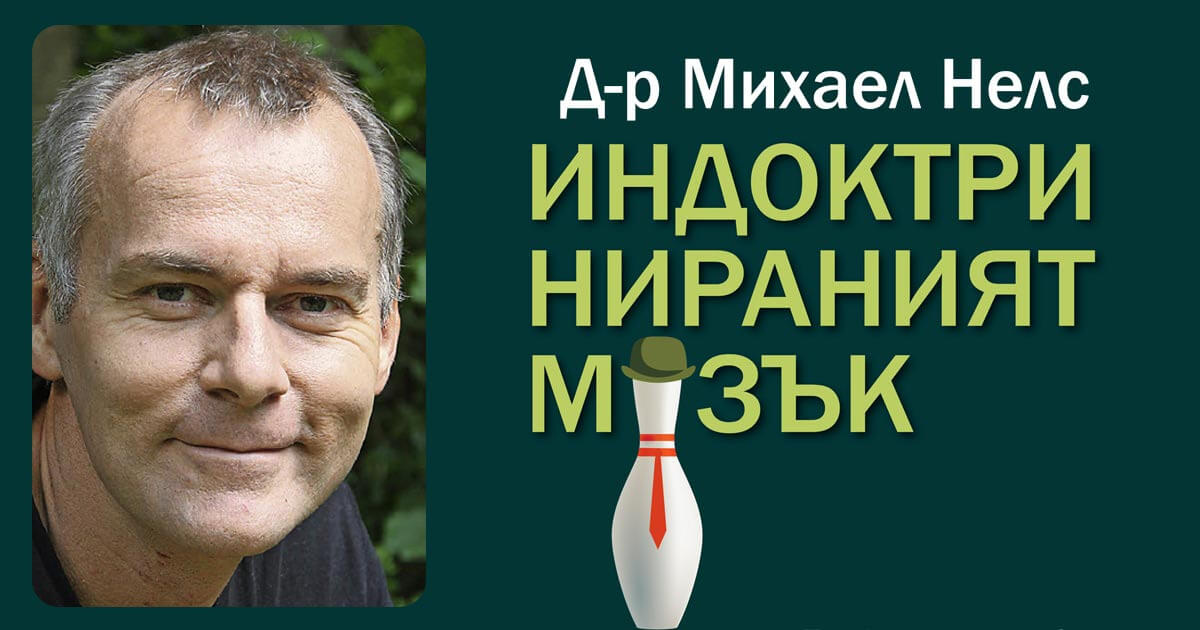
Interview with Dr. Michael Nehls
Dr. Nehls, it is an absolute pleasure to have the opportunity to discuss your book, The Indoctrinated Brain. It was released in Germany in 2023 and has already been published in Bulgaria. The book was an instant success in German-speaking countries, and it also topped the bestseller lists in the English-speaking world for months. To what do you attribute this success—mankind's natural fear for its survival, a general sense that something is amiss with our development, or something else entirely?
First of all, I would like to thank you for inviting me to this interview. I am very pleased that the book has been published in Bulgaria under the catalog of "Iztok-Zapad." I am truly happy about this fact.
Its success is likely due to the same reason that drove me to write it: for a long time, I was searching for an explanation myself, until one day the pieces finally clicked. It was like a sudden epiphany, and I thought, "Well, if this is true, then everything makes perfect sense."
The events we have lived through since 2020, as well as the factors that led to the global epidemic, can be explained with complete logic. I managed to formulate a unified understanding of how certain trends and interests lead to the deterioration of human mental health. COVID-19 and its associated propaganda were major factors, but the mRNA vaccine itself specifically targets and heavily damages the very part of the brain I have spent over 20 years researching in the field of Alzheimer's. This is an area I refer to as "our mental immune system"—the mechanism that shields us from harmful narratives in our environment.
The word "narrative" has acquired a negative connotation, but narratives are essentially just stories. Our brain is like a sponge, soaking up the things it is told. We live through stories; we are incredibly efficient at remembering them. They shape our life experience, and the stories we tell ourselves ultimately build our "ego"—our self-awareness, which is the story we tell about who we are.
When we wake up in the morning and turn our brains back on, much like a computer, we begin to reflect on stories about ourselves. We are both the storytellers and the listeners. However, some stories help us, while others harm us. To protect us, our brain has this center, which I call "our mental immune system." Unlike our physiological immune system, which protects us from microorganisms, this center protects us from macro-organisms—or stories about them—that cause us harm. Stories that frighten us unnecessarily; stories that generate lucrative ideas for others while stripping us of our health. Protecting us from them is precisely the role of the mental immune system.
If you want to rule over people, all you need to do is paralyze this system, leaving them defenseless against any narrative manipulation. And that, in turn, means they can be indoctrinated very easily.
I find the subtitle of your book very intriguing: "The Global Attack on the Freedom of the Mind." In this context, the term "attack" should not be understood metaphorically; it refers to a very real one. Furthermore, "freedom of the mind" does not refer to a philosophical concept, but directly to the physical properties of our brain. Could you explain this in a bit more detail?
Yes, the mental immune system is just like our physiological one. That is, it has a physical component, and when that component is damaged, we are left completely exposed to narratives. When these narratives lead to a loss of our freedom by making us believe falsehoods, that is when the real danger sets in.
Here is a very concrete example: we are told that someone is dangerous to us and that we must go to war against this person (or nation). But this version of events might not be true at all, and the other side might also be dragged into the war by a similar narrative. In that case, we actually have two narratives fueling a war, even though the populations of these countries have absolutely no interest in it. The same thing happens when we claim that a certain virus is extremely dangerous when, in reality, it is not. We begin to fear the narrative itself.
In the specific case of COVID-19, it was known from the very beginning that our immune system could successfully handle this virus, provided it was well-supplied with micronutrients—and that if they were lacking, especially Vitamin D, the fight against the virus would not be efficient. Yet, the narrative we were fed claimed there was no alternative to genetic engineering experiments like the vaccine. This is a harmful narrative—we lose our freedom and our health, which in turn limits our physical freedom. After all, if someone suffers a stroke, their freedom is certainly restricted.
In the case of COVID-19, the hidden agenda was clearly formulated by the World Economic Forum—to implement the "2030 Sustainable Development Goals," where the core idea is that we should "own nothing and be happy." This is about a complete reversal of people's financial capabilities, where we will practically be monitored through a Chinese-style social credit system. This would certainly be a restriction of freedom, especially if our thoughts are also controlled, which is already possible through various devices—be it smartwatches, wearables, or headphones that capture brainwaves.
We are controlled in every sphere. The question is: do we want to accept it? A person whose mental immune system is no longer functioning cannot even ask this question; they will simply accept whatever is imposed upon them without a word.
When the mental immune system ceases to function, a person loses their curiosity, their ability to reason, and their critical thinking. Most of all, they easily succumb to fear. The mental immune system gives us what I call psychological or rational resilience—the ability to stay calm in crisis situations and not panic. These are not purely mental concepts; they are actual functions of the brain itself.
We can locate exactly where the specific nerve cells responsible for this are situated in the brain. They are among the most important cells in our body; they are formed anew every day, and their rate of regeneration is crucial to their functionality.
Because these nerve cells are so young, they are also extremely sensitive. They must be provided with optimal conditions to grow so that, in the long term, they can protect us even from Alzheimer's. Conversely, their deficiency—caused by a lifestyle in modern society that is atypical for our biological species—leads to the development of degenerative brain diseases. I published a study on this topic in 2016 titled “A Unified Theory of Alzheimer’s Disease,” and the consequences of the core mechanisms I presented there were clearly visible in 2020.
First of all, the coronavirus measures themselves—I call them "antisocial distancing" because they alienated people. A human being needs social contact for these nerve cells to thrive. We need physical activity and a sense of purpose in life, and many people were stripped of these in 2020 due to the measures, particularly the lockdowns. Nutrition also plays a key role, and it cannot be optimal when a person is unable to leave their home.
This is where the impact of fear comes in, which prevents these nerve cells from being produced effectively. Even the hippocampus is affected—the center of our autobiographical memory, which, thanks to these cells that regenerate throughout our lives, has the ability to grow along with our experience. This means that the size of the hippocampus directly reflects our experience, and if its growth is restricted, or if it even shrinks, it limits our mental freedom.
The mental immune system, which functionally relies on the creation of new brain cells in the hippocampus, is also what makes us human. Humanity is based on our ability to reflect, to put ourselves in another person's shoes; to be able to resolve conflicts by finding compromises and learning from one another; to listen, having the courage to sometimes hear things we do not like, so we can correct the wrong direction our lives have taken. All of these elements grant us the specific qualities that make creativity, planning, and long-term visions for our lives possible. These depend crucially on the ability of cells to form in the hippocampus—the center of our autobiographical memory—over and over again, every single day. These are young cells in a highly sensitive phase, and they are the exact target of the global genetic engineering program.
In your book, the COVID-19 pandemic takes center stage. Did the indoctrination of the brain begin with it, or was the process already underway?
This is a process that has been going on for a very, very long time. Indoctrination has actually been a fact since the dawn of humanity. The history of cultures (at least the written one) consists mainly of indoctrinations. An example is the narrative that we must attack the people on the other side of the fence because they are evil. Or because they are inferior to us—we downgrade their status, we exclude them from the human family so we can commit atrocities; we say our country is worth more than any other and we are superior to the rest. All of these are indoctrinations because people truly believe in them and internalize them as part of their identity.
Children are indoctrinated into religious beliefs from a very early age. A child coming into this world is neither a Buddhist, nor a Taoist, a Muslim, or a Catholic. Humans are born with a mind open to everything, and this type of indoctrination starts early. In Christianity, it sounds like this: "Let the little children come to me."
On one hand, their brains are highly receptive, and on the other, they do not yet have another belief system to compare the first one to. That is why learning a second religion is much harder—one already begins to make comparisons. Doubts appear at the latest with the onset of puberty, and that is why it exists. During puberty, the brain reprogrammes itself; all connections are somehow questioned: "What did I learn from my parents?" "Is all of this true?" One begins to rebel, and this is very important for cultural development. But when the indoctrination has been very intense, the deeply rooted principles a person assimilates in early childhood become part of their personality and are never questioned again. This results in permanent indoctrination.
The question, however, is whether this is a targeted attack on the mental immune system—meaning, is the brain deliberately made vulnerable to harmful narratives? I believe that is exactly the case.
I can make a point based on the example of Alzheimer's: this disease is a consequence of the chronic destruction of the mental immune system to the point where a person no longer remembers their own stories. The narratives themselves are forgotten, and the hippocampus undergoes so-called hippocampal dementia. Alzheimer's originates there, in the autobiographical physiological center. In my study, which I cited earlier, “A Unified Theory of Alzheimer’s Disease,” I managed to show that the insufficient formation of new nerve cells in the hippocampus—the only area of the brain capable of creating cells throughout one's life—is a primary prerequisite for the onset of Alzheimer's.
When the disease was first discovered in 1906, it was described as a medical oddity. In the 1940s, the illness was so rare that it was not even discussed as an independent topic in textbooks, whereas in the final decades of the twentieth century, it became a mass phenomenon. I can point to many new factors that severely hinder the creation of brain cells in the hippocampus. Because of them, by 2019, two or more diseases associated with hippocampal damage were at the top of global statistics.
These include Alzheimer's and depression (the most widespread illnesses in the world in 2019), but also autism, ADHD (Attention Deficit Hyperactivity Disorder), borderline personality disorder, and so on. Taken together, these conditions are currently leading worldwide. It is absolutely clear that even by 2019, the mental immune system of society was heavily compromised, because we had already reached the first extremes.
Just like the tip of an iceberg: I assume that the part of the population below the surface also no longer possessed an optimally functioning mental immune system. This explains why people were so easily influenced in 2020. Hospitals were not overcrowded back then. Statistics even show that in 2020, there were fewer cases of severe pneumonia compared to the previous year.
There were many strange things being openly discussed on the internet. Although a lot of this information was deleted, it was still possible to access it and hear different opinions. I had such a case in my own family—my closest relatives listened to me, but those in the wider family circle were completely under the sway of the harmful narratives. This led to a very clear rift within the family and was the primary reason I began my intensive research, which resulted in this book.
Bulgaria actually remained quite skeptical regarding the COVID-19 measures. We remained in last place in terms of vaccination rates. Does this speak positively of us?
Yes, definitely.
According to your theory, this natural skepticism toward mainstream measures, discourses, and narratives should be considered a positive trait.
In any case, it is. Harmful narratives are recognized thanks to autobiographical memory; the mental immune system is located precisely within it. And autobiographical memory is very efficient at recognizing bad narratives simply because it has accumulated some experience, whatever that might be. If a person lacks this experience, as is the case with children, they accept any narrative. We believe what our parents tell us because we have no past experience, no memory of ever hearing anything different.
If we accept that the mental immune system depends heavily on our past experiences—either as independent individuals or as part of the community we live with, which influences our cultural identity—then the cultural heritage in Bulgaria is probably quite different from that in France or the United States. We can see this in Germany as well, in the eastern part, which was under Soviet influence for a long time. People in the East were much more skeptical than those in the West because their collective memories made them understand what it meant to live under state surveillance.
We have experience in this regard, and the people I meet in eastern Germany always tell me the same thing: "Actually, we've already lived through all of this—in the GDR—and now we are being reminded of it." That is precisely why, from the very beginning, they were much more skeptical, but also more willing to listen to opinions different from those in the mainstream media.
Your book does not seem fatalistic; rather, it offers hope. But what does this hope consist of?
To be honest, I struggled with hope for a long time. I knew I had to end the book on a positive note somehow. I really found the final chapter difficult and even took a two-week break to ponder what could happen next, where history is heading, and where we are traveling.
One of the answers, of course, is that the worse we feel, the better things can get from here on out. We have reached the lowest point in our cultural development, and everything in nature is constantly in flux. We often talk about homeostasis—that our bodies have the ability to self-regulate. But what does that mean? A human being always swings from one extreme to another.
Here is an example: I was just in the United States, where I had a personal meeting with Robert F. Kennedy, the Secretary of Health, who is currently actively supporting the MAHA movement—Make America Healthy Again. It made sense to me that such a movement would start in the US, because they consume the worst food in the entire world. However, bad nutrition has spread here as well—to Germany and Europe—so I assume this movement will reach us sooner or later. What I mean is that we always transition from one extreme to the other. The country with the worst diet now wants to be the one with the best. I looked into the issue closely and saw that they are now heading toward an extreme that is also not good. That is why I met with the Secretary. The good, which lies in the middle between two extremes, best serves our mental health.
That was also one of the thoughts in my head back then—that I believe human beings are actually good. I told my wife I needed to take two weeks off because I couldn't write the final chapter of the book right away. On the day we were leaving, a close friend of mine coincidentally gave me a book by Rutger Bregman, published in German—Humankind: A Hopeful History (published as Good by Nature in German). I read it in two days and cited it multiple times in my final chapter.
After reading that book, I concluded that human beings are indeed good by nature, and what we are experiencing today are simply the socio-psychopatholgical consequences of the actions of a cabal of technocrats. I call it "acquired sociopathy"—acquired sociopathic behavior among the ultra-wealthy who believe they can play God. But the majority of people are not like that; they are actually good.
I am fully convinced that we all belong to one large human family, that we share the same hopes and joys, and want the best for our loved ones. Of course, conflicts arise, but if we have a healthy mental immune system, we can resolve them peacefully, enabling a harmonious coexistence among everyone.
You spoke of a book that inspired you. Which of your favorite books do you wish you had written yourself?
That very same one—by Rutger Bregman. When I read it, I thought: "It would have been really wonderful if I had written this—the arguments in it are so obvious."
I find the research in that book very solid, as well as the author's approach to the topic, debunking the myths that constantly suffocate us—including the harmful narrative that human beings are inherently malicious. I know this narrative well, as I was raised in the Catholic faith until my puberty, during which I realized that this framework was not for me.
The Catholic narrative consists of precisely this—man is bad by nature, born with original sin, and must be controlled by laws from above to prevent chaos. But I believe that people can organize themselves very well in small groups, without the need to impose authority and laws regulating everything down to the smallest detail. The prerequisite for this, however, is that we manage to strengthen our mental immune system once again so that it can regain its original strength. In this respect, my book and Bregman's complement each other very well.
I have also described this in great detail in another book, titled The Lithium Conspiracy. It was recently released in the US, where it also became a bestseller. I spoke about lithium in the European Parliament as well, because there is a serious war being waged there. In fact, that is exactly what I said in my lecture there: "A massive war is being waged against people's mental immune system."
But I have hope. We only need—and this is what I have been fighting for for 20 years—to put Alzheimer's on the agenda. I took on this topic when I was just starting out as an author, because I believed that if we could solve the Alzheimer's problem, we would be able to solve all mental health issues. And I remain firmly convinced of this.
Our mental health must correspond to what nature gave us at birth—meaning we should be mentally healthy in accordance with our potential. If that happens, there will likely be no more wars. Because even if the technocrats or the people profiting from weapons and geopolitical machinations want to consolidate their power by provoking a war, no one would join it anymore. That is my hope.
Is the possibility of complete human freedom actually realistic?
Absolutely, but a healthy mental immune system is required for that. Then we will have the freedom to realize our potential and coexist with others. And since our opponents will also possess the same mental freedom, I am convinced that good compromises will always be reached—it will be clear both what the other person wants and what we want ourselves.
Then we will be able to say: "Alright, I respect your wishes, and you respect mine." And if we find ourselves in a situation where we have to share something, we will simply try to find a compromise. I am convinced this is possible if both sides approach the issue peacefully and reasonably.
You have not only a medical education, but you have also held executive positions in various universities and companies worldwide. You run your own publishing house, you are highly active in public life, and you are also a father of three grown children. In your book, you often speak of the meaning of life as a primary prerequisite for liberating oneself from indoctrination. Is this the meaning of your life—to fight for human freedom, for a free existence?
Readers who want to understand how we can live to an advanced age will notice the concept of the "grandmother hypothesis" in my books. Our ability to exert influence across generations—meaning to use our life experience for the benefit of not only our own but also subsequent generations—is evolutionarily determined.
The point is this: a long life is actually inherent to us. Therefore, people who have a healthy mental immune system show a strong interest in being there not only for their children but also for their grandchildren. I myself am fortunate enough to be a grandfather to a wonderful child, and a second one is on the way. If my life were to have only one meaning, only one goal, it would be for children to grow up in freedom. And the global trends we observe today lead precisely to its restriction.
As we mentioned at the beginning, we know what is happening right now. But there is also an opposing movement, and if I have become a part of it, then I have made my contribution. And the more people I manage to inspire, including your readers, the more likely it is that we will live in a world where my grandchild will feel well.
Interview conducted by Boris Drenkov.
Products related to this post

Comments