
When the “Impossible” Becomes “Inevitable”
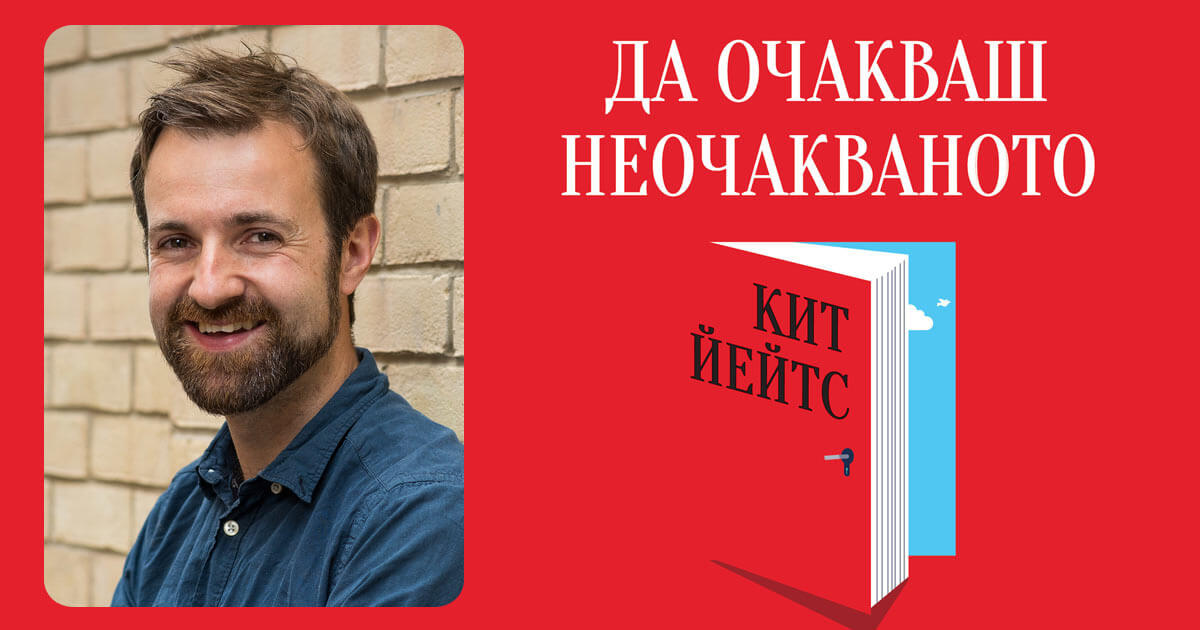
Interview with Dr. Kit Yates, author of “How to Expect the Unexpected”
What was the last time you successfully predicted something significant, yet chose to keep that prediction to yourself for one reason or another?
I don’t have a dramatic example, partly because a prediction kept entirely to oneself is almost worthless as evidence. Once the event has happened, it is very easy to remember our successful predictions and forget all the incorrect ones. Hindsight can also sharpen a vague suspicion into something that feels like a precise forecast.
Like everyone else, I sometimes anticipate that a project will run into trouble, that a journey will be delayed or that a decision will have unintended consequences, but choose not to say so because the prediction would be unhelpful, unnecessarily pessimistic or based on little more than intuition. Occasionally I am proved right, but I try not to award myself too much credit.
If I genuinely wanted to test my predictive powers, I would need to write down every forecast in advance, make it sufficiently precise and keep track of the failures alongside the successes. Otherwise I would be behaving like the followers of Nostradamus, presenting the apparent hits after the event while allowing the misses to disappear.
The universe is so vast that most people simply cannot comprehend its scale – and those who manage to grasp even a fraction of it often feel overwhelmed and prefer to stop thinking about it. But an infinite universe also implies infinite possibilities. Is it ultimately a matter of personal choice whether we reduce everything to mathematical probabilities, or decide to call something a miracle, luck, or fate?
I think these are two different ways of interpreting the same experience. Mathematics can help us understand how an apparently extraordinary event might have occurred. If there are enough people, enough places and enough opportunities, then even events with extremely small individual probabilities become likely to happen somewhere. This is the law of truly large numbers: given enough chances, the seemingly impossible can become almost inevitable.
That explanation does not necessarily rob the event of its wonder. If I meet an old friend by chance on the other side of the world, I can try to calculate the number of travellers, journeys and possible encounters that made the coincidence less unlikely than it first appeared. But I can still feel extraordinarily lucky that it happened to me. Mathematics describes the mechanism and helps us judge how surprised we ought to be. It does not dictate the emotional significance we attach to the event.
Where I would be more cautious is in moving from calling something remarkable or lucky to claiming that it was fate or a miracle. Those words can imply that an event was deliberately arranged by some external agency. An unlikely event, however astonishing, is not by itself evidence of such an agency. We usually notice the extraordinary coincidence that happened and overlook the countless occasions on which nothing remarkable occurred. We also tend to assess probability from our own individual perspective, forgetting the enormous number of other people to whom the event might have happened.
So, yes, we are free to describe an experience as luck, fate or a miracle. But these descriptions do different jobs. Probability asks how an event could have happened and how surprising it really was. Words such as luck and fate express what that event means to us. My own preference is to use mathematics to understand the occurrence without pretending that understanding it makes it any less remarkable.
Some events are so unlikely that we tend to think of them as practically impossible. And yet, from time to time, we witness such occurrences – for example, Roy Sullivan, who was reported to have survived being struck by lightning seven times. The chance of being struck once in a lifetime is said to be around 1 in 500,000, and the probability of being struck seven times is mathematically close to zero. But given a large enough number of trials, anything that does not violate the laws of nature should eventually happen. Aren’t such events actually occurring around us all the time, only we fail to notice them because they don’t directly affect our daily lives?
Extraordinarily unlikely events are happening around us all the time. We tend not to notice most of them because they happen to other people, because nobody recognises them as unusual, or because they have no particular significance for us. Given billions of people, each living through tens of thousands of days and generating an almost unimaginable number of interactions, there are vastly more opportunities for coincidences and other rare events than our intuition allows for. This again is the law of truly large numbers at work: given enough opportunities, even events with very small probabilities should be expected to occur eventually.
Roy Sullivan’s seven lightning strikes are a good illustration, but simply raising the lifetime probability of being struck once to the seventh power would be misleading. That calculation assumes that the seven strikes were independent and that Sullivan faced the same risk as an average person. In reality, he worked as a park ranger and spent a great deal of time outdoors in a region where thunderstorms occurred relatively frequently. His exposure to lightning was therefore much higher than that of the average person. Having been struck once may also tell us something about the conditions in which he lived and worked, making another strike more likely than it would be for someone selected randomly from the population. The event remains extraordinary, but perhaps not as close to impossible as the naïve calculation suggests.
There is also a powerful selection effect at work. We know Sullivan’s story precisely because it is so remarkable. We hear very little about the enormous number of park rangers who were never struck by lightning, or the people who were struck just once. Nor do we hear about all the other strange combinations of events that could have happened but did not. We identify the remarkable pattern after it has occurred and then calculate the probability of that particular pattern, while overlooking the huge range of other patterns that would have seemed equally astonishing.
So, yes, events that appear practically impossible probably are occurring continually. Most pass unnoticed because nobody is looking for them. Others are noticed but never reported, while a tiny number become stories precisely because someone recognises how unusual they are. The remarkable thing is often not simply that an improbable event occurred, but that, among the vast catalogue of unlikely events unfolding every day, somebody happened to spot it.
People have always been fascinated by the end of the world, and throughout history different societies have expected it at various moments. Yet when an immediate crisis is right at our doorstep, we often fail to pay enough attention to it. Wuhan, China, was the first city in the world to be placed under a COVID‑19 quarantine on January 23, 2020. With more than 11 million residents confined to their homes, all the signs were there, yet much of the world seemed unwilling to acknowledge them. Why are we so prone to neglecting the signs of an imminent crisis?
There is a strange contrast here. We can be fascinated by the end of the world when it is safely distant or imaginary, while being remarkably reluctant to accept a real crisis developing in front of us. One important reason is normalcy bias: our tendency to assume that life will continue much as it has before. If we have never personally experienced a pandemic, a natural disaster or some other extreme event, it can be difficult to believe that familiar daily life is genuinely about to be disrupted.
The sinking of the Titanic provides a particularly stark example. Many passengers had been told that the ship was effectively unsinkable. Even after the collision, some preferred the warmth and apparent security of the ship to the dark, freezing uncertainty of a lifeboat. The evidence of danger was there, but accepting it required them to abandon the future they had confidently expected. By the time the reality became undeniable, many had waited too long.
Something similar happened at the beginning of the COVID-19 pandemic. The quarantine of a city of more than 11 million people should have been an extraordinary warning to the rest of the world. Yet the outbreak still felt remote to many people. It was happening somewhere else, to other people, and there remained a strong temptation to believe that the disruption could be contained geographically. Acknowledging the scale of the threat would have meant accepting the potential consequences that seemed almost unimaginable: closed schools and workplaces, grounded aircraft, overwhelmed hospitals and whole populations confined to their homes.
Our difficulty understanding exponential growth made matters worse. At the beginning of an epidemic, case numbers may look reassuringly small. If infections are doubling every few days, however, the apparent calm is deceptive. An outbreak can move from dozens of cases to hundreds, thousands and then millions with alarming speed. Because we tend to extrapolate in straight lines, we repeatedly underestimate how quickly the situation can deteriorate. By the time the scale of the exponential growth becomes evident, it’s often already too late.
There are also social and political incentives to delay recognition. Raising an alarm risks causing panic, damaging the economy or making the person issuing the warning look foolish if the crisis fails to materialise. Waiting can therefore feel like the safer option, even when delay makes the eventual consequences considerably worse. Ironically, successful preventive action can compound the problem: if a warning prompts measures that avert disaster, people may conclude that the original warning was exaggerated.
The problem is that often the warning signs conflict with the reassuring story we have already told ourselves about the future. We minimise them, explain them away or wait for certainty that may arrive only when it is too late to act effectively. The lesson is that we should not prepare only for the future that feels most familiar. We must also take seriously futures that seem extraordinary when the potential consequences are severe and the evidence is beginning to accumulate.
You describe how unexpected coincidences can push us into searching for a causal explanation far too quickly, even when none may exist. People look for “signs” in their lives, supposedly left by some higher power; they turn to fortunetellers or mediums; and we constantly see the effects of self‑fulfilling prophecies in our societies. What would a purely pragmatic and skeptical approach to the world around us give us – and what might it take away?
A pragmatic and sceptical outlook offers us protection. It encourages us to ask whether a pattern is genuine, whether the supposed cause could really produce the observed effect and what evidence might change our minds. It makes us less vulnerable to fortunetellers who exploit our cognitive biases, or to anyone trying to sell us a convenient but unsupported story. It can also prevent us from making important decisions based on coincidences that have no predictive value.
Scepticism does not mean dismissing every coincidence as meaningless. Many scientific discoveries have begun with somebody noticing an unexpected pattern. The sensible response is to investigate it rather than immediately decide what it means. Does the connection appear again in new evidence? Is there a plausible mechanism? Or have we simply found one remarkable cluster among the countless possibilities generated by chance?
What scepticism may give us is some comforting certainty. Interpreting a coincidence as a sign can provide reassurance, purpose or a sense of connection with something larger. But understanding why an event occurred need not make it less extraordinary. Knowing how a rainbow forms does not make it less beautiful. We can preserve the personal meaning of an experience without claiming evidence for an external cause.
Ultimately, scepticism asks us to enjoy the coincidence while remaining careful about the conclusions we draw from it. It may deprive us of a few comforting stories, but it gives us the freedom to revise our beliefs and some protection from those who would exploit our desire for meaning.
Calculating probabilities and using statistics skillfully have endless applications – from marketing strategies to designing safer cars. But where are they still underused, or where do people remain unaware of the relevant data? Could the number of gambling addicts decrease dramatically if people were more familiar with the actual mathematical odds of winning? And would the world become a safer place if more global leaders paid attention to the Doomsday Clock?
Probability and statistics remain underused wherever intuition feels more compelling than data. We see this in medicine, where people struggle to interpret the meaning of test results; in public policy, where vivid but rare dangers can receive more attention than commonplace ones; and in planning for pandemics, climate change and natural disasters, where low-probability but catastrophic outcomes are too easily postponed in favour of immediate concerns. The relevant data may exist, but they are useless unless decision-makers understand them and act upon them.
Greater familiarity with gambling odds would certainly help some people. Lotteries, for example, are designed so that players lose a substantial proportion of their stake on average. But I don’t think explaining the odds will eliminate gambling addiction. Gambling appeals to emotions more strongly than to reason: the excitement of taking a risk, the memory of occasional wins and the persistent feeling that the next attempt might be different. Probability education could provide some protection, especially if introduced early, but addiction cannot be solved by mathematics alone.
The same applies to the Doomsday Clock. It draws attention to dangers that are global, cumulative and easy to neglect in everyday political decision-making. Leaders taking those risks seriously could undoubtedly make the world safer. Simply knowing the time on the clock, however, changes nothing. Predictions and warnings achieve something only when they alter behaviour.
More data does not automatically produce better decisions. We need the mathematical tools to interpret the evidence, the humility to acknowledge uncertainty and institutions that reward leaders for addressing long-term risks before they become disasters.
Logic suggests that every seemingly chaotic event or phenomenon has an underlying explanation and a causal structure – perhaps one that science has not yet advanced enough to uncover. In your view, which contributes more to answering such questions: the exact sciences, which rely on empirical data, or the cognitive sciences, which explain how we ourselves interpret the world around us?
I don’t think we can separate the two. The ‘exact sciences’ help us uncover the mechanisms that generate the world around us. They allow us to test hypotheses, identify causal relationships and distinguish genuine patterns from random noise. But the cognitive sciences help explain why we notice some patterns and miss others, why we prefer certain explanations and why two people can interpret the same evidence in completely different ways.
We should also be careful with the assumption that every apparently chaotic phenomenon has a discoverable causal explanation. Some chaotic systems are governed by precise deterministic rules, yet remain impossible to predict far into the future because tiny uncertainties in their starting conditions grow rapidly. Science may improve the accuracy and range of our predictions, but there can still be fundamental limits to what we can know.
This question of how we form a picture of reality from incomplete information is central to my new book, You Don’t Know What You’re Missing. We like to think we respond to the world as it really is, but our understanding is assembled from partial evidence, filtered through our senses, memories, expectations and cognitive biases. The gaps themselves are often invisible to us, meaning that we do not always know what we have overlooked.
Ultimately, these different branches of sciences are complementary. One helps us understand the world; the other helps us understand the imperfect instrument through which we perceive it. To answer difficult questions well, we need both the empirical evidence and an awareness of the ways in which our minds may distort, embellish or simply fail to register it.
You examine how people misinterpret data and events. Which case of mass delusion or deliberate misinformation from the past quarter‑century do you consider to have had a particularly significant impact on the world – perhaps one whose full effects we still do not completely understand?
For me, one of the most consequential examples is the misinformation that surrounded COVID-19. False claims about the virus, masks, vaccines and supposed miracle cures spread through social media with many of the characteristics of an epidemic. In the book, I describe this process as ‘conceptagion’: ideas passing from person to person, with the most emotionally appealing or provocative often spreading furthest, regardless of whether they are true.
The immediate consequences included avoidable illness and death, as people rejected effective precautions or vaccination. Belief in misinformation was associated with lower willingness to be vaccinated, while distrust of governments and health institutions played an important role in vaccine hesitancy. Yet the longer-term consequences may be broader. COVID misinformation helped turn questions of public health into markers of political and cultural identity. That distrust has since spilled over into attitudes towards routine vaccination and other areas of science and medicine.
What made this episode especially powerful was that the misinformation was mixed with genuine uncertainty. Scientific advice changed as new evidence emerged, which is exactly what science should do. But every revision was presented by some as proof that experts were incompetent or dishonest. Social-media algorithms then rewarded certainty, outrage and conspiracy more readily than careful explanations containing caveats.
We may therefore still be living with its most significant legacy: an erosion of our shared ability to agree on what counts as reliable evidence. A society can recover from an individual false claim relatively quickly. Recovering from widespread distrust in the institutions that help us distinguish truth from falsehood may take considerably longer.
From ancient divination through the reading of animal entrails, to Nostradamus, and all the way to modern futurists – attempts to peer into the future have always fascinated the human mind, often with the bittersweet awareness that we ourselves will never witness what the world will look like a century from now. Let’s look a bit closer, though: what are the three major trends that you believe will shape the world twenty years from today?
Predicting twenty years ahead is a dangerous game, but I would choose three broad trends whose effects are already becoming visible.
First, artificial intelligence and automation will reshape how we work, learn and make decisions. The most important issue in this field may be how readily we hand decisions over to systems that we do not fully understand. AI could accelerate scientific discovery and improve medicine, education and productivity. It could also magnify existing biases, spread misinformation and concentrate power in the hands of those who control the technology and data.
Second, climate change and the transition away from fossil fuels will increasingly shape economics, politics and migration. Over the next twenty years, societies will have to adapt simultaneously to more severe environmental pressures and to a transformation in how we generate and consume energy. The outcome will depend heavily on feedback loops: on one hand warming can trigger further warming, while on the other hand technological progress and falling costs can accelerate the adoption of cleaner alternatives.
Third, demographic change will transform the balance within and between countries. Many societies are ageing as people live longer and have fewer children, while others retain young and rapidly growing populations. The United Nations identifies population growth, ageing, urbanisation and migration as major forces shaping the future. These differences will affect labour markets, healthcare, pensions, migration and geopolitical power. By the mid-2030s, the global number of people aged eighty or over is projected to exceed the number of infants.
How these three issues interact with each other is also going to be important. AI might help ageing societies compensate for labour shortages and assist in tackling climate change. Climate disruption may drive migration, placing pressure on countries already struggling with demographic change. The future will emerge from these feedbacks rather than from any one trend in isolation. My greatest confidence is therefore not in a particular vision of 2046, but in the expectation that the consequences will be nonlinear, interconnected and difficult to foresee.
Which book do you wish you had written – both on a personal level and in terms of your professional aspirations?
The book I wish I had written is the one I wrote next: You Don’t Know What You’re Missing. On a personal level, it grew out of something I began noticing everywhere: the hidden gaps that shape how we think, decide, argue and determine what counts as true. We all like to believe that we are responding to reality, when in fact we are usually working with an incomplete picture.
The book explores three kinds of “missingness”. Intrinsic missingness is created by our own minds and bodies, as our brains filter noise, fill in blind spots and edit messy information into a coherent experience. Extrinsic missingness is imposed from outside, through biased data, skewed samples, selective reporting or suppressed evidence. Finally, constructive missingness occurs when an absence is itself informative: sometimes failing to find something after a proper search can tell us more than finding it.
Professionally, it brings together many of the subjects that interest me most: mathematics, data, psychology, perception and the scientific method. My ambition was to give readers practical tools for noticing when something important may have been filtered out, and for asking what the gaps in their knowledge might be telling them. You Don’t Know What You’re Missing is the book I most wanted to write because it allowed me to name and explore an idea that had been hiding, appropriately enough, in the background of almost everything I do.
Interview by Vladimir Tsankov
Products related to this post

Comments