
The Technological Stability of Our Civilization Is Now Almost Entirely in China’s Hands
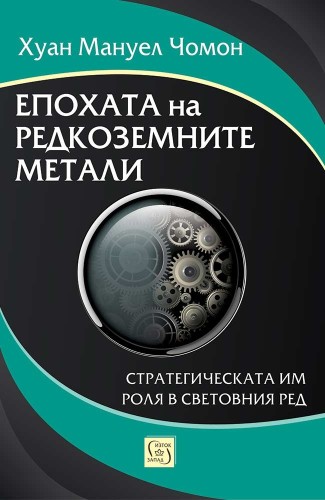
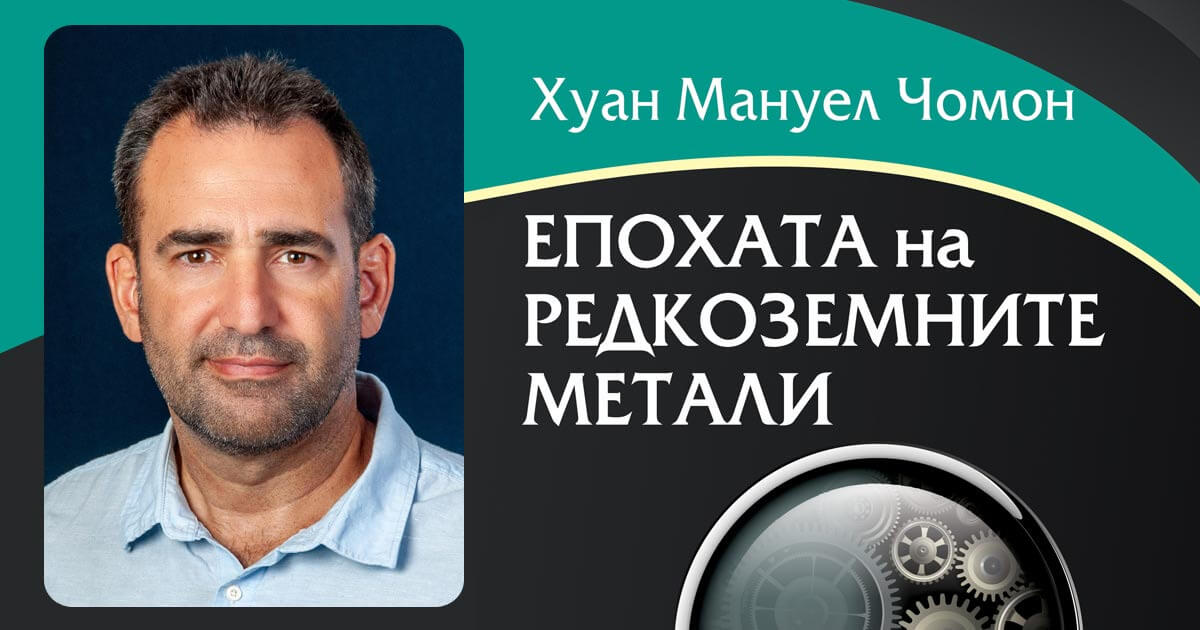 Interview with Juan Manuel Chomón, author of “The Rare Earths Era: Strategic Metals Dependency & World Order”
In your view, which single dependency in the global rare‑earth supply chain poses the greatest long‑term strategic risk, and why?
In my view, the greatest strategic risk is not simply that China mines a large percentage of the world’s rare earths. The real danger lies in the fact that China progressively absorbed almost the entire supply chain: mining, separation, refining, metal production and, increasingly, the manufacturing of final technological products and production of new patents. That is the true vulnerability. As I explain in The Rare Earth Era, China did not merely become another producer; it became the central nervous system of the rare earth world.
Modern societies tend to believe that technology is virtual, immaterial, almost magical. In reality, our digital civilization rests on a fragile physical foundation made of critical metals. Rare earths are the “holy grail” of that technological civilization. Without them, satellites, radars, electric motors, fiber optics, advanced medical systems and modern weapons begin to fail progressively. The strategic risk is therefore systemic: a disruption would not affect one industry alone, but the technological coherence of entire nations.
If access to critical minerals collapsed, which modern technologies would disappear first – and how far back could global technological capability fall?
The first technologies to suffer would be those most dependent on permanent magnets, miniaturization and high-performance electronic systems. Electric vehicles, wind turbines, advanced communications systems, precision-guided weapons, satellites and many consumer electronics would rapidly face production paralysis. Modern supply chains operate with limited inventories, so the effects would not necessarily take years but months to appear.
But the truly dangerous aspect is not the disappearance of luxury technologies. It is the cascading effect on the systems that sustain modern civilization: energy distribution, telecommunications, logistics, hospitals, transport networks and military readiness. In the book I argue that, if the disruption were prolonged and severe, parts of the world could progressively fall back technologically toward something resembling the 1970s, before rare earths became deeply integrated into everyday technological infrastructure.
What worries me most is that many societies underestimate how deeply these materials have penetrated daily life. Rare earths entered our civilization silently. They are everywhere, but almost nobody sees them.
You describe China’s rare‑earth leadership as both economic and geopolitical. Do you see this dominance as intentional strategy, historical circumstance, or a mix of both?
It is clearly a combination of both, although over time it evolved into a deliberate long-term strategy. China benefited initially from favorable geological conditions, lower environmental constraints and cheaper labor. Western countries progressively abandoned the most polluting and strategically uncomfortable parts of the supply chain, often in pursuit of short-term economic efficiency.
But China did not simply inherit this position accidentally. It protected, expanded and weaponized it strategically. Beijing understood earlier than others that rare earths were not merely commodities, but instruments of technological sovereignty and geopolitical leverage. Deng Xiaoping’s famous phrase that “the Middle East has oil, China has rare earths” reflected a profound strategic vision.
While much of the West treated globalization as irreversible, China approached rare earths with a state-centered strategic mentality. It invested patiently across the full industrial chain while other nations outsourced it. Today, the result resembles what I describe in the book as a form of strategic capture of the supply chain.
Which modern technologies do you believe are most underestimated in terms of their vulnerability to rare‑earth shortages?
I believe satellites and the invisible infrastructure behind modern communications are among the most underestimated vulnerabilities. People immediately think of smartphones or electric cars, but few realize how dependent navigation systems, timing synchronization, military communications and energy grids are on technologies that require rare earths.
Another underestimated vulnerability is modern defense technology. Precision-guided munitions, radar systems, electronic warfare, drones and aircraft maintenance all depend heavily on these materials.
In many ways, rare earths are to modern technology what oil was to twentieth-century industrial warfare. The difference is that rare earth dependence is often less visible to the public because the quantities involved are relatively small, even though their strategic importance is enormous.
Several analysts argue that U.S. policy under President Trump placed stronger emphasis on securing access to strategic resources, including those in Ukraine, which holds significant deposits of rare earths and critical minerals. From your perspective, how do resource considerations shape U.S. engagement with Ukraine, and how might this influence the broader geopolitical competition over rare earths? How do rare‑earth dependencies reshape military planning and national‑security doctrines in major powers?
Natural resources have always shaped geopolitics, even when governments prefer not to state it openly. Rare earths and critical minerals increasingly influence strategic calculations because they are essential for advanced industry, energy transition technologies and military systems. Ukraine possesses significant deposits of critical minerals, including graphite, lithium, titanium and rare earth-related potential, which inevitably increases its long-term strategic relevance.
That said, reducing the war in Ukraine solely to rare earths would be simplistic and inaccurate. The conflict is fundamentally geopolitical, historical and security-related. However, resource competition forms part of the broader strategic environment in which major powers operate. States increasingly understand that future military power depends not only on soldiers and weapons, but also on secure access to strategic materials and industrial resilience.
In The Rare Earth Era, I compare rare earths to previous strategic resources such as oil or spices that reshaped international power structures and even triggered conflicts. Today we are witnessing the beginning of a similar transformation. Rare earth dependencies are already influencing defense planning, industrial policy, strategic stockpiling and alliance structures. Modern military doctrines increasingly incorporate supply chain security as part of national security itself.
If a sudden geopolitical crisis were to cut off access to rare earths from a major supplier, what type of global economic shock do you believe would unfold first – and which sectors would be hit hardest?
The first shock would probably not be an immediate collapse, but rather panic throughout industrial supply chains. Governments and corporations would rapidly begin stockpiling strategic materials, prices would surge and manufacturers dependent on just-in-time logistics would face severe disruptions.
The sectors hit hardest initially would likely include electric vehicles, renewable energy technologies, semiconductors, aerospace and defense industries. But over time, the disruption would spread toward telecommunications, medical equipment and energy infrastructure.
What makes rare earths uniquely dangerous is that their absence creates cascading failures. A missing microchip delays an automobile. A missing magnet can halt the production of entire industrial systems. The world discovered during COVID how fragile globalization really is. Rare earths could expose that fragility on an even larger scale.
Many governments promote rare‑earth recycling as a solution. From your research, is this a meaningful path forward or an overestimated promise?
Recycling is necessary, but it is often overestimated as a near-term solution. The problem is structural. Rare earths are usually dispersed in small quantities across millions of devices, making collection, separation and recovery technically difficult and economically expensive.
Recycling will certainly become part of the solution, especially as the volume of end-of-life products increases. However, it cannot rapidly replace primary mining and refining capacity. The expected growth in demand for strategic technologies is simply too large. Even optimistic recycling scenarios leave significant supply deficits.
In other words, recycling can reduce vulnerability, but it cannot eliminate the geopolitical and industrial challenge posed by rare earth dependence. Many governments present recycling almost as a magical answer because it sounds environmentally attractive. Unfortunately, physics, chemistry and industrial reality are usually less optimistic.
Rare‑earth mining is notoriously toxic. What is the most plausible environmental catastrophe that could arise from accelerated extraction in poorly regulated regions?
The greatest danger is probably not a single dramatic accident, but the progressive destruction of ecosystems and water systems through poorly regulated chemical processing. Rare earth extraction and separation require large quantities of acids, solvents and water. If environmental standards are weak, the result can be long-term contamination of rivers, agricultural land and groundwater.
Another particularly serious issue is the association of some rare earth ores with radioactive elements such as thorium. Waste management becomes extremely challenging in countries lacking strong governance or environmental oversight.
There is a dangerous contradiction at the center of the energy transition: societies want “green technologies,” but often prefer not to confront the environmental cost of obtaining the materials that make those technologies possible. In many respects, modern civilization has outsourced not only its mining, but also its pollution.
If you had to outline one optimistic and one pessimistic scenario for the rare‑earths era over the next 20 years, what would they look like?
The optimistic scenario is that humanity finally becomes conscious of the finitude of strategic resources and understands that the current model of unlimited technological expansion based on finite materials is unsustainable. In such a scenario, major powers would progressively move away from purely competitive approaches toward a more cooperative management of critical resources through international institutions and strategic agreements.
This would also require a profound transformation of the global energy model. In my view, one possible path would involve a renewed commitment to nuclear energy, including the development of thorium-based technologies, capable of reducing part of the enormous pressure currently placed on critical mineral supply chains by the energy transition. At the same time, technological innovation, recycling, substitution research and a more rational and equitable use of resources could progressively reduce the risk of geopolitical confrontation.
The pessimistic scenario is very different. Demand continues growing exponentially while production and refining fail to keep pace. Geopolitical tensions intensify; supply chains fragment and major powers increasingly weaponize access to strategic materials. Under those conditions, rare earths could become what oil was during the twentieth century: a driver of confrontation, coercion and proxy conflicts.
In the book I describe rare earths as the “holy grail” of the technological age. The key question for the coming decades is whether humanity will learn to manage that holy grail cooperatively, or whether we will repeat the historical logic of resource wars under a new technological disguise.
Interview by Vladimir Tsankov
Products related to this post
Comments