
There Are Many Ways in Which We Could Live – and This Is One of the Worst
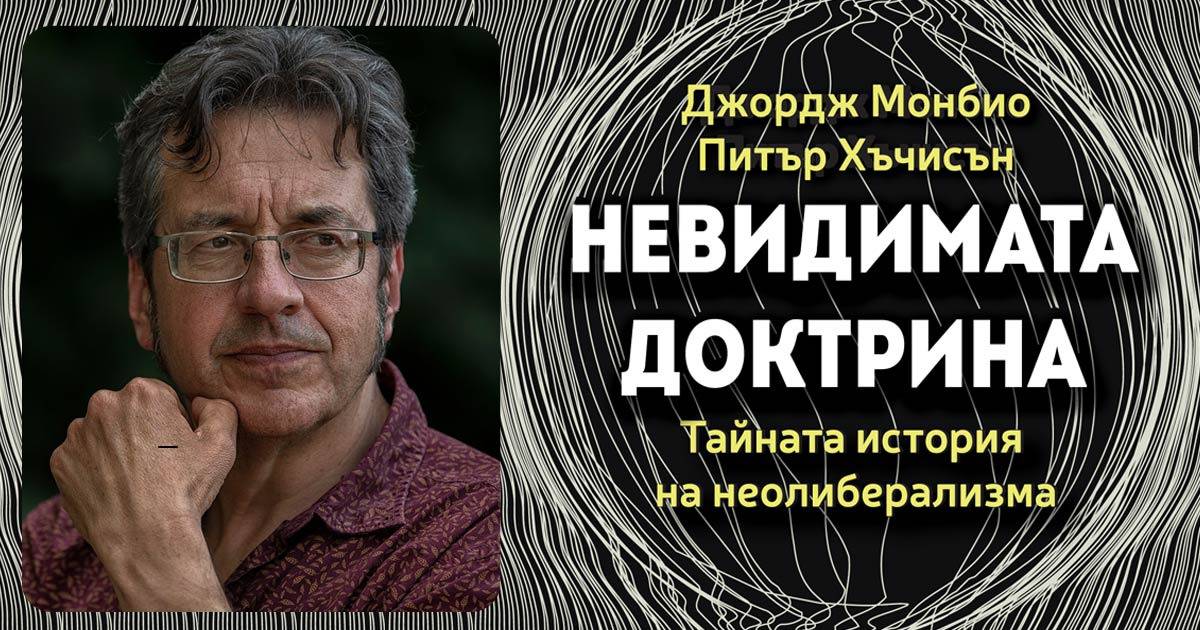 Interview with George Monbiot, Co author of “The Invisible Doctrine: The Secret History of Neoliberalism”
What do you see as the single most
damaging consequence of neoliberal ideology that people still fail to
recognize?
It's the political disillusionment neoliberalism has
caused. When people perceive that democracy cannot improve their lives, because
our power has been handed instead to something called “the market” (in reality,
very wealthy people), they come to see the political system as their enemy.
Then they become susceptible to the sirens of the far right, who claim to be
smashing the elite, but who, in reality, tend to be millionaires working for
billionaires.
Which public belief or narrative, in your
view, has been most successfully engineered by neoliberal thinking?
It is the idea that competition is and should be the
defining aspect of our lives. In truth, we are the most sociable and
cooperative of all mammals (with the possible exception of the naked mole rat).
But we have been persuaded that human life is a war of all against all, in
which some must win and others must lose. It does not have to be like that, and
many human societies have organised themselves along different lines.
If neoliberalism is “invisible,” what is
the mechanism that keeps it hidden in plain sight?
The promoters of neoliberalism have cleverly presented
it not as a philosophy or an ideology at all, but simply as a description of
how things are. They suggest that a society built on pure competition, in which
everyone seeks only to maximise their own position, is normal and natural. It
should be encouraged by any means possible, which include stripping away
taxation, regulation, protests, trade unions, even democracy itself, as these
interfere with the discovery of a “natural hierarchy” of winners and losers. In
reality, there are many ways in which we could live, many in which we can
organise ourselves, and this is one of the worst of them.
Did the COVID19 pandemic expose the
weaknesses of neoliberal systems, or did it actually strengthen them by
normalizing emergencydriven individualism?
In almost every country surveyed, there was a
fascinating response to the pandemic: nearly everyone wanted life to be
different when it was over. They did not want to revert to business as usual.
Survey after survey showed that people wanted a kinder, greener, more
cooperative society. But governments forced us back to the old ways. It was a
very clear sign that this is a topdown ideology which does not reflect public
demand.
Do current wars expose the fragility of
neoliberal globalization, or do they strengthen it by deepening public
acceptance of austerity and militarized spending?
Wars are a great distraction from our political and
economic problems. In some cases, they seem to be launched for that very
purpose. If governments can persuade us that our enemies are not the rich and
powerful within our own societies, but either the weak or the poor (such as
immigrants and asylum seekers, Black and Brown people, gay people, disabled
people ...) or another state, they can make us forget what needs to happen to
ensure we have better lives. Wars also help capital to secure or monopolise
resources, an agenda which is further advanced by neoliberalism.
Has any modern country truly escaped the
influence of neoliberal ideology, or has it become so globally embedded that
opting out is no longer possible?
There are pockets of resistance, generally at the
provincial or municipal level. But most national governments have been whipped
into line by the demands of bodies such as the IMF. Or, in some cases, through
coups and assassinations. It is fair to say that it has become globally
hegemonic. This is why popular movements are so crucial: to force reluctant
governments to change.
Can we still expect genuinely altruistic
initiatives – like the early ambition to explore space – or has every major
modern undertaking become inevitably shaped by the dominant neoliberal
ideology?
I think there's a useful contrast to be made between
the Montreal Protocol on ozone-depleting gases, which was agreed earlier in the
neoliberal era, before the doctrine was as hegemonic as it is today, and the
hopeless efforts to address climate breakdown, which are failing by design.
Neoliberalism has enabled corporate and oligarchic power to dictate to
governments, and it is highly reluctant to let go of fossil fuels.
Interview by Vladimir Tsankov
Products related to this post
Comments