
The Laws of the Universe Themselves Are Abstractions, and Yet They Govern!
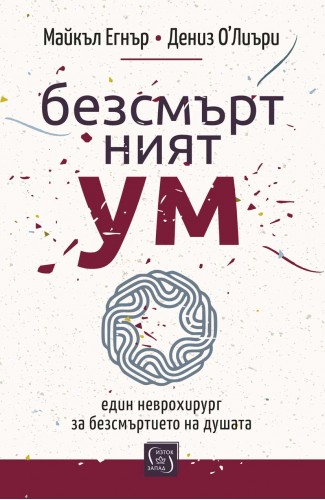
 Interview with Denyse O'Leary, coauthor of “The Immortal Mind: A
Neurosurgeon's Case for the Existence of the Soul
Interview with Denyse O'Leary, coauthor of “The Immortal Mind: A
Neurosurgeon's Case for the Existence of the SoulRadio waves have existed throughout the entire history of humanity – electromagnetic radiation is a fundamental feature of nature, present since the early stages of the universe – yet we discovered them only in the late 19th century. Why does official science so often appear narrow‑minded, seemingly dismissing unexplored possibilities with surprising ease?
That’s an excellent question! Two responses come to mind. First, in one way, science is much like religion: A great prophet or theorist can achieve a huge insight. Most of us try to understand and make use of that insight. It becomes a part of our lives. But then the guardians of the intellectual system will typically resist further insights that undermine what they think they know because they fear that it undermines their authority.
And, in reality, most attempts to enlarge knowledge are mistaken and miss the mark. The few that are correct may be neglected alongside the ones that are just wrong — especially if they challenge a worldview. Semmelweis, for example, died in an insane asylum, in part because his theories about sanitation and bacteria threatened the medical establishment. However, many such novel theories in medicine at that time were in fact wrong.
One way of looking at it: In science, the truth prevails — often, after everything else has had a turn first.
Copernicus was an interesting case. His basic hunch (heliocentrism) was right. But, I am told, he got some important things wrong. He thought, for example, that planetary orbits must be perfect circles. Astronomers knew that they are not and that discrepancy made his idea a lot harder to accept.
Popular accounts of the controversy often overlook that part of the story. It was not until Johannes Kepler straightened out many secondary matters that heliocentrism could be assessed as a theory that fit the evidence. And then it was generally accepted.
The second thing to keep in mind is that discoveries build on earlier discoveries. I like to put it like this: 100,000 years ago, a Neanderthal hunter might amuse the crowd huddled around the fire on a winter’s night by recounting the tale of the Hunter Hero who found a way to the Moon. He fought dire Moon monsters, and impressed the Moon Chief so much that he married the Chief’s daughter — and he, once a lowly Neanderthal, will in due course be the Moon Chief himself! “And if you look carefully and squint a bit, you can even make out some of these figures on the surface of the Moon...”
Did that tale bring him or anyone else closer to the moon? No, such a feat required many hundreds of discoveries and technologies, unknown to him, over thousands of years, far off from his own time. The human mind has no history but technology does.
Which specific clinical or personal case convinced you that materialism cannot adequately explain consciousness? And was there a case you wished to include in the book but ultimately could not, for one reason or another?
I’ve always thought that the placebo effect was a practical demonstration of the reality of the human mind. It may be the best-attested effect in medicine; I am told that drugs must be tested against it. If the proposed drug performs no better than placebo, it cannot be licenced for use.
Briefly, that is because people will often start to recover from an illness when they receive a medication that they believe works, even if they are in the control group and the capsule is a sugar pill. What we think is happening to us is part of what is happening to us, which I take to be evidence that the mind is a real, though immaterial thing.
And note: The rule is not that the medication proposed for the market performs better than nothing. It must perform better than the patient’s belief that he has received a healing drug. That belief is a signal of the mind at work.
Once, about twenty-five years ago, I went to stay with my brother and sister-in-law, both medical doctors, in Ottawa. I had developed a bad case of bronchitis so my sister-in-law gave me a medication.
I took the pill and went to lie down. After about an hour’s rest, I felt great. The bronchitis was much better. I skipped downstairs to thank my sister-in-law and she said, “Well, that’s nice, but this medication would not really start to take effect for about five more hours...”
No, but the effect of being convinced that I had at last acquired a solution took effect right away and made a physical difference.
There are many other reasons to think that the mind is real but immaterial. But the placebo effect is the one that has stayed with me.
When we look back at the origins of life, how do you view its emergence – as a chance outcome of millions of years of chemical reactions, or as the product of still‑unknown, possibly non‑material forces? And can arguments for a non‑materialist origin of life be subjected to empirical evaluation?
First, after a century of research, there is no viable theory of the origin of life. There are hundreds of non-viable ones. Silence can be a signal.
The topic has also become much more complex now that “simple” and presumably early life forms turn out to be very complex indeed. Also, the Archaea seem to have arisen separately from the prokaryotes, which seems to double the odds against a purely chance origin.
Without getting into any specific philosophy or psychology, it seems reasonable to assume that there is an information source behind the universe that enables complex origins.
About the question of empirical evaluation, my counter-question would be, what evidence would the skeptic accept? If I know that, I can provide some sort of response. But if it becomes evident that he would not accept any evidence, then we are not really in a conversation.
How do you view the emergence of consciousness in the human being – what do you consider its foundational source? And is there a conceptual bridge that can be built between rigorous scientific inquiry and spiritual traditions, one capable of illuminating what many describe as the “divine breath” underlying human awareness?
Well first, as I noted above, the human mind has no history. We see it when we see it. Perhaps a paleontologist finds a child’s burial from 80,000 years ago with a decorated shell or various other artifacts. Or bones coated with ochre. Absent the written word, we cannot know what the shell engravers or the bone coaters believed. But we sense that they believed something, and that sets them apart from the buffalo and the squirrel. Beliefs about what happens at death would require a human type of consciousness and we have no idea how that consciousness came about, only interesting speculations.
We don’t begin to have any idea how other people have thought until the development of writing, which combats mortality where ideas are concerned.
Rigorous scientific enquiry has shown that almost all humans have had some concept of how the cosmos in which we live came to exist, our place in it, and what our deaths portend. The fact that these ideas differ very much should not be allowed to obscure the significance of the fact that we have any such ideas at all. Perhaps that is the “divine breath” you mention.
I think that a desire to learn more about all this is a sturdy conceptual bridge, provided that the bridge is girded with humility in the face of the remarkable fact that humans are asking these questions at all. A simple explainaway will not suffice.
After examining so many near‑death experiences, do you believe that at the very end of biological existence a person may encounter insights that remain inaccessible during ordinary conscious life? And if such revelations do occur, is there not a certain tragedy in the fact that they cannot be shared with those who remain behind?
That’s the topic of a book Mike Egnor and I are working on now (Worthy 2027). Yes, there is considerable evidence that people gain insights at death that they did not have in life and many change the directions of their lives because of those insights.
What’s changed in the last century is that medical procedures have revived many people who, in centuries past, would simply have died without telling anyone what they saw. Hence, there are thousands of accounts of near-death experiences, which fit into rough patterns and give us some insight. So today the accounts are more often shared.
In the past, there were many such accounts, as Carol Zaleski’s Otherworld Journeys recounts. But back then, there was no way of being sure that the person recounting the story was actually in the process of death and somehow recovered. Today, NDE researchers can study medical records to see what was happening physiologically, hence the concept of the near-death experience.
If consciousness is not generated by neural processes, how do we address the deeper epistemic tension that every act of knowing – including the recognition of consciousness as non‑material – is still mediated through neural structures? Or does the very nature of our insights and illuminations itself deny a materialistic origin?
I am honestly not sure why it is an epistemic tension. If the mind is real, there is no reason it should not be effectual. Let’s say I need to calculate something for a kitchen chore. I remember an abstract formula and mentally work out the correct measured amount. The immaterial abstract formula, the neurons I use, and the measured substances are all real. And so am I, a mind-body composite.
If someone cannot accept that state of affairs philosophically, his problem is with the universe, not with you or me: The laws of the universe themselves are abstractions, and yet they govern.
As a journalist, what was the greatest challenge you faced while working on “The Immortal Mind: A Neurosurgeon’s Case for the Existence of the Soul”, particularly in translating complex concepts for a broad readership? And do you think the proliferation of various spiritual practices tends to distort the picture that the media present regarding the subject you investigate?
We needed to avoid writing a textbook or a philosophical treatise (guaranteed to cause most people to quickly remember all the other things they have to do or could be doing…) Mike solved this by providing many anecdotes from his practice. Anecdotes are living demonstrations of our topics so they bring the subject to life. And we found many other methods as well. Current events, quotations and statistics can help keep the story moving too. Above all, the trick is to make sure that people always realize that these are living questions that affect us all, not someone’s thesis somewhere.
Which book do you wish you had written – both on a personal level and in terms of your professional aspirations?
There are many books I am not competent to write or assist with writing and I am sure Mike would say the same. That said, I would be happy to work, as a second author, on a book on the nature and importance of free will. It is critical to the preservation of human dignity and freedom in an age where the totalitarian temptation looms.
Interview by Vladimir Tsankov
Products related to this post
Comments