
We May Be on the Brink of the Biggest Scientific Discovery in Human History!
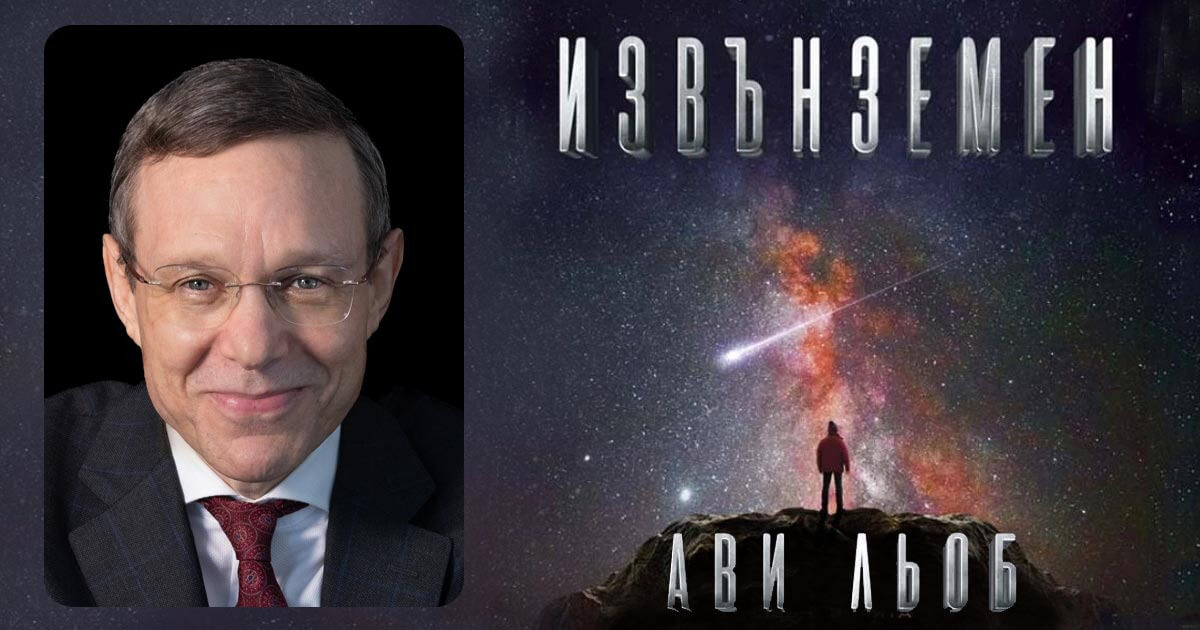 Interview with Avi Loeb, author of “Extraterrestrial: The First Sign of Intelligent Life Beyond Earth”
On June 5, 2026, leading scientists from the Search for Extraterrestrial Intelligence (SETI) community and the International Academy of Astronautics (IAA) officially updated the global protocols for how humanity should respond if a credible extraterrestrial signal is detected. The revised guidelines advise strict independent verification before any public announcement and reaffirm that no reply should be sent to an extraterrestrial intelligence without broad international consultation. In such a scenario, should we remain silent, in accordance with the Dark Forest Theory?
These SETI protocols can be easily applied to an electromagnetic signal received across the Milky-Way disk of stars, which has a diameter of 53,000 light years from the Earth’s location. A response signal at such a distance would arrive only in 53 millennia to the conversation partner. There is no rush to reply on a timescale of years. The conversation partner will not notice the time delay required for an international committee to decide how to respond.
However, the situation is very different for a visitor to our backyard in the form of a technological interstellar object. In that case, a prompt response may be needed in order to figure out the intent and abilities of the visitor. It only took months for the latest interstellar visitor, 3I/ATLAS, to traverse the inner solar system at a speed of 60 kilometers per second, a few times higher than our fastest spacecraft. A long delay in responding to a hostile invader could carry dramatic repercussions to the future humanity.
The response to a visitor cannot be decided ahead of time because the details of the visitor’s capabilities and intent must be observed and taken into account. For the challenges of travel through the hazardous conditions of interstellar space, survival of the fittest implies that we are most likely to meet travelers from the top of the cosmological food chain. Mediocre travelers will not make it far from their home exoplanets.
An encounter with a visitor that represents our long-term technological future millennia from now, might resemble the meeting of a cave dweller with our latest AI-assisted robots. A committee of cave dwellers can establish a protocol on how to respond, but their choice of a sign language will have negligible consequences as to the outcome.
My hope is that the encounter with interstellar artifacts near Earth will bring humans together because we are all in the same boat. Decisions by committees are based on the false premise of a meeting among equals, whereas in reality the encounter with a superior technological civilization will most likely fill us with a sense of cosmic modesty. This will be a learning experience through which we would witness new technologies and science, and be inspired to imitate our visitors. Once we realize that they arrived at our backyard, we will be motivated to visit their backyard in a similar fashion. This will change our geopolitical priorities from a focus on conflicts over the two-dimensional surface of a rocky planet to a focus on exploration of the three-dimensional interstellar space.
Ultimately, we might construct a city-size spacecraft with artificial gravity that would serve as our Noah’s Ark flagship into space. At that time, we will become an interstellar species by recognizing that this is the only way for us to be remembered in the history books of the Milky-Way galaxy for billions of years to come. SETI observers might then receive the uplifting message: “Welcome to the club of interstellar travelers!”
Just very recently you were appointed to lead the newly formed UAP Science Advisory Council, a federal‑level scientific advisory group that includes multiple agencies and scientific bodies and is tasked with providing rigorous scientific analysis of Unidentified Anomalous Phenomena (UAP). In which specific direction do you intend to focus the Council’s resources and efforts most strongly?
The task of the council is to figure out the nature of UAP based on the scientific method. As any good detective knows, the key for resolving a mystery is acquiring good data. The council submitted a request to the U.S. government for more than 50 items of information and provided a list of new recommended sensors for gathering better data in the future (as detailed here). The quality of our deliberations will reflect the quality of the data we get access to.
There are two possibilities regarding UAP of technological origin: either they were made by humans or not. In the first case, the work of the council will promote national security since some UAP are found near strategic assets. In the latter case, some UAP may represent the biggest scientific discovery in human history.
Alien intelligence could educate us much more than artificial intelligence, because it is based on a training dataset that extends well beyond Earth.
Since 2024 we have been witnessing an unprecedented release of declassified UFO/UAP footage by the U.S. Government. What do you think is driving this shift toward greater transparency? And are some people justified in seeing it as an attempt to prepare the public for new information that could challenge our understanding of the world around us?
President Trump should be credited for the recent directive to declassify UAP data that does not compromise national security. Much of classified data remains under wraps, not because of the targets but because of the classified sensors that were used to collect the data. The U.S. government prefers not to reveal the abilities of these classified sensors to adversarial nations.
The partnership between government organizations like the Office of the Director of National Intelligence (ODNI) or the All-Domain Anomaly Resolution Office (AARO) in the Pentagon, the FBI, the White House and the Intelligence Community, with scientists like myself implies that they have data on objects that do not lie within the performance envelope of human-made technologies. If they were confident about all of technological UAP being human-made, they would have summarized their suspicion in a classified memo to the Secretary of War, Pete Hegseth, and not ask for advice from scientists.
Reality appears to be far more uplifting than the script of Spielberg’s new movie “Disclosure Day” where the car of the main characters is slammed against a moving train. My car remains in good shape and the U.S. government is cooperating with me in the pursuit to better understand the nature of UAP.
Nine years after ʻOumuamua’s discovery, what do you consider the single most haunting anomaly in its behavior – the one feature that still resists all natural astrophysical explanations?
The most remarkable facts about `Oumuamua are the flat shape (inferred here at a statistical confidence of 91%) and the non-gravitational acceleration (reported here at a statistical significance of 30 standard deviations) with strict limits on outgassing (reported here).
How do you interpret ʻOumuamua’s non‑gravitational acceleration, and why do you believe conventional outgassing models fail to account for it? What specific technological properties would ʻOumuamua need to possess for the artificial‑origin hypothesis to be scientifically plausible?
The Spitzer Space telescope did not detect any carbon-based molecules or dust surrounding `Oumuamua. Comet experts suggest that this gas is invisible. They behave just like the adult characters in Hans-Christian Andersen’s story “The Emperor’s New Clothes,” who insist that the clothes are invisible. These comet experts label `Oumuamua as a dark comet, namely a comet for which the telltale characteristics of a comet are missing. The situation resembles zoologists who studied zebras throughout their career and saw an elephant for the first time. They would argue that the elephant is a zebra without stripes.
My recommendation to these comet experts is for them to expand their training dataset. We know that our space agencies launched technological objects to space and the same may be true for older civilizations which launched devices to interstellar space. Albert Einstein argued: “Imagination is more important than knowledge”. And I add to that: “The foundation of science is the humility to learn, not the arrogance of expertise.”
How did the unexplained anomalies of ʻOumuamua influence your decision to establish the Galileo Project, and what gap in scientific inquiry did you feel urgently needed to be filled?
Prior to the discovery of `Oumuamua, SETI was limited to the search for electromagnetic signals, which resembles waiting for a phone call. I realized that even if we have neighbors, we might not receive a phone call from them. In that case, we should check our mailbox for packages or our backyard for any tennis balls from our neighbors.
The Galileo Project followed shortly after the first ODNI report to the U.S. Congress about UAP in June 2021.
You introduced the idea of ‘cosmic archaeology’ – the notion that ancient extraterrestrial technology may persist in space long after its creators are gone, and that machines may outlive biology, making technological relics the most detectable form of life. How does the Galileo Project address the practical limitations imposed by the vastness of the universe, and which detection strategies do you consider most promising for locating ancient technological artifacts?
The Galileo Project constructed three observatories which are collecting multi-modal data in search for extraterrestrial artifacts in the infrared, optical, radio and audio bands, as well as through expeditions to retrieve materials from interstellar meteors. A year ago, we constructed a Galileo Observatory in Las Vegas, Nevada, which has three units that allow us to triangulate objects near Earth and measure their distance, velocity and acceleration in search for UAP. There is a huge public interest in the subject. The latest release of UAP files by the U.S. government received 2 billion views in the last two months. This offers an amazing opportunity to attract kids to science.
There are two themes that bring all Americans together: national security and the search for aliens.
Long before the Event Horizon Telescope produced the first image of a black hole, you published theoretical work on how light bends around a black hole and how its silhouette could be observed. As the founder of the Black Hole Initiative, what do you see as the most haunting secret of black holes that we are now finally close to uncovering?
The biggest unsolved mystery in the study of black holes is what lies at their center. Einstein’s theory of gravity breaks down at the singularity where the curvature of spacetime diverges, because it does not incorporate quantum mechanics. Since we do not have a predictive theory of quantum gravity, we do not know what replaces the singularity. My personal favorite is that the matter that collapsed to make the black hole ends up in a central star there which has the maximum imaginable density of matter, the so-called Planck density, which is 93 orders of magnitude larger than solid density!
Black holes are the ultimate spacetime prison, from where even a spacecraft moving at the speed of light cannot escape. The only way to test my conjecture about what exists near the center is to fall into a black hole. I recommended doing so to some of my colleagues who dedicated their career to string theory as a candidate for quantum-gravity, but they argue that I have an ulterior motive for sending them into a black hole.
Interview by Vladimir Tsankov
Products related to this post
Comments