This book is an intellectually captivating journey through the period of the disintegration of the Western Roman Empire, the construction of the new capital Constantinople on the site of the city of Byzantion, and the gradual formation of the Eastern Empire—during times of migration of various tribes, tempted to settle within its territory.
The Eastern Empire—a flexible and rapidly developing organism—managed to resolve the problem of invasions through skillful policy, establishing coexistence, neighborhood, or alliances with the barbarians, and living alongside them by entering into relationships that were not achieved in the Western Empire.
Where lies the key to the preservation of the Byzantine Empire for a thousand years after the fall of the Western Roman Empire?
Uspensky provides an answer to this and other questions, revealing to the reader the full picture of decisive events that shaped the face of modern Europe. He presents numerous aspects of the political, military, and diplomatic history of Byzantium, the clergy and church affairs, crafts and trade, agriculture, urban planning, laws and their application, and the strict hierarchical structure of the empire.
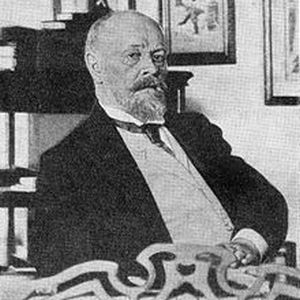
Fyodor Ivanovich Uspensky (1845–1928) spent more than 40 years studying historical sources and archaeological data on site in Constantinople, Asia Minor, Syria, and Palestine, leaving us a remarkable work that sheds bright light on the grandeur of Byzantium.
"History of the Byzantine Empire" is published in Bulgarian in five volumes, with the first volume divided into two parts.
- Volume 1, Period I
Period I (up to 527). Elements of the formation of Byzantinism
- Volume 1, Period II
Period II (518–610). From Justinian I to Heraclius
- Volume 2, Periods III–IV
Period III (610–716). Heraclius and his successors. Period of Iconoclasm (717–867)
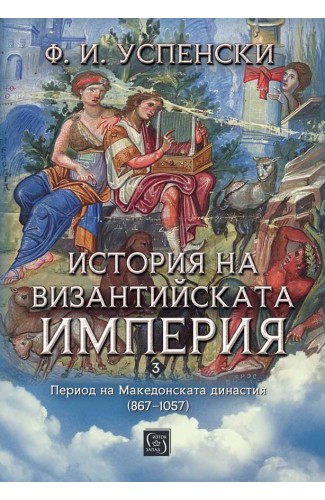
- Volume 3, Period V
Period of the Macedonian dynasty (867–1057)
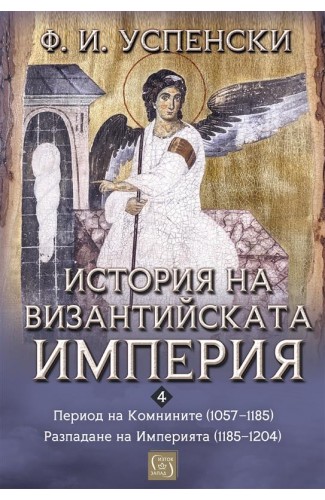
- Volume 4, Periods VI–VII
Period VI. Komnenoi (1057–1185). Period VII. Disintegration of the Empire (1185–1204)
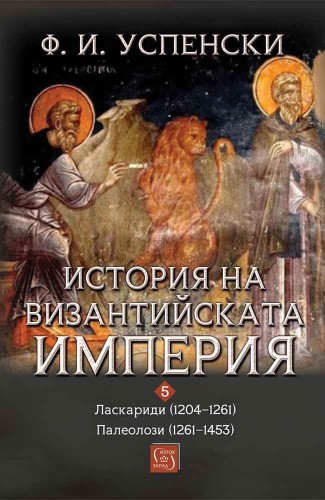
- Volume 5, Periods VIII–IX
Laskarids (1204–1261). Palaiologoi (1261–1453)