Welcome to the new website of “Iztok-Zapad” – quality books, knowledge, and inspiration all in one place!
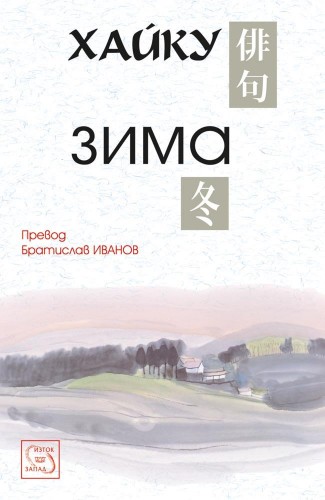
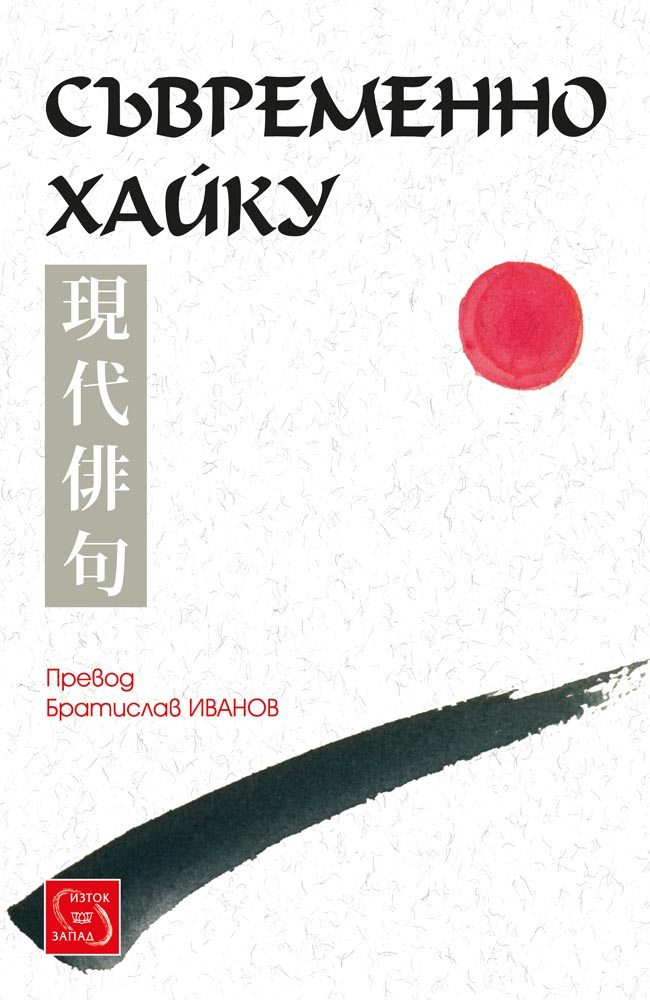
Contemporary Haiku

Contemporary Haiku

Sale -20%
  • 3.58€ / 7.00 лв.
  • 2.86€ / 5.60 лв.

Turn the Page. See the World: This month only, enjoy a 20% discount on all books.

Product Code:
216-01
ISBN
954-321-191-4
SKU
18.0114
Year
09-12-2005
Translation
compilation and translation from Japanese: Bratislav Ivanov
Pages
136
Size
130/200 мм
Weight
0.232 kg
Cover Type
Paperback
Genre
Poetry, Haiku, Japan

Bratislav Ivanov (compilation)

Bratislav Ivanov (compilation)

Bratislav Ivanov (born March 29, 1945) is a Bulgarian author of works in linguistics and culture of Japan and a translator from Japanese language. He graduated in Japanese Language and Literature from the Moscow State University. He has specialized in the Japanese Language Institute at the Japanese Foundation. He is the author of many Japanese language articles and books, as well as a series of tr…
Read more

In the first half of the nineteenth century, the Japanese society experienced a profound crisis that eventually led to the sweeping revolutionary changes that remained in history under the name Meiji Restoration. As a result of these changes, the country is confidently undertaking the road of modernization and industrialization. The usual attempts to re-evaluate traditional values are also appearing.

In the eighties and early nineties of the 19th century, there was a debate in Japan under the motto "Is Haiku Literature?". In 1892, Masaoka Shiki, a poet, theorist, and pioneer of the modern haiku was also included in the discussion. Some consider Shiki to be one of the four great haiku masters, the others being Matsuo Bashō, Yosa Buson, and Kobayashi Issa. In 1892, the same year he dropped out of university, Shiki published a serialized work advocating haiku reform, Dassai Shooku Haiwa or "Talks on Haiku from the Otter's Den".

Shiki may be credited with salvaging traditional short-form Japanese poetry and carving out a niche for it in the modern Meiji period. While he advocated reform of haiku, this reform was based on the idea that haiku was a legitimate literary genre. He argued that haiku should be judged by the same yardstick that is used when measuring the value of other forms of literature — something that was contrary to views held by prior poets. Shiki firmly placed haiku in the category of literature, and this was unique.

There are no reviews for this product.