
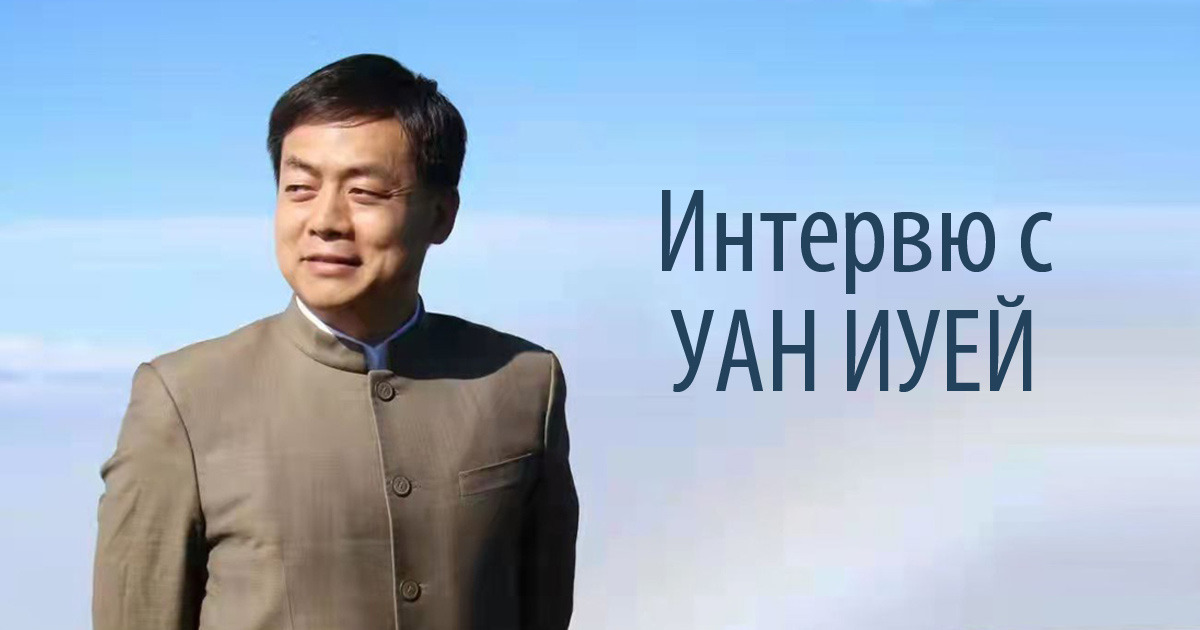
“China will not follow the U.S. model of hegemony.” Interview with Wang Yiwei
How do you assess the evolution of relations between China and the European Union in the context of the Belt and Road Initiative? What prospects do you see for this partnership, and what key challenges remain to be addressed?
The EU was quite excited about the Belt and Road Initiative in the beginning, because it offered an alternative land route across the Atlantic – spanning the Eurasian continent. It also revived the exchange and mutual learning between Eastern and Western civilizations, elevated the EU’s status, and helped Europe reconnect with its historical identity. Of course, some people called it the New Silk Road and worried about China expanding its influence across Eurasia. Additionally, Russia, as the largest Eurasian country, seemed somewhat reluctant whenever Eurasia was mentioned. Nevertheless, Central and Eastern European countries were the first to seize the opportunity brought by the Belt and Road Initiative, upgrading the "16+1" cooperation framework that existed before the initiative to "17+1." Greece also joined. It was not a zero-sum game between land and sea, but rather a Chinese initiative for land-sea express routes, land-sea connectivity, and infrastructure integration. As a result, Central and Eastern European countries became gateways linking China to the heart of Europe. Large-scale infrastructure projects, energy cooperation, and investments in connectivity became a hotspot at the time. However, Europe also struggled with questions such as the relationship between "16+1" and the Belt and Road Initiative, fearing it might undermine EU standards. Meanwhile, China was seen as offsetting Germany’s downstream influence, among other concerns. Portugal was the first to join the Belt and Road Initiative. Spain and even the UK also wanted to join at one point but later gave up, partly due to growing concerns over EU normative power and U.S. influence.
How do you view China’s role in the contemporary world – from economic, cultural, and geopolitical perspectives?
China's growing global influence is, in fact, a great return – what we call a great rejuvenation. This trend is driven by several inevitabilities:
First, China is the only uninterrupted civilization in human history. In the age of AI powered by large language models, just 3,500 Chinese characters are enough to express virtually all meanings. China’s national and ethnic identity is naturally rooted in over five thousand years of mythology and history. As a result, China has achieved the trinity of country, nation and state (so-called “civilization state”) – a unified whole that operates as "one chessboard," enabled by a new type of nationwide mobilization system. Initiatives like the "Six Networks" under the 15th Five-Year Plan clearly demonstrate this advantage.
Second, China is a secular civilization that does not believe in a single deity. It embraces the coexistence of Confucianism, Taoism, and Buddhism, while also practicing pragmatism. Historically, China has never fought religious wars, emphasizing harmony and shared existence – including in its current approach toward the United States. This brings hope to the world.
Third, the Chinese spirit of "man conquering nature" – expressed through stories like Yu the Great taming the flood and the Foolish Old Man moving mountains – reflects a strong will to overcome challenges. This is different from the Western narrative of salvation through Noah’s Ark. The Chinese people’s diligence and wisdom have created one miracle after another, making China the only country with a complete industrial chain. Its advantages in talent, nationwide mobilization capacity, and application scenarios – collectively known as the "four major advantages" mentioned in the 15th Five-Year Plan – are unmatched. In short, under the leadership of the Communist Party of China, rejuvenation is unstoppable.
In the future, China's political, economic, military, and cultural influence in the world will surpass that of the United States. But crucially, it will not follow the U.S. model of hegemony or military alliances. Instead, China emphasizes partnership rather than alliance, building a global network of connectivity partnerships, advancing the Belt and Road Initiative, and promoting a shared future for mankind – ushering in a world without hegemony. This represents a new form of human civilization.
How would you describe the current state of relations between China and the United States, particularly when viewed in the context of developments in the Middle East? Do you see China’s growing role in the region as complementary to, or in quiet competition with, the United States’ traditional influence there?
China and the United States represent two major powers, two distinct systems, and two great civilizations. First, in terms of power, the current international landscape can be described as "two superpowers and multiple major powers." In comprehensive national strength, both China and the U.S. are far ahead of the rest. The same applies to new quality productive forces. Second, regarding the two systems, China has established a system truly independent of that of the U.S. For example, in mobile operating systems, the world has Apple’s iOS, Google’s Android, or Huawei’s HarmonyOS–no other country has developed its own. China does not use Google, Facebook, or Twitter; instead, it has its own Baidu and WeChat. Most other countries cannot achieve this. Thus, if the two systems confront each other, the world may face division; if they can be compatible, a new Cold War could be avoided. Third, concerning the two civilizations, take AI development as an example: the U.S. approach is "all in AI," reflecting a monotheistic, capitalist worship of technology. In contrast, China’s approach is "AI in all," emphasizing AI that is inclusive, open-source, beneficial to the people, empowering all industries, and subject to strong regulation. The so-called China-U.S. rivalry thus influences the direction of human civilization. In the Middle East, China is a latecomer. The U.S. inherited Britain’s colonial legacy, built military alliances, maintains deep religious and people-to-people ties with Israel, and is entangled in the petrodollar system. As a result, the U.S. is heavily invested and constrained. China, by contrast, is relatively detached and serves as a constructive force. The Middle East is a critical link between Europe, Asia, and Africa, hosting vital strategic corridors and energy supplies. China will neither replace the U.S. nor provide American-style security guarantees or petrodollar arrangements. However, more and more Middle Eastern countries may no longer anchor their security solely on the U.S.–as the recent Iran conflict has shown. U.S. military bases can become targets of attack rather than guarantees of safety. As a result, connectivity, horizontal cooperation between the Gulf states and ASEAN, and decentralized financial and energy cooperation models are emerging as new paradigms, distinct from the U.S. model, offering the Middle East more choices.
Looking ahead to the next decade, what areas of global development do you believe China will prioritize most strongly, and how do these priorities align with the needs of developing countries?
Development is the master key to solving all the problems facing humanity, and it is also one of China’s greatest comparative advantages internationally. However, the Chinese people emphasize that common development is the only real development, and sustainable development is the only good development. Therefore, China’s understanding of development is rooted more in the philosophy of the I Ching (Book of Changes) than in the narrow Western notion of "developing" as a transactional process. It is in this spirit that China has put forward the Global Development Initiative, whose principles are based on China’s domestic development experience as well as the needs and expectations of the world.
Why does China need the Global South? First, China has always seen itself as a natural member of the Global South. It is the only developing country among the UN Security Council permanent members. It was developing countries that helped restore China’s lawful seat in the UN. China shares with the Global South a common identity of opposing imperialism, colonialism, and hegemonism. That said, China is not an ordinary Global South country–some even regard China as a superpower. Therefore, China has voluntarily renounced the preferential treatment typically enjoyed by Global South countries in forums such as the WTO, while stepping up to take on greater responsibilities as a major country. There may be some gap between China’s self-perception and how the outside world perceives it.
The Belt and Road Initiative (BRI) now includes 156 countries, most of which are from the Global South. The BRI promotes shared modernization with China and the building of a community with a shared future for mankind–a reflection of China’s sense of responsibility.
China needs the Global South not only psychologically and emotionally, but also economically and politically. Economically, according to a forecast by the United Nations Industrial Development Organization (UNIDO), by 2030–just five years from now–China will account for 45% of global manufacturing output. This far exceeds what China alone can consume. Developed countries are experiencing consumption contraction, so the market yet to be tapped lies in the Global South. Moreover, China seeks to participate in the formulation of global standards, which requires the wider application of Chinese technologies around the world. Politically, the Global South is a natural partner for China in shaping a more open, inclusive, equitable, balanced, and win-win direction for the global political and economic order. Hence, the Global South needs China, and China needs the Global South–China itself is, after all, part of the Global South.
With artificial intelligence becoming a central topic in global governance discussions, how do you see China contributing to the development of international norms and standards for safe and responsible AI?
China is a developing country shaped by Confucianism and Daoism. Therefore, China has always emphasized respect for the natural order (Tian Dao) and warns against anthropocentric arrogance. Artificial intelligence must never be deified. It should benefit all people and all industries, not just a so-called "chosen few." Second, China advocates for development within regulation and regulation within development. AI must balance ethical, moral, security, and risk considerations–it should not be developed in a laissez-faire manner for military purposes or at the behest of certain countries. Third, China stresses that the foundational logic of AI development rests on electricity and infrastructure. That is why China continues to promote Belt and Road cooperation on connectivity, emphasizing openness, inclusiveness, security, and benefits for all countries and peoples. This stands in contrast to the U.S. approach, which emphasizes a "winner takes all" mentality and an "all in AI" strategy.
Without China’s DeepSeek, people might have thought that ChatGPT represented true open-source AI. In fact, models like DeepSeek better meet the needs of the Global South and even people in developed countries. If China fails, the United States could act with impunity, calling black white and imposing its will on others. Humanity could then find itself in an "AI 1984" era–a very dangerous prospect.
Thus, China and the U.S. indeed have different philosophies and models. There is competition, but also cooperation. U.S. high-end chips cannot generate profits without a market, and without profits they cannot iterate. Yet the U.S. fears that selling to China would allow China to overtake it. This contradiction leads the U.S. to try to control the pace of development. Instead of competing head-on in high-end chips or raw computing power, China focuses more on integrating AI with the real economy–enriching all industries and benefiting the real economy and all people. This, I believe, represents a new form of human civilization, one that emphasizes AI for the common good.
Interview conducted by: Vladimir Tsankov
Comments