
"Some of the most complex mysteries in evolution are now becoming accessible for research!"
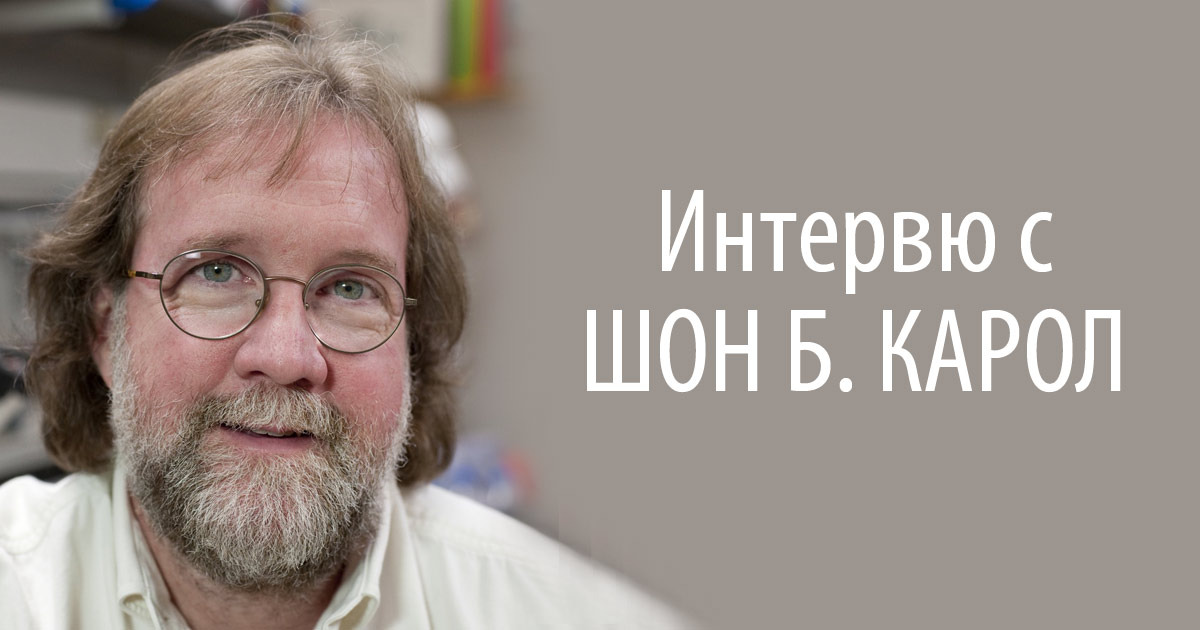 An Interview with Prof. Sean B. Carroll, author of "Endless Forms Most Beautiful"
Dr. Petar Eftimov: As a child, I read Conan Doyle, and he has a wonderful book—not about Sherlock Holmes, but about scientists. In it, there is a character, Professor Challenger, who is strongly against the idea of scientists "wasting time" popularizing science. There is a famous passage where he says: "Do not make this mistake. Professor Wadley, with all due respect, is a parasite"—using the labor and efforts of researchers to gain popularity.
I myself popularize science, though not on such a scale. What is your opinion? Should we "waste" time on popular interviews, books, movies? By the way, I saw you have a 2022 movie that I haven't watched yet.
Prof. Sean B. Carroll: I believe science plays an important role in our global culture. If I may say so, science is probably the closest to the ideals of the UN of all human endeavors. Here we are—talking to each other, coming from completely different backgrounds. We know there are certain norms for how scientists communicate worldwide, how they collaborate, how they share information. The scientific community has a lot to offer society—both in terms of how scientists think and how they work together. It's actually a very positive story in most cases.
What we discover—and I think this is important for our culture—is that the adventure of exploring nature and revealing how it works is something society can appreciate and derive meaning from. Science has as much to give to culture as art, music, or literature do. But it can only make this contribution if active efforts are made for these discoveries and insights to reach people—and that usually happens through the media: books, podcasts, movies, etc.
That is the more idealistic view of the role of science in culture. But there is also a very practical one: in most countries, society funds science.
To have public support, people need to understand what scientists are doing, why they are doing it, what they are discovering, and how it might affect their lives. Scientists need to participate in this conversation. It cannot be left solely to third parties. We have a lot to share because we are the "travelers"—the ones entering the unknown, seeing things that haven't been seen, having completely new ideas. Of course, we must share this.
Usually, when one has to explain something complex—and that is a serious effort—one has to take the time to think about how to present, for example, the concept of Hox genes to the general public.
Dr. Petar Eftimov: But usually, people start the rationalization like this: "Scientists should participate in public communication to convince society to fund science." And that is only one of the reasons. You articulated it very well: our role is also to show the general public that science makes an equal contribution to human culture, alongside art, literature, and everything else.
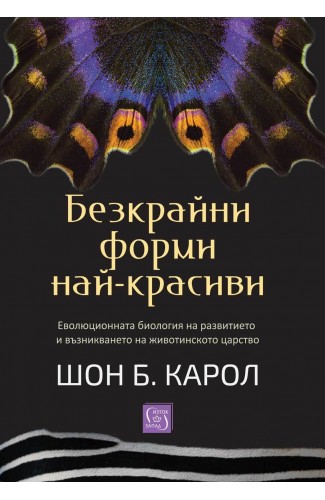
Let's go back to your book; Endless Forms Most Beautiful: again, what a title!
Prof. Sean B. Carroll: I stole it from Darwin. (laughs)
Dr. Petar Eftimov: Of course, it leads to Darwin, but Steinbeck does the same. And Hemingway does it, but with the Bible. So you have a great example.
In your book, you emphasize the role of gene regulation over the "invention" of new genes. How did this shift in perspective change our understanding of evolution compared to earlier, gene-centric views?
Prof. Sean B. Carroll: I think I was lucky to be part of a revolutionary shift in thinking—a shift that came about because we finally managed to get answers to some questions. When I was graduating as a student, or was on my way, not a single one of the genes involved in building and patterning the body had been isolated yet. There were only rumors. You had to go around and ask.
At that time, the expectation—and I was doing a PhD in immunology, working mainly with mammals—was that the formation of a mouse or a human had nothing to do with the formation of a fruit fly. These were completely different branches of the animal kingdom: we have bones, flies don't; we have big brains, they don't, etc.
When the genes, the so-called Hox genes, were first isolated, and when it was very quickly established that they have counterparts throughout the animal kingdom—including in us—and that they are arranged in clusters, just like in the fruit fly, it was a shock. Exciting, incredible, but shocking. This required a complete rethinking. I don't know anyone who predicted such a result. No biologist expected that the exact same set of genes would govern the construction of animals as different as worms, flies, humans, and elephants.
And that makes you wonder: "What does this mean? If there are shared genes involved in building the body, what is that telling us?" The first conclusion is that a large part of the animal kingdom is constructed with a similar "toolkit" of genes.
So you make a huge conceptual turn: from the idea that organisms have nothing in common, to the realization that they have a lot in common. But despite that, we are different animals from fruit flies. Butterflies are different from them, lobsters from shrimp. And then the question arises: "What makes them different if they use similar genes?"
This is one of the core ideas of "evo-devo" (evolutionary developmental biology): these genes are shared, but different animals are produced because the genes are used differently—just as you use the tools in your workshop in various ways to assemble different things.
I don't know if I'm answering your question exactly, but the big shift in thinking was triggered by these shocking discoveries. If genes are so similar, then where does the diversity come from? It comes from the different ways they are used and expressed.
Dr. Petar Eftimov: You mentioned, and I often emphasize in my lectures, Theodosius Dobzhansky's great thought: "Nothing in biology makes sense except in the light of evolution."
Many people still think that evolution is driven primarily by mutations in protein-coding genes. Why is gene regulation such a key part of the puzzle? I am leaving aside those people who think evolution is a "choice of belief"—we won't talk about them.
Prof. Sean B. Carroll: Yes, we won't. Why is regulation so important? Part of the explanation is historical. For a long time, when we read DNA, we could mainly read the parts coded into proteins. The genetic code was deciphered in the 1960s. And when biologists analyze cells, tissues, or blood, they usually look at proteins. That's why we had a very protein-centric view of life. But we hadn't looked at the "choreography" of it all. Let me start there.
Imagine this: from a single fertilized egg—one cell—depending on the organism, trillions of cells must be produced, differentiated into hundreds of types, organized into tissues and organs. Where does this choreography come from? It is a ballet of time and space. Events must happen in a specific order and in specific places relative to each other. This information is in the genome, in the DNA, but it has to unfold. That is regulation: it determines when and where genes are active or inactive. It is precisely this choreography that is needed to build a complex organism.
The simplest way I explain it is this: development is one of the most spectacular phenomena on the planet—one cell turning into a complex organism. Any parent can appreciate this, going through it—it is simply infinitely amazing.
Ever since Aristotle, people have marveled at how in 21 days you can observe the development of a chick day by day. But what is the difference? Aristotle only had the power of observation. He said: "Okay, I will break this egg day by day—day one, day two..." And so he arrived at the idea of preformation.
Dr. Petar Eftimov: But today we have tools. We have modern laboratories, and our understanding of these processes is much more advanced than then.
Prof. Sean B. Carroll: Exactly. And what developmental biologists in the 80s—and I was one of them—could do was to create images like the ones behind you. We could observe the embryos moment by moment and see the chemical changes happening within them, even before the physical changes appeared.
To see with the naked eye or under a microscope the formation of a certain tissue, a certain appendage, etc. We realized that there is tremendous genetic activity that precedes the appearance of organs, tissues, and structures. Without this understanding of development, there would be no "evo-devo". "Devo" was a massive revolution in biology—in our understanding of how complex organisms are built.
And once you understand that there is such a choreography, the next step—not too big, I hope—is to realize that the physical differences between organisms arise from changes precisely in this process. A little "nudge" here, a little change there—and you get something bigger, smaller, you start building it earlier, or you place it somewhere else. All these changes during development lead to the diversity of organisms we see in nature.
Development and evolution are closely linked. Development is the creation of the individual, and evolution is the emergence of different species through changes in this developmental program. And all this is a matter of regulation, because animals share many genes, but the way they use them—in time and space—that is where the real differences arise.
Dr. Petar Eftimov: This leads me to my next question. "Evo-devo" is a very complex field that unites genetics, embryology, and evolution. What were the biggest challenges in integrating these disciplines into a single whole? Because I now work in the field of astrobiology—that is, let's say, the latest step in my career. I am the director of our master's program in astrobiology. And astrobiology, as you know, is a massive field with many interconnected disciplines. And I encounter quite a bit of tension when I have to steer our team's efforts in one direction—or at least in three.
Prof. Sean B. Carroll: As you mentioned, "evo-devo" unites different disciplines: developmental biology (or embryology), genetics—because genes are what changes and does the work in time and space—and evolutionary biology in a broad sense. Some of the most enthusiastic about "evo-devo" were the paleontologists. They see the deep history of life. They know that birds evolved from dinosaurs, the history of mammals, etc. The new thing that "evo-devo" brought was the ability to ask questions about the origin of structures, about the origin of the organisms themselves. For example: how did a fish fin turn into a foot? Paleontology tells us that this happened, but "evo-devo" allows us to understand how—by comparing what happens in different organisms: some with fins, others with feet—what is common... and what is different.
Thus, paleontology integrates into the field. The same applies to population genetics, which deals with variations in populations. Evolution is massive in scale—it looks at processes both moment by moment and in the context of the 3.8-billion-year history of life.
And "evo-devo" comes along and asks: "How? How do differences between organisms arise? How does a new structure appear? How is a spot 'painted' on a butterfly's wing? How does the number of limbs change in a caterpillar or a shrimp?" Before the breakthrough of "evo-devo," we couldn't answer these questions because we had no idea how animal or plant forms were built. We were merely spectators of this incredible spectacle—we observed development, but we didn't know what was happening inside. Therefore, we didn't know exactly what changes led to the appearance of different organisms or structures.
So "evo-devo" is highly integrative. And I must say something important—it has a huge aesthetic element. People love nature. If you love flowers, the evolution of flowers is interesting. If you love animals—the evolution of animals. "Evo-devo" allows you to tap into this love for nature and diversity because you are looking for an explanation of how it came to be.
And there is a strong aesthetic dimension—watching embryos develop is beautiful. Like the images behind you—that is beautiful. And this attracted a lot of talented people. In the early 80s, it wasn't clear that "evo-devo"... it didn't even have that name. It wasn't clear that this direction of research would explode.
But when it started yielding truly exciting results and it became clear that more and more questions were becoming accessible for research, it attracted many talented scientists from different fields who said to themselves: "I want to understand how diversity arises in the animal kingdom." This brings together perspectives and expertise from many different fields.
Dr. Petar Eftimov: Since you mentioned paleontology—why do some forms never appear, even though they seem possible? I wonder, because in science fiction, and in other genres, we often encounter such ideas. Why are there no animals with wheels? Or birds that use something like quadcopters instead of wings?
And why, for example, are there no six-legged mammals? There are hexapods, but why no six-legged mammals? This is a question that torments many young zoologists, let's put it that way.
Prof. Sean B. Carroll: Yes, we can have even more fun with these questions. They've been around for 40–50 years. But today we can have even more fun because we know much more about the "program" that builds these structures. And we start asking: "Okay, why isn't there a six-legged animal?" Can you modify things so that...? And you come to the thought: maybe it's too difficult to go from four to six.
It's probably not that difficult to go from six to four, or from eight to four, or even from twelve to four. But to go from four to six—with all the other things the organism has to build—maybe it's simply impossible. But then you look at mammals and you see, for example, the evolution of aquatic mammals from their terrestrial ancestors.
Dr. Petar Eftimov: Quite impressive, isn't it?
Prof. Sean B. Carroll: Four-legged animals evolved from fish. Fish came onto land and gave rise to tetrapods, and then some of these tetrapods went back into the water as aquatic mammals. That's not a six-legged animal, but it's an incredible achievement of evolution. So you can choose—you can have fun studying what did happen, or have fun imagining what didn't happen and why.
Actually, we can do quite a lot of things—for example, with chicken embryos. If you add the FGF8 protein, you can get another apical ectodermal ridge between the limb and the wing. That is, we can create all sorts of crazy things in the lab—but they don't happen in nature for a reason.
Maybe they just wouldn't compete well with the other four-legged or winged animals. But this shows us that there is enormous potential. Which evolutionary paths develop depends on many, many factors. And paleontologists remind us that truly incredible creatures existed in the past. No one would believe that dinosaurs could even exist if our hills weren't littered with their remains.
There was an astonishing diversity of creatures—huge, bizarre, incredible. And many of them are no longer here.
What we often don't realize is what a massive number of species went extinct, and we have no idea about them because they left no fossil records for us.
I love Darwin's early description that the Earth's crust is a "vast museum," of which little has been explored and little has been preserved. And yet—whether we're talking about Darwin's era or much later—what paleontologists have discovered has taught us an extraordinary amount about the history of life and the history of our own species. And the best part is that there are many, many more fossils yet to be discovered.
I still believe we are living in a Golden Age of paleontology, but it is hard work. It's difficult to find new things.
Dr. Petar Eftimov: Speaking of modern tools—such as CRISPR or Prime editing (DNA editing technologies) that we now have—how do you see the development of experimental evolutionary biology over the next decade? We stand on the threshold of a very interesting era.
Prof. Sean B. Carroll: If we take CRISPR as an example—this ability to make very precise genetic changes is an incredibly powerful way to test hypotheses about what happened in evolution. One of my favorite areas is a beautiful natural phenomenon described by a contemporary of Darwin—Henry Walter Bates—described as mimicry, or more precisely "Batesian mimicry." This is when unrelated species begin to look alike because selection pressure pushes them toward a similar appearance—for example, in butterflies. Mimicry is a spectacular phenomenon and occurs all over the world. But in butterflies, it is particularly impressive—which is how it was discovered by Bates.
And when CRISPR came along, our ideas about mimicry became experimentally accessible. People already had leads on which genes were involved. Today, researchers working on butterfly wing patterns can manipulate them with CRISPR literally on a daily basis. Thus, important evolutionary questions are becoming accessible for research. There are many smart people using these tools, inventing new ones, and perfecting existing ones.
So some of the hardest mysteries in evolution—the origin of structures, phenomena like mimicry—are becoming accessible for research because these tools allow us to do very precise experiments and test hypotheses with high accuracy. This is what I foresee for the coming years.
And one more thing—these genetic tools allow us to work practically with any species.
Decades ago, most research was done on six or seven species: the bacterium E. coli, baker's yeast, Arabidopsis, Drosophila, mice... Partly because classical methods for genetic selection could be applied to them. Today, we no longer need classical selection—we can study wild organisms, we can work with species no one has studied before. These genetic tools make practically the entire biosphere accessible to us. This is incredibly powerful—we are no longer limited to just seven or eight models, as was the case for decades. We can dive into completely new things and do very complex experiments.
Dr. Petar Eftimov: Speaking of complex experiments, I'm reminded of Jack Horner's experiments. He wanted to create a "chicken-raptor".
Prof. Sean B. Carroll: Or a "dino-chicken," whatever you want to call it, yes.
Dr. Petar Eftimov: A "dino-chicken," something like that. And he is actually quite advanced in this direction. Can we expect small Jurassic Parks or mini-velociraptors in our homes?
Prof. Sean B. Carroll: I think it's reasonable to say... before I answer, I'll say something because of my age. I can't believe what has happened in biology during my career. Completely unsolvable puzzles were literally smashed. Today we sequence genomes of complex organisms almost instantly. So it's very hard to make predictions—except this one: everything is progressing faster than anyone expects.
Yes, we will see more and more attempts to "resurrect" extinct traits, if not entire organisms. There are people working on resurrecting the Dodo bird, others—on the woolly mammoth. The challenge is how much genetic information we have about the extinct species and what surrogate we can use to bring it back. Can we use modern elephants to carry a mammoth to term? And for the Dodo bird—we have to find a way to modify an egg and try to create it.
If you want to make a bird that is closer to a dinosaur, yes—you start with a chicken and gradually introduce certain characteristics. It may sound a bit like Jurassic Park, or like scientists with too much time on their hands, but exactly this type of research requires the invention of new tools that later find broad applications. Sometimes these very difficult tasks—like trying to bring back an extinct species—make us wonder if this is a good use of funds. But usually, it's just an idea—an inspiring idea that stimulates thinking and leads to benefits in itself. There is a phrase I really like, from a book probably from the 1930s: "the usefulness of useless knowledge."
It might seem useless or sound like scientists have gone off track, but very often this is exactly what sparks creativity and inventions that later become widely applicable. So there will be attempts to bring back extinct species or traits from them into modern animals. I don't think we'll be doing massive ecological experiments with them—we have enough ecological problems with current species. But we are exploring our ability to manipulate genes and create traits, and this will likely soon have medical applications as well.
Dr. Petar Eftimov: We are a unique species because we can manipulate our own reproduction. When I teach mammalian development, I start the lecture with a question: "What is the type of reproduction and what is the type of fertilization in mammals?" The students say, "Internal, of course." And I ask, "What about external?" — "No, no." — "What about in vitro?" And then they say, "Ah, yes."
We've come a long way. But if you had to update Endless Forms Most Beautiful today, what new discoveries or perspectives would you include?
Prof. Sean B. Carroll: I would include some of the classic evolutionary mysteries that we understand much better today—especially the origin of structures.
For example, the origin of vertebrate limbs—a structure that is extremely important to us. Or phenomena like mimicry—a very rich and beautiful picture once you understand its secret. And again, we see how the same old genes are doing new things. This is something I emphasize in Endless Forms... as well—that invention is often a matter of teaching old genes new tricks. Today we have even more examples of this, which gives us a richer understanding of the origins of life's diversity.
I would pick a few beautiful and captivating examples of the origin of structures or mimicry.
Perhaps also some examples of convergence. It is extremely interesting to see how independent lineages of organisms arrive at similar solutions—and to wonder whether they used the same path or completely different ones. These are classic mysteries that naturalists have debated for centuries, and "evo-devo" has shed light on them. That's what I would choose.
Dr. Petar Eftimov: Great idea. And I can't skip the question about astrobiology. What lessons from "evo-devo" can be applied there? I believe that within our lifetime we will encounter—maybe not in direct contact with extraterrestrial life, but at least with fossil records of such life.
I mean the discoveries in the Jezero crater (Mars), as well as future missions—Europa Clipper, Dragonfly, which we hope will be sent to Titan...
Prof. Sean B. Carroll: That would be one of the most exciting discoveries in human history. Most scientists think there is life out there somewhere. I personally think it might be quite common—at a microbial level. I'm not talking about giraffes and sequoias. But throughout human history, we've had a completely geocentric view of life. We ponder the possibility of life elsewhere, but if we are truly confronted with its existence and history, that would be incredibly exciting.
The lessons of "evo-devo" for astrobiology don't differ much from the lessons of evolutionary biology as a whole. Some rules of evolution probably apply everywhere in the universe. If life is a form that replicates, and if there are variations among these replicating forms, then natural selection will act. There will be lines of descent, ancestors, and descendants. Many of the general rules of evolution we've discovered will likely apply there too—speciation, modification over time...
But I expect life will be mostly microbial, cellular—as it was on Earth for the first three billion years. If you visit Earth—for most of its history, life is small and microbial.
I think that's what we'll find in the universe. And I hope—I would love—to see truly concrete evidence within my lifetime, because that would be one of the most thrilling discoveries humanity could make.
Interview by Dr. Petar Eftimov
Products related to this post
Comments