
Welcome to the new website of “Iztok-Zapad” – quality books, knowledge, and inspiration all in one place!
The Structure of Scientific Revolutions

The Structure of Scientific Revolutions

Sale -20%
  • 8.18€ / 16.00 лв.
  • 6.55€ / 12.80 лв.

Turn the Page. See the World: This month only, enjoy a 20% discount on all books.

Product Code:
1815-01
ISBN
978-619-152-919-3
SKU
18.0193
Year
13-10-2016
Translation
from English: Ivanka Tomova
Pages
264
Size
140/215 мм
Weight
0.25 kg
Cover Type
Paperback
Genre
Philosophical Researches, Philosophy of Science, Scientific Theories, Contemporary Philosophy, Famous Scientists
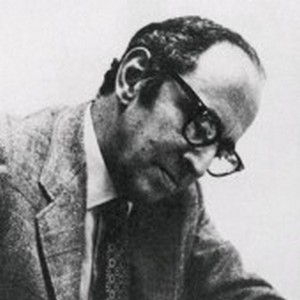
Thomas Kuhn

Thomas Kuhn

Thomas Samuel Kuhn (1922–1996) was an American physicist, historian and philosopher of science whose controversial 1962 book The Structure of Scientific Revolutions was influential in both academic and popular circles, introducing the term paradigm shift, which has since become an English-language idiom. Kuhn made several notable claims concerning the progress of scientific knowledge: that scienti…


Read more

In "The Structure of Scientific Revolutions" Thomas Kuhn presents a revolutionary approach to how science functions and progresses. Against the normal perception of science as a linear accumulation of knowledge, Kuhn attempts to view science as progressing in leaps from one "paradigm" to the next.

Kuhn is revolutionary in the philosophy of science since he views scientific practice a something conducted by a community rather than a set of inpiduals. As a community the science world is a sociological matter, especially in terms of having norms and commonly held beliefs which function within it and regulate it. Kuhn argues for example that scientific education is, in fact, the socialization or indoctrination of the young researcher into the conventional manner in which science is practiced. This is what Kuhn famously calls "paradigm", the unspoken basic assumption which make the worldview of a scientific community and allows it to function.

A landmark in intellectual history which has attracted attention far beyond its own immediate field. . . . It is written with a combination of depth and clarity that make it an almost unbroken series of aphorisms. . . . Kuhn does not permit truth to be a criterion of scientific theories, he would presumably not claim his own theory to be true. But if causing a revolution is the hallmark of a superior paradigm, [this book] has been a resounding success.

—Nicholas Wade, Science

Occasionally there emerges a book which has an influence far beyond its originally intended audience. . . . Thomas Kuhn's The Structure of Scientific Revolutions . . . has clearly emerged as just such a work.

Ron Johnston, Times Higher Education Supplement

Among the most influential academic books in this century.

—Choice

Габриела 09/09/2022

Винаги съм мислела, че науката се е развивала поетапно през периода на различните исторически епохи. Тази книга преобърна безвъзвратно всичките ми представи. Едва тогава осъзнах, че вместо да изследват природните закони и въз основа на тях да градят и доказват своите хипотези, по-голямата част от учените и изследователите се опитват да впишат своите възгледи и теории в рамките на вече зададена концепия, която вече се пропуква поради опровергаващи я изключения и несъответствия. Но поддържането на старата парадигма може да се окаже икономически изгодно и да коства живота на онези, чиито открития пропукват господстващата концепция.