

Sale -20%
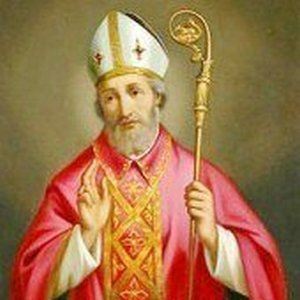
Anselm of Canterbury, also called Anselm of Aosta (Italian: Anselmo d'Aosta) after his birthplace and Anselm of Bec (French: Anselme du Bec) after his monastery, was a Benedictine monk, abbot, philosopher and theologian of the Catholic Church, who held the office of archbishop of Canterbury from 1093 to 1109. After his death, he was canonized as a saint; his feast day is 21 April.
Beginning at Bec, Anselm composed dialogues and treatises with a rational and philosophical approach, sometimes causing him to be credited as the founder of Scholasticism. Despite his lack of recognition in this field in his own time, Anselm is now famed as the originator of the ontological argument for the existence of God and of the satisfaction theory of atonement. He was proclaimed a Doctor of the Church by a bull of Pope Clement XI in 1720.
As archbishop, he defended the church's interests in England amid the Investiture Controversy. For his resistance to the English kings William II and Henry I, he was exiled twice: once from 1097 to 1100 and then from 1105 to 1107. While in exile, he helped guide the Greek bishops of southern Italy to adopt Roman rites at the Council of Bari. He worked for the primacy of Canterbury over the bishops of York and Wales but, though at his death he appeared to have been successful, Pope Paschal II later reversed himself and restored York's independence.