
What Do People Want More Than Anything?
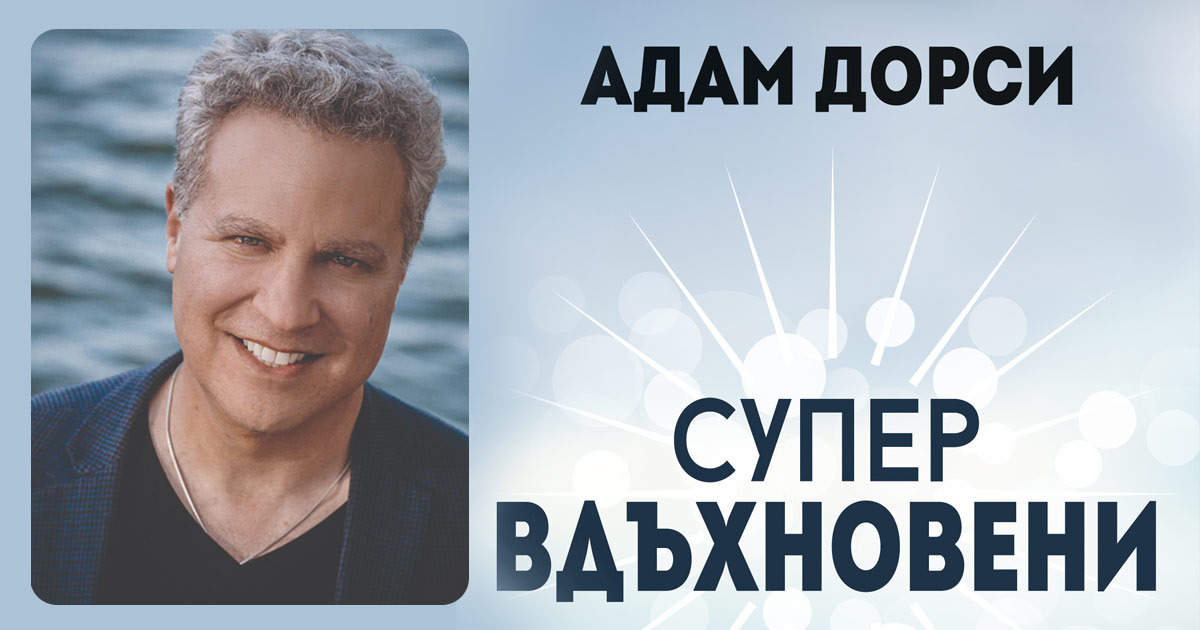 Interview with Psychologist Dr. Adam Dorsay
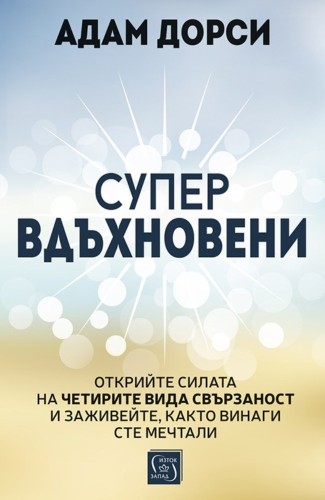
1. What moment or experience convinced you
that connection needed to be the focus of your first book?
After sitting with smart people in my office for
thousands of hours, the thing they said they wanted more than anything was this
nebulous thing called "connection." However, when I asked them what
connection meant, they had trouble defining it. I knew I needed to define it
and help them with ways to find it that were meaningful for them.
That is why I invested well over 20 months writing
this book!
2. Which of the four types of connection
do people struggle with most, and why?
The answer is this: it depends. People struggle with
all of the four ways. However, I will focus on one of them, the one that has
the biggest effect on the other three: our connection to ourselves. Not
surprisingly many of us struggle to figure out who we are and what we are about
due to external influences telling us who we should be.
We also have brains full of cognitive biases that
further lead us astray.
These distract us. So, the big job is to have a
strong, well-grounded connection to ourselves since the other three connection
points are profoundly influenced and impacted by that primary source of
connection.
3. What do you see as the biggest
misconception people have about happiness – the belief that leads them furthest
away from it?
I'll begin to answer your question with a question: Have you ever had the
experience of believing you would be happy when you achieved something?
Perhaps you were happy for a little while. But not
long after, you likely returned to how you felt before your accomplishment.
Many people erroneously believe that when they achieve
something, they will be happy forever. Unfortunately, that is a fallacy most of
us have experienced.
In my experience, to have sustainable happiness, we
need to be living lives that are aligned with our values. Figuring that out
takes time and intention and the willingness to fail and persist.
4. Being self-aware doesn't automatically
mean being happy. Why do these two so often diverge, and what gets in the way
of turning awareness into genuine well-being?
That is true, being self-aware does not automatically
mean being happy.
Also true is that nothing automatically
leads to happiness.
And perhaps happiness alone is not the goal. A better
target to aim for might be trying to find meaning and fulfillment. Is the thing
we are doing meaningful? Do we find it fulfilling? Does it require energy from
us and give us energy back? Do we lose ourselves in the thing? Are we learning
and improving in some way as we do the thing?
I believe these targets are better and more realistic.
5. You describe loneliness as a public
health crisis. What misconception about loneliness frustrates you the
most?
There are a few things that frustrate me around
misconceptions of loneliness. The first is this: being alone does not
necessarily mean loneliness. We can be alone and find it extremely fulfilling.
We can find restoration in being alone if it is self-determined solitude and we
choose a restorative activity.
We need solitude at varying levels in order to connect
with ourselves.
Lastly, we can be around a lot of people and feel
lonely (or even more lonely than being alone) when there's no real connection
or when we try to fit in.
6. What's the first connection a person
loses when addiction takes over – and how can that connection be rebuilt? Why
do the things that cause harm often feel comforting, while the things that
could heal feel so threatening?
Lack of connection to oneself can be a precursor to
addiction. An addiction can be any behavior that causes harm, yet we persist
with that behavior in spite of this.
The first connection that is harmed is our connection
to ourselves. We dissociate from our thoughts and feelings. That harm continues
on an outward trajectory: we harm others by ceasing to recognize our impact on
them. It continues further because we prioritize the addictive behavior over
our relationships.
The addiction numbs us indiscriminately from both our
pain and from feeling alive.
For some, it may feel as though there are no other
options than to continue the addictive behavior because it feels so protective.
However, there are other options: seeking therapy, finding an activity that
provides meaning and challenge, joining a 12-step program, volunteerism...
these are just a few healthful alternatives to addiction. While these are the
healthier options, they require vulnerability and courage (which can connect us
with our pain as we heal).
When it comes to healing, the only way out is through.
7. How does surviving an extreme or
life-altering experience reshape a person's perspective on the four types of
connection? And where do you see the line between being broken by trauma and
gaining meaningful wisdom from it?
Nietzche (and Kelly Clarkson) said versions of
"What doesn't kill me makes me stronger."
This is potentially true. It is also potentially
untrue. It depends on how we cope after the experience. Do we
cope by abusing alcohol and threaten our health and relationships? If that's
the case, what didn't kill us made us weaker.
But what if we engage in art, therapy, journaling, or
some other healthful activity to assist us through the healing? In these cases,
we can improve our lives after the stressor. Once again, we have to face the
stressor.
We all go through difficult and highly stressful
experiences. How we cope determines the longer-term outcome.
8. When you look at how people
interact today, especially on social media, what separates a truly meaningful
connection from one that only looks like a connection on the
surface? What signals tell you someone is genuinely connected versus just
socially busy?
I like the way Dr. Laurie Santos at Yale describes
social media: it's the NutraSweet (aspartame) of connection. It can feel like
we're connecting but our brains—which haven't changed in at least 35,000 years
(possibly up to 100,000 years)—can tell the difference between a social media
connection and a genuine connection.
Also, the brain can differentiate between an authentic
connection and a strategic connection. That is, if the connection is intrinsic
(good in and of itself) or extrinsic (only as valuable as the results derived
from the connection).
We need both types, of course. But we must have some
connections that are intrinsic.
9. Which books have influenced you the
most – both personally and professionally — and why do they stand out for you?
Here are a few:
In fiction, The Little Prince (Antoine
de Saint-Exupéry) and The Shadow of the Wind (Carlos Ruiz
Zafón), The Unbearable Lightness of Being (Milan Kundera),
and A Personal Matter (Kenzaburo Oe). These books are
timeless, beautiful, and contain philosophical truths that inform me to this
day. I have read some of them multiple times, and I will never tire of them!
In non-fiction, Dr. Victor Frankl's Man's Search for Meaning. Dr.
Frankl illuminated life's most primary and crucial truths when he examined his
life during the most trying time in Auschwitz during the Holocaust.
Interview by Vladimir Tsankov
Products related to this post
Comments