
We Are Becoming More and More Ignorant of Our Own Ignorance: That Is the Death of Knowledge
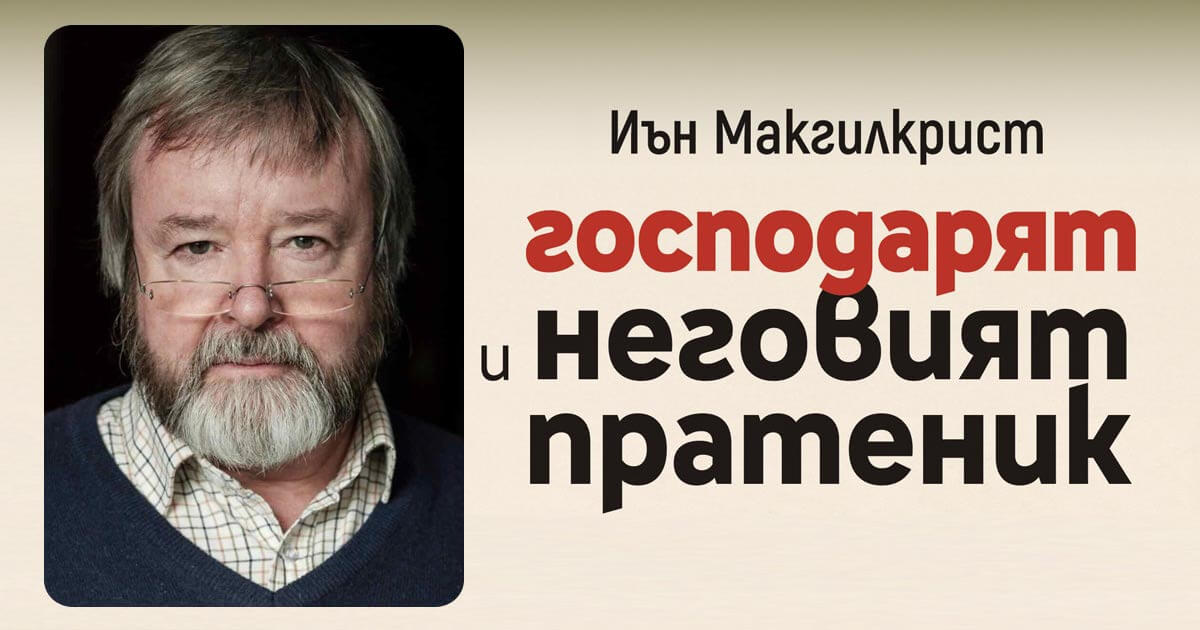
Interview with Dr Iain McGilchrist, Author of “The Master and His Emissary: The Divided Brain and the Making of the Western World”
At what point
did you come to realize that the differences between the brain’s hemispheres
were not merely a neurological curiosity, but a key to understanding the
development of Western culture?
It began when I was
training as a psychiatrist at the Maudsley Hospital in London, and heard a
lecture by John Cutting, an authority on the subject, in which he described
three important and well validated points of difference between the brain hemispheres
that I had hitherto not heard about.
What were those differences?
First, that the right hemisphere was attuned to the implicit – which is
to say nearly all that is of the greatest importance to us, such as love,
friendship, sex, nature, works of art, music and poetry, narrative, myth and
the sacred – where the left hemisphere was relatively blind to that whole
realm. It took poetry, metaphor, irony, sarcasm – all that is not explicit or remains
unspoken – literally. Second, that the
right hemisphere was attuned to the unique case, whereas the left hemisphere
tended to deal only in broad categories and abstract generalities. And third, that
while both hemispheres have obvious connections to the body, the right
hemisphere had closer, more intimate connections, and was the only hemisphere
to have an intact image of the body as a whole.
In my 20s, and before I had embarked on a medical career, I had written
a book about how the typical academic approach to literature tended to destroy
all that was most precious in its chosen subject, because a) it made explicit
what simply had to remain implicit if it were not to lose all its power; b) it
turned what was first and foremost something completely fresh, new and unique
into a stale example of something familiar; and c) it approached the work of
art as something abstract, decontextualised, conceptual and disembodied, thereby
missing most of its essential nature.
And it suddenly
came to me: why had I struggled so much to find a way of saying this? Because my right hemisphere literally did not
have a voice, and the speaking left hemisphere didn’t understand what it was
the right hemisphere knew. So all this struck
me forcibly; and I spoke to John Cutting after the lecture. That was the
beginning of a collaboration on research into hemisphere differences; and, as
it progressed, it became clearer and clearer to me that these differences were
characteristic of the chief way of approaching everything in the modern era of
reductive materialism. I was also
greatly influenced by the work of Louis Sass, whose wonderful book Madness
and Modernism asked why it was that so many of the features of
schizophrenia were reflected in the art and thought of modernism. I saw that it was not, of course, that we had
all suddenly developed schizophrenia, but that we had neglected the
understanding that came from the right hemisphere – and that subjects with
schizophrenia were like people trying to understand the world with their left
hemisphere alone.
Do you
believe the Renaissance was truly a period of harmony between the hemispheric
ways of thinking you describe, and if so, what made that balance possible?
For me, the Renaissance stands out as a period of exceptional harmony
between the hemispheres, at least until the advent of the Reformation. It was an era in which enormous strides
forward were made across the sciences and in mathematics, across the arts, in
music, poetry, painting and architecture, and in government and that art of law-making. It was
marked by a simultaneous broadening and deepening of the world-picture – and
since it is the right hemisphere that sustains broad, open attention to the
whole, rather than narrow fixation on detail, but nonetheless honours what the
left hemisphere can offer, it makes sense that this is a world in which we see
these two visions, that of the big picture and that of the detail, working
together as they should.
There was a new thirst for
knowledge of the natural world, and the historical world – the broader context
in which we live, with the accent on how things are, rather than how they ought
in theory to be, or were said to be according to authority: the beginnings of
modern science, history and philosophy. In the arts it is usual to speak of a new
sense of the importance of harmony, of the relation of part to whole, a new spirit
of conception that is both daring and tactful, graceful yet original. In all things,
there was a new sense of the balanced reciprocities of individual and society,
and of male and female. It was this
breadth and depth of vision – typical of the right hemisphere of the brain –
that enabled such richness to come about.
There are of course many theories as to what gave rise to this irruption
of the imagination at this particular time in Europe, but what I think is
relevant is that it coincided with a renewed interest in the past. This is what
the word Renaissance means – a re-birth. Paying attention to what the past can
teach us – even if it is only to show us what it is that we have lost and still
have need of – is often associated with a great step forward, not backward, in
civilisation.
When do you think the balance between the hemispheric ways of thinking
first began to erode, and what were the earliest manifestations of that shift?
It’s important to
realise that this was not the first time in the history of the West that there
had been a sudden irruption of genius across the whole spectrum of human
endeavour, in which the arts and sciences, and the art of government – indeed
wisdom more generally – flourished, where one can see the left hemisphere
working in an important, but necessarily, auxiliary role to the right. But it seemed that each time this happened, civilisation
then began to decay gradually, over a period of two or three hundred years,
into a world dominated by the modus operandi of the left
hemisphere. In the second half of The
Master and his Emissary, I trace this movement three times, with peaks of
flourishing in the sixth century BC in Athens, then again about the year zero
in Rome, and once more around the 14th-15th century in
Western Europe, only for each of these civilisations to decline in this manner.
Coming forward to the history of modern Western Europe, I see the first signs
of this decay beginning in the so-called Scientific Revolution in the late 17th
century, and hardening up with the Enlightenment in the 18th
century. I should make it clear that these movements produced very valuable
results, and, seen through the eyes of their own time, were obviously steps
forward for mankind. But unfortunately, they were also hubristic movements,
believing that everything important is susceptible to the grasp of mere
ratiocination. It is a common
observation that the less one knows, the more one thinks one knows; and
conversely the more one knows, the more one becomes aware of how little one
actually knows and understands. This
sense that we know it all, and that we can and should control nature towards
our own ends, hardened up with the Industrial Revolution. In our own time it has given rise to a
general scepticism about everything that could bring meaning once more into
life – about art, about religion and about the structures of civil society.
You argue
that Western culture has increasingly come under the influence of the left
hemisphere. Which forces do you see as most responsible for this shift?
Of course I do not
suggest that we can reduce human history to the functioning of the brain, as
though the brain were the cause of the direction of a culture. I do not
suggest that changes in the brain caused anything at all. However, the brain is
in constant ‘dialogue’ with culture, so that the way we think and behave
changes the brain, and then in turn the brain changes the way in which we think
and behave. Consciousness and the brain move
in tandem, each affecting the other. It
is instructive to think of the downfalls of Greece and Rome, which were in part
occasioned by the expansion of mercantile or military empire. Once a civilisation over-reaches itself,
bureaucratic administration and a proliferation of laws take over from a subtle
sense of what is valuable in a particular context, and a certain coarsening of
values, a corruption of truth, a deterioration in the capacity for creating and
celebrating beauty, begins to arise. The unique – which is all that ever really
exists – is swallowed up in general abstractions; algorithms take over from
intuition and imagination, and the exercise of flexible reason; the
virtual triumphs over the embodied and the real. Bureaucracy exerts a stranglehold. The civilisation loses any sense of direction
other than ever further to increase its wealth and power and influence –
though to what end such wealth and power and influence should be used becomes
ever less clear.
How is left‑hemisphere
dominance manifesting in contemporary life – in our politics, education,
technology, or social relationships?
What you have to
realise is that, while the left hemisphere’s evolutionary role is of critical
importance for survival, it requires neither intelligence, nor perceptiveness,
nor a capacity to understand the whole picture – nor to follow higher values
than those of mere utility. It
prioritises a ‘quick and dirty’ decision over nuance, complexity,
subtlety. It enables us to grab and get,
without worrying about anything else. So it tends to be black-and-white in its
thinking; inflexible, abstract, and bureaucratic; pursuing technology that will
give us more power, but which at the same time makes it less likely that we
will be wise enough to know how to use that power. It means that those who devise educational
curricula emphasise only those subjects that are of immediate practical use in
getting a well-paid job. This is
shortsighted in the extreme, as it leads to a decay of understanding of
history, literature, music, the arts, philosophy, and all the things that
enable us to make sense of the world and understand its deeper value. Since the left hemisphere is concerned only
with “self” – and achieving more power, money and influence for that self – we
see society breakdown into an aggregate of isolated, lonely, atomistic
individuals, locked in battle with one another and reluctant to accept any constraints,
any requirements that they should acknowledge limits to their behaviour of any
kind.
Umberto Eco
wrote, “As the man said, for every complex problem there’s a simple solution,
and it’s wrong.” What future risks do you associate with the left hemisphere’s
tendency to oversimplify reality, especially as this habit becomes more
culturally dominant?
I see many problems ahead, unless we are able to
redress this tendency. The left hemisphere’s vision is simplistic in the
extreme, and it is not aware of the extent of what it is that it does not know.
It is not ignorance, but ignorance of ignorance, that is
the death of knowledge.
I hope I may
be wrong, but I’m afraid that there will be an increase in intensity in mutual
incomprehension and hostility between societal groups; a breakdown of family,
community and societal ties more generally; the adoption of extreme positions
in politics; the loss of the understanding of a broader picture; the loss of
the concepts of skill and judgement, in favour of bureaucratic rules that are
crass, inhuman and inept; a simultaneous exaltation of the individual over
against society, and yet at the same
time a complete loss of any appreciation of the individual himself; mechanical rationalisation
taking over from reasonableness; a complete failure of common sense; a rise in
paranoia and lack of trust; an ever greater emphasis on the need for total
control, as a substitute for the trust that is lost – and without which, as
Confucius so wisely said, no society can survive; a rise in anger and
aggression; the exaltation of ourselves as passive victims; a decline in the
arts, as they become more abstract and more political, as though explicit
‘messages’ could in any way substitute for the deep revelations of true art; a
deliberate undercutting of the sense of awe or wonder; the fragmentation of our
understanding of the world; a discarding of the sense of the sacred; a
relinquishing of all tacit forms of knowing in favour of what de Tocqueville
described already in the early 19th century as a ‘network of small
complicated rules’; a world in which we are, as Descartes proudly said of
himself, spectators rather than actors. And
all this accompanied by a dangerously unwarranted optimism. Blind optimism in
the face of reality is typical of the left hemisphere acting unopposed by the
right hemisphere.
But while
things look bad, I do think there are grounds for hope. Particularly among
young people, there is a new sense of what it is that has been lost, and the
need to rediscover it. It is out of this
sense of what is missing that a new Renaissance can come about. And it is this that
gives me hope.
Where do you believe the creative power that arises
from harmony between the two hemispheres can manifest most strongly – in the
creation of artistic masterpieces, in the exploration of space, or in devising new
ways for humanity to destroy itself?
It’s important to understand that the two hemispheres
are not of equal importance to the flourishing of a human being or a human
society. Though he knew little or
nothing about brain structure and functioning, Einstein put is like this: ‘While
the rational mind is a faithful servant, the intuitive mind is a precious gift.
We live in a world that honours the servant but has forgotten the gift.’ The proper balance is one in which the less
intelligent, less intuitively gifted, less imaginative left hemisphere, which
is also on its own prone to delusion, operates under the tutelage of the wiser
right hemisphere. This matters for the future, not only of an individual human
being, but for the survival of a civilisation.
It certainly matters for the production of great art, for the sustaining
of a spiritual life, for a just government, for the flourishing of communities
and for our capacity to exist in harmony with nature. When things are tipped in favour of the left
hemisphere’s way of being in the world, we become blind and foolish. It is therefore of vital importance for the
achievement, and the preservation, of everything that truly matters to us that
we do not allow the left hemisphere to take control. It’s like putting machine guns in the hands of
toddlers. The reasons I have researched
this area in such depth and written about it at such length, and so
passionately, is that nothing less than the future of humanity is at stake.
Interview by Vladimir Tsankov
Products related to this post
Comments